Atacamite
A variety of Atacamite Group
What is Atacamite?
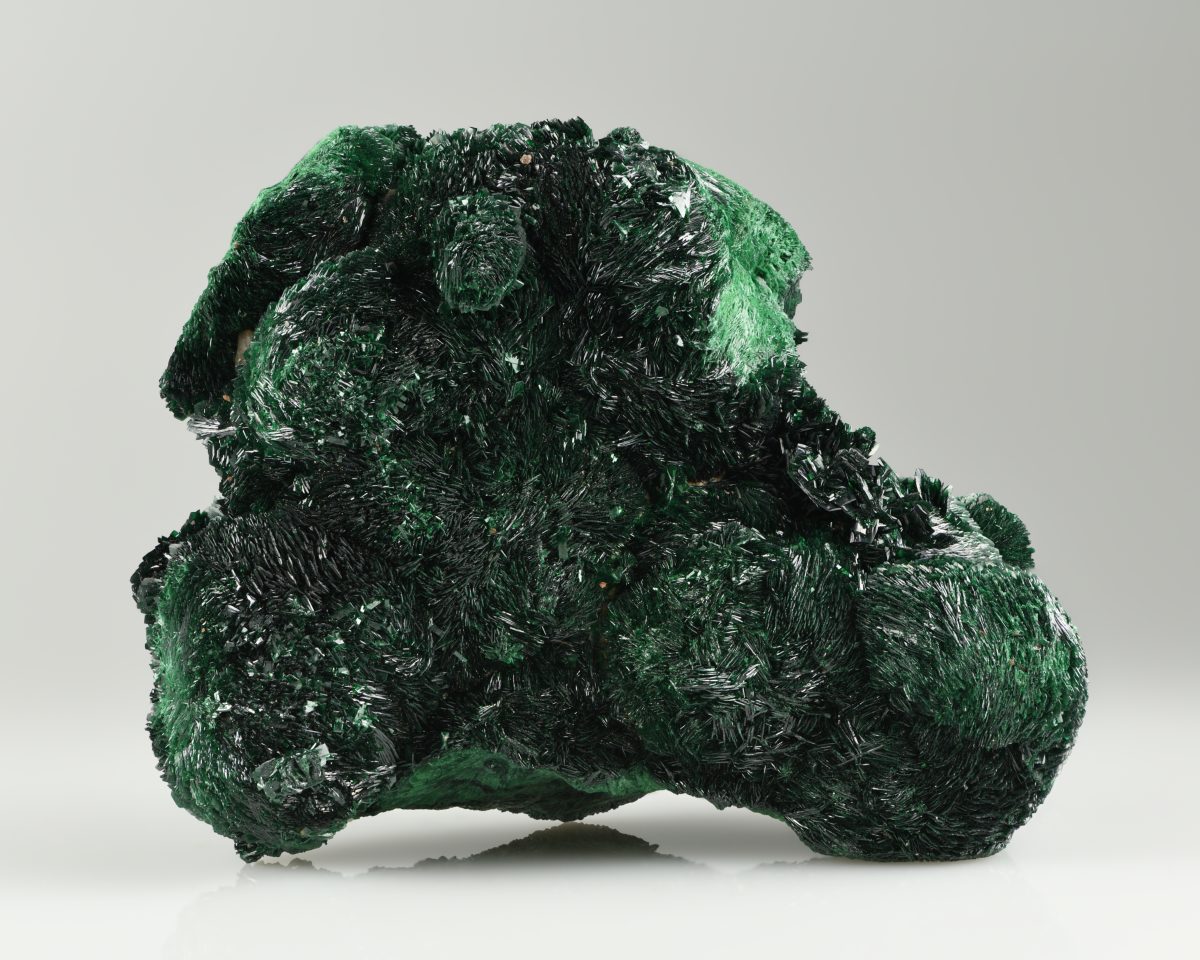
Atacamite is rich in copper sulfide and displays interesting crystal formations. It only forms in dry areas, with the largest finds being in the Atacama Desert of Chile, one of the driest places on earth! It is most useful in its natural form as a collectible mineral.
Etymology & Origins
It was first described for deposits in the Atacama Desert of Chile in 1801 by D. de Fallizen. The Atacama Desert is also the namesake of the mineral.
Uses & Applications
Atacamite is a minor source of copper, which is an essential metal for many industries. Due to its rarity and beauty, atacamite is most often sought out for mineral collections.
Healing Properties
Atacamite is a strong stone that works on the Third Eye chakra to help one make contact with the spiritual realm. It is most effective when used in meditation or worn on the body. Its energies harmonize with other stones to provide inner healing of the mind, body and spirit. It works with the Throat and Heart chakras to attract love and better communication in relationships with others.
Market Value Factors
Pricing varies for every rock and mineral, so use these universal factors to gauge Atacamite before comparing listings or appraisals.
Size & Weight
Larger, intact specimens usually command higher prices.
Rarity & Demand
Scarce material or popular varieties sell at a premium.
Condition & Finish
Chips, repairs, and heavy wear lower value; clean prep helps.
Treatment & Provenance
Untreated specimens with documented locality are prized.
Associated Chakras
Key Characteristics
Formation of Atacamite
Atacamite is polymorphous with botallackite, clinoatacamite, and paratacamite. Atacamite is a comparatively rare mineral, formed from primary copper minerals in the oxidation or weathering zone of arid climates. It has also been reported as a volcanic sublimate from fumarole deposits, as sulfide alteration products in black smokers. The mineral has also been found naturally on oxidized copper deposits in Chile, China, Russia, Czech Republic, Arizona, and Australia. It occurs in association with cuprite, brochantite, linarite, caledonite, malachite, chrysocolla and its polymorphs. It has been shown that atacamite is a component of the jaws of some Glycera species.
More Images

Quick Facts
Physical Properties
- Color
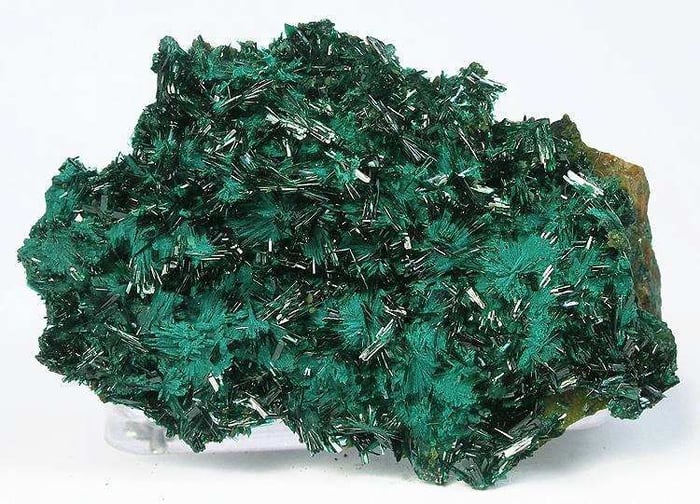
- Bright green, dark emerald-green to blackish green, shades of green in transmitted light
- Hardness (Mohs)
- 3 - 3.5
- Rock tumbling
- Not recommended
- Density
- 3.756 g/cm³
- Streak
- Apple-green
- Luster
- Vitreous, Adamantine
- Crystal System
- Orthorhombic
Chemical Properties
- Chemical Formula
- Cu2(OH)3Cl
- Elements
- Cl, Cu, H, O
Also Known As
Identify Atacamite Instantly
- Snap a photo, get instant results
- 6,700+ rocks, minerals & crystals
- Discover collecting spots near you
Atacamite FAQs
How do I identify Atacamite?
Atacamite can be identified by its hardness of 3 - 3.5 on the Mohs scale, Bright green color, Vitreous, Adamantine luster, Orthorhombic crystal system. Look for these key characteristics when examining specimens.
What color is Atacamite?
Atacamite typically appears in Bright green, dark emerald-green to blackish green, shades of green in transmitted light. Color can vary depending on impurities and formation conditions.
How hard is Atacamite?
Atacamite has a hardness of 3 - 3.5 on the Mohs scale. This makes it a soft mineral that can be scratched easily.
What is the formation of atacamite of Atacamite?
Atacamite is polymorphous with botallackite, clinoatacamite, and paratacamite. Atacamite is a comparatively rare mineral, formed from primary copper minerals in the oxidation or weathering zone of arid climates. It has also been reported as a volcanic sublimate from fumarole deposits, as sulfide alteration products in black smokers. The mineral has also been found naturally on oxidized copper deposits in Chile, China, Russia, Czech Republic, Arizona, and Australia. It occurs in association with cuprite, brochantite, linarite, caledonite, malachite, chrysocolla and its polymorphs. It has been shown that atacamite is a component of the jaws of some Glycera species.