How Much Is My Rock Worth? Free Rock Value Estimator
Upload a photo to identify minerals, crystals, and gemstones and get a free rock value estimate in seconds.
Last updated: - Based on recent online listings and typical collector pricing.
Wondering how much your rock is worth after a hike or a dig? This free estimate tool identifies minerals and crystals from a photo and suggests a realistic price range using recent market listings. Upload a clear image and our analysis reviews color, luster, texture, and crystal habits. Whether you found a quartz cluster, an agate, or a gemstone-quality piece, you'll get guidance on rarity, size, and condition so you can decide if it's a keeper, a collector item, or worth a professional appraisal.
Rock Appraisal (Free Estimate) in 5 Steps
Upload a photo and follow the guided valuation wizard

Upload Your Photo
Take a clear photo of your rock using natural light. Our system accepts JPG, PNG, or WebP images up to 6MB.

Photo Analysis Identifies Your Stone
Our image analysis reviews color, texture, crystal patterns, and surface features to identify your specimen.

Choose Form & Size
For gemstones, choose crystal or cut. For other rocks, select a category and size for better accuracy.

Answer Quality Questions
For gemstones and diamonds, answer a few questions about color, clarity, and other quality factors.

Get Value Estimate
Receive a market value estimate with price range, based on current market data and your specimen's characteristics.
What Makes a Rock Valuable?
Understanding the key factors that determine rock and mineral value
Rarity & Demand
Scarce minerals and gemstones with high collector demand command premium prices. Rubies, sapphires, and emeralds are consistently valuable.
Size & Weight
Larger specimens typically fetch higher prices, especially for gemstones where per-carat value increases exponentially with size.
Quality & Condition
Crystal formation quality, color saturation, and clarity significantly impact value. Damage-free specimens are worth more.
Treatment Status
Natural, untreated stones are generally more valuable than heat-treated or enhanced specimens. Disclosure affects price.
Origin & Provenance
Certain localities are prized by collectors. Kashmir sapphires, Colombian emeralds, and Burmese rubies carry premiums.
Mineral & Crystal Price Guide
Different minerals, crystals, and gemstones are valued differently
Diamonds
Valued using the 4Cs: Carat (weight), Color (D-Z scale), Clarity (FL to I3), and Cut (quality of faceting). Lab-grown diamonds are valued differently than natural.
Precious Gemstones
Ruby, Sapphire, and Emerald are valued by color intensity, clarity, size, and origin. Fine specimens from renowned sources command highest prices.
Semi-Precious Stones
Tourmaline, Garnet, Topaz, Aquamarine, and more. Value varies by variety, color saturation, and clarity. Paraiba tourmaline rivals precious stones in value.
Raw Crystals & Specimens
Valued by size, formation quality, color, and display appeal. Museum-quality specimens with perfect terminations are most valuable.
Where the Price Range Comes From
Our estimates blend current market signals with specimen details you can see in a photo. The range is meant to give you a realistic window, not a single number.
Need identification first? Use the free rock identifier to confirm the mineral before valuing it.
We weigh signals like:
- Recent online listings and sold comps for similar specimens.
- Specimen grade, including color, clarity, and crystal formation.
- Size, weight, and cut vs. raw presentation.
- Treatment disclosures, origin notes, and collector demand.
Gemstone Value Calculator (Diamonds, Sapphires, Opals)
Looking for a gemstone value calculator? These examples highlight common valuable rocks, including diamonds, sapphires, and opals, plus the typical ranges collectors look for.
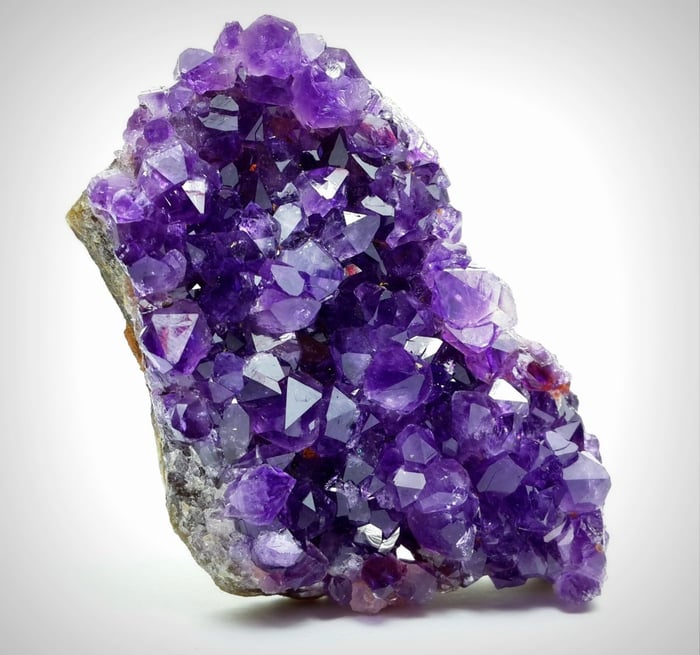
Amethyst
Purple quartz prized for saturated color and clear points.
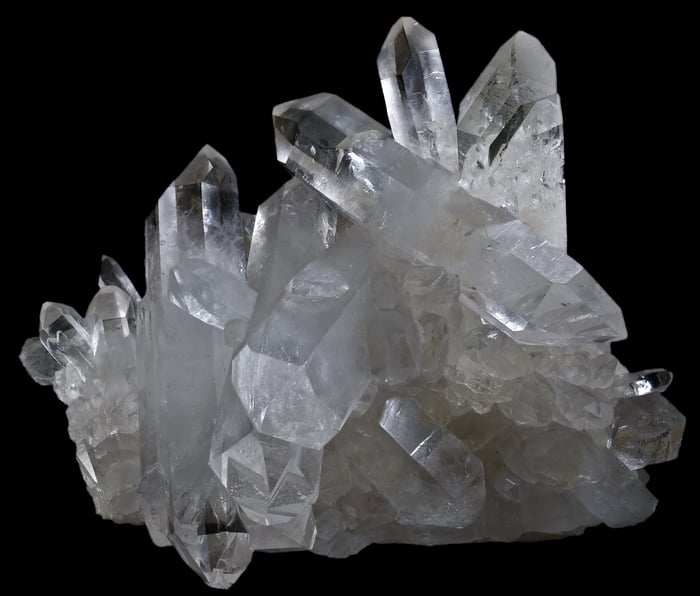
Quartz Clusters
Multiple terminations with good clarity and luster.
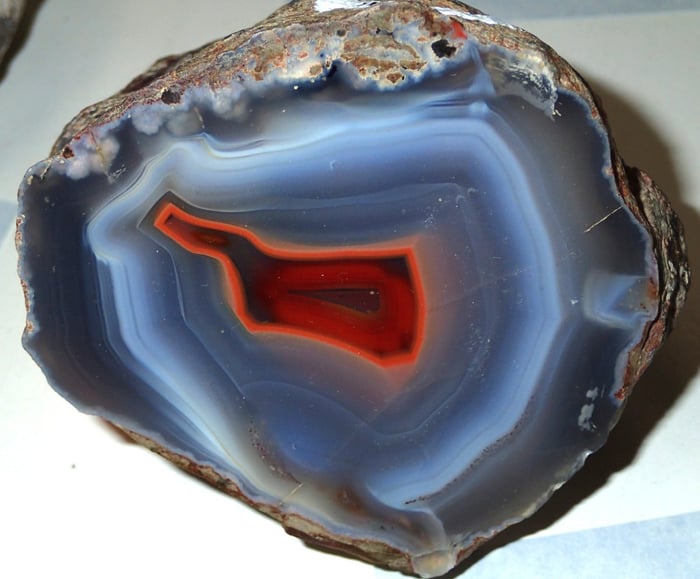
Agates
Banded patterns and vivid colors drive value.
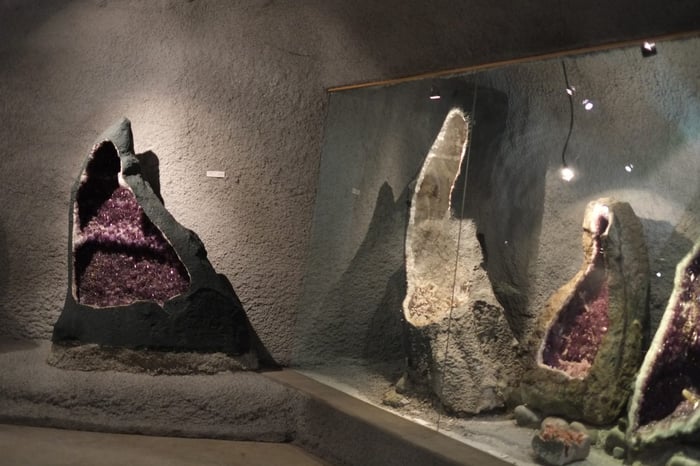
Geodes
Crystal-lined cavities where size and sparkle matter.
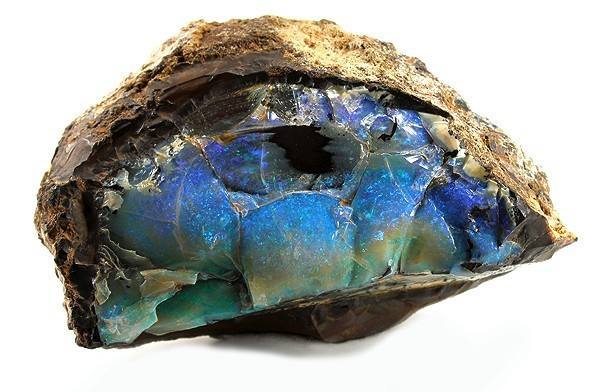
Opal
Play-of-color and brightness set premium values.
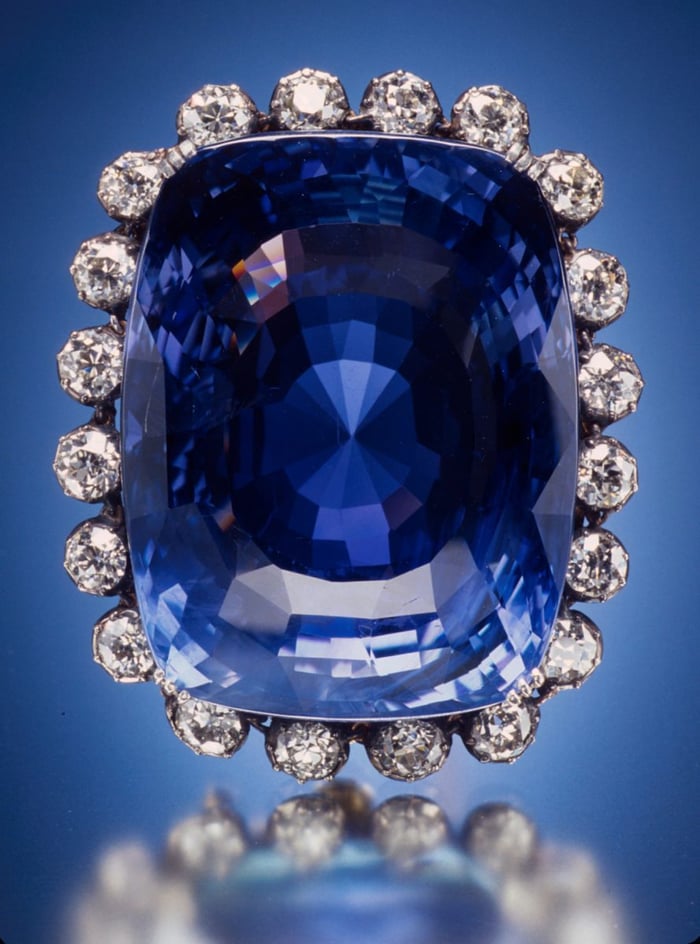
Sapphire
Deep blue with strong clarity is most prized.
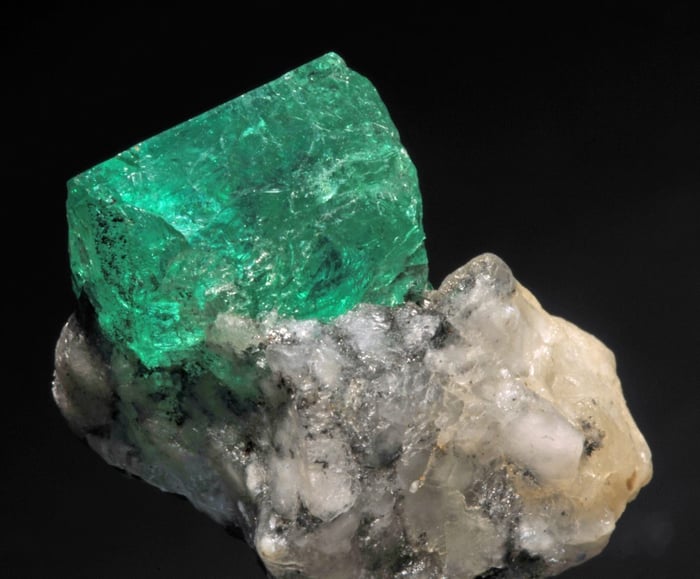
Emerald
Rich green color with minimal inclusions is rare.
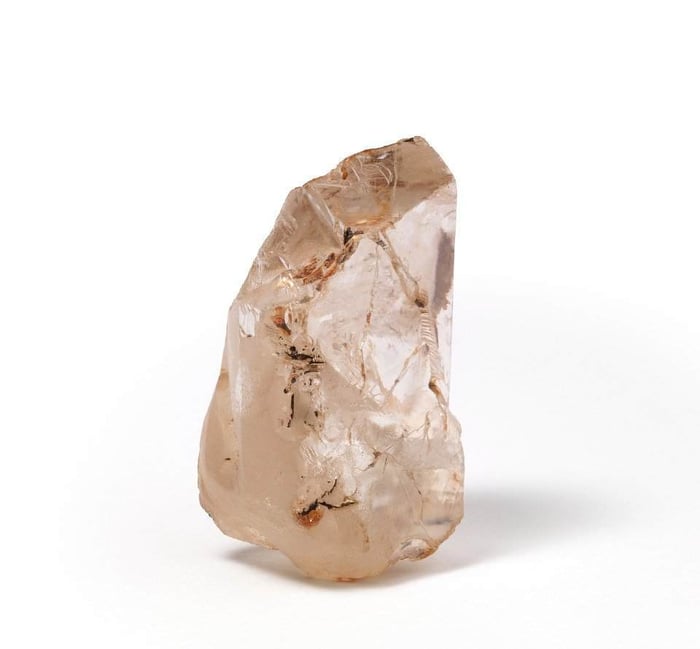
Diamond
Values vary by the 4Cs and natural vs lab-grown.
Related Tools
Explore identification and app options for deeper mineral insights.
Gemstone Value Calculator
Use our dedicated gemstone value calculator for gem-specific valuation.
Calculate gemstone valueCrystal Value Calculator
Estimate what your crystal is worth with crystal-focused valuation steps.
Estimate crystal valueFree Rock Identifier
Identify minerals and crystals online before you estimate value.
Try the identifierRuby Glint Mobile App
Unlimited identifications, saved history, and detailed value reports.
Download the appValue guides for popular finds
Take Better Photos for Accurate Estimates
Photo quality is the biggest factor in accurate value estimates
Do This
Natural Light
Shoot near a window or outdoors. Avoid harsh shadows and direct sunlight glare.
Fill the Frame
Get close enough to show surface texture and crystal details clearly.
Show Key Features
Capture crystal faces, grain patterns, color variations, and luster.
Avoid This
Keep It Dry
Wet surfaces reflect light and hide the true color of your specimen.
No Flash
Camera flash creates harsh glare and washes out natural colors.
No Blurry Photos
Blurry images make it impossible to see crystal structure and assess quality.
Unlimited Valuations & Detailed Reports
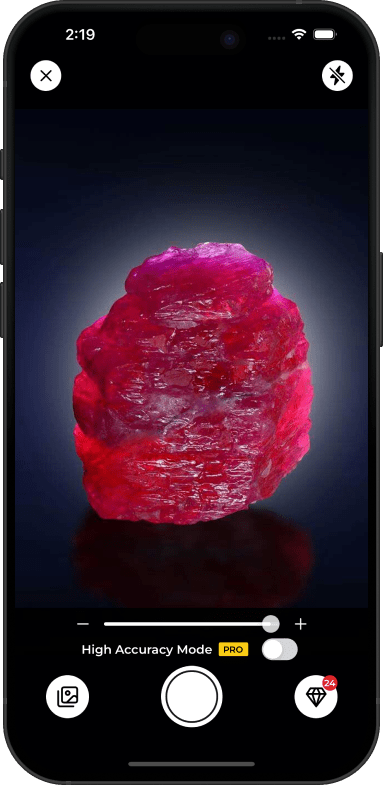
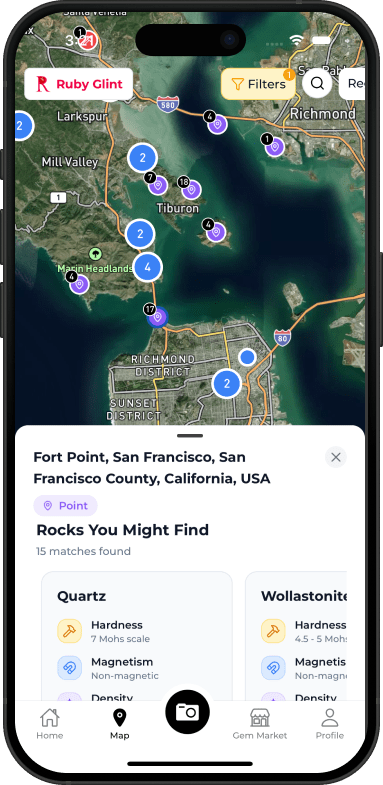
The Ruby Glint app includes saved history, detailed valuation reports, 260,000+ rockhounding locations, and unlimited identifications and valuations.


Rock Estimate vs Professional Appraisal
Use the estimator for quick market context, then move to a certified appraisal when paperwork or high value is involved.
Online estimate
- Fast, photo-based range for research or curiosity.
- Great for common finds and early sorting.
- Uses visible traits and recent market comps.
Professional appraisal
- Hands-on grading, testing, and verification.
- Required for insurance, estate, or legal uses.
- Provides formal documents and provenance notes.
Need more detail? Review the FAQ or consult a certified gemologist for formal documents.
Frequently Asked Questions
Get answers to common questions about rock identification, rockhounding, and using our platform.
Most rocks found in nature are common specimens worth a few dollars or less. However, rare minerals, well-formed crystals, gemstone-quality specimens, and unusual formations can be valuable. Our estimator helps you identify what you have and provides market value ranges.
Key value indicators include: rarity of the mineral type, quality of crystal formation, color intensity and saturation, size and weight, condition (damage-free), and origin. Gemstones like diamonds, rubies, and emeralds are typically most valuable.
The most valuable natural finds include diamonds, precious gemstones (ruby, sapphire, emerald), rare minerals like alexandrite, and high-quality crystal specimens. Value depends heavily on quality - a perfect small ruby can be worth more than a flawed large one.
Our estimates provide market value ranges based on typical prices for similar specimens. Accuracy depends on photo quality and the information you provide. For valuable pieces worth over $500, we recommend professional appraisal.
No. This is a free estimation tool for educational purposes. For insurance, sale, or legal purposes, please consult a certified gemologist (GIA, AGS) or mineral appraiser.
Diamonds and precious gemstones have standardized grading systems (like the 4Cs for diamonds). Answering questions about carat weight, color, clarity, and treatment helps provide more accurate valuations.
Our estimate gives you a starting point for understanding value. Actual selling prices vary by market, buyer, and sales venue. Consider auction houses, mineral shows, or collector marketplaces for valuable specimens.
Start by grouping similar specimens, documenting sizes and weights, and taking clear photos. For higher-value pieces, consider mineral shows, specialty dealers, or auction platforms. Common specimens often sell best in lots, while rare crystals and gemstones should be marketed individually.
Look for certified gemologists (GIA, AGS) or mineral appraisers in your area. Local rock and gem clubs, mineral shows, and university geology departments can also recommend reputable appraisers.
They can be, but most finds are common. Value depends on rarity, specimen quality, size, and condition. If you find well-formed crystals, unusual color, or a potential gemstone, a professional appraisal can confirm value.
Natural diamonds are extremely hard, have strong luster, and often form in octahedral shapes. They do not scratch easily and will not fog with breath. Because many lookalike minerals exist, a gemologist or jeweler should confirm any suspected diamond.
Ready to Find Out What Your Rock is Worth?
Scroll up and upload a photo to get started. It's completely free - no account required.