Chalcocite
A variety of Chalcocite-digenite Group
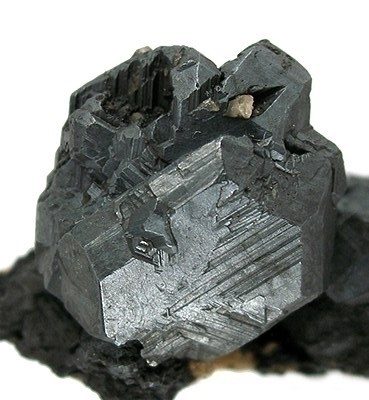
What is Chalcocite?
Chalcocite is one of those minerals that every collector wants, but not everyone can come by because it rarely crystallizes into an eye-catching form. It is localized to specific areas around the world, most notably Cornwall, England. This mineral is comprised of almost 80% pure copper, making it the most profitable ore to mine for copper production.
Etymology & Origins
The term chalcocite comes from the alteration of the obsolete name chalcosine, from the Greek khalkos, meaning copper. It is also known as redruthite, vitreous copper and copper-glance.
Uses & Applications
Chalcocite is a source of copper in some areas, though more common sources are typically preferred. Copper is used in a wide variety of applications, from electrical equipment to coins to sugar detection. Chalcocite is also collected, although high-quality crystals are rare.
Market Value Factors
Pricing varies for every rock and mineral, so use these universal factors to gauge Chalcocite before comparing listings or appraisals.
Size & Weight
Larger, intact specimens usually command higher prices.
Rarity & Demand
Scarce material or popular varieties sell at a premium.
Condition & Finish
Chips, repairs, and heavy wear lower value; clean prep helps.
Treatment & Provenance
Untreated specimens with documented locality are prized.
Where to Find Chalcocite
RockHoundR, the free-to-download rockhounding map from the Ruby Glint team, shows where collectors find chalcocite in the US, with land-access notes for BLM land and national forests. Collecting is banned in national parks.
See where to find chalcociteAlways check the local rules and get the landowner's permission before you collect.
Key Characteristics
Formation of Chalcocite
Chalcocite is sometimes found as a primary vein mineral in hydrothermal veins. However, most chalcocite occurs in the supergene enriched environment below the oxidation zone of copper deposits as a result of the leaching of copper from the oxidized minerals. It is also often found in sedimentary rocks. It has been mined for centuries and is one of the most profitable copper ores. The reasons for this is its high copper content (66.6% atomic ratio and nearly 80% by weight) and the ease at which copper can be separated from sulfur. Since chalcocite is a secondary mineral that forms from the alteration of other minerals, it has been known to form pseudomorphs of many different minerals. A pseudomorph is a mineral that has replaced another mineral atom by atom, but it leaves the original mineral's crystal shape intact. Chalcocite has been known to form pseudomorphs of the minerals bornite, covellite, chalcopyrite, pyrite, enargite, millerite, galena and sphalerite.
More Images

Quick Facts
Physical Properties
- Color
- Blue black, gray, black, black gray, steel gray
- Hardness (Mohs)
- 2.5 - 3
- Rock tumbling
- Not recommended
- Density
- 5.8 g/cm³
- Streak
- Blackish lead gray
- Luster
- Metallic
- Crystal System
- Monoclinic
Chemical Properties
- Chemical Formula
- Cu2S
- Elements
- Cu, S
Also Known As
Identify Chalcocite Instantly
- Snap a photo, get instant results
- 6,700+ rocks, minerals & crystals
- Discover collecting spots near you
Chalcocite FAQs
How do I identify Chalcocite?
Chalcocite can be identified by its hardness of 2.5 - 3 on the Mohs scale, Blue black color, Metallic luster, Monoclinic crystal system. Look for these key characteristics when examining specimens.
What color is Chalcocite?
Chalcocite typically appears in Blue black, gray, black, black gray, steel gray. Color can vary depending on impurities and formation conditions.
How hard is Chalcocite?
Chalcocite has a hardness of 2.5 - 3 on the Mohs scale. This makes it a soft mineral that can be scratched easily.
What is the formation of chalcocite of Chalcocite?
Chalcocite is sometimes found as a primary vein mineral in hydrothermal veins. However, most chalcocite occurs in the supergene enriched environment below the oxidation zone of copper deposits as a result of the leaching of copper from the oxidized minerals. It is also often found in sedimentary rocks. It has been mined for centuries and is one of the most profitable copper ores. The reasons for this is its high copper content (66.6% atomic ratio and nearly 80% by weight) and the ease at which copper can be separated from sulfur. Since chalcocite is a secondary mineral that forms from the alteration of other minerals, it has been known to form pseudomorphs of many different minerals. A pseudomorph is a mineral that has replaced another mineral atom by atom, but it leaves the original mineral's crystal shape intact. Chalcocite has been known to form pseudomorphs of the minerals bornite, covellite, chalcopyrite, pyrite, enargite, millerite, galena and sphalerite.