Hübnerite
A variety of Wolframite Group
What is Hübnerite?
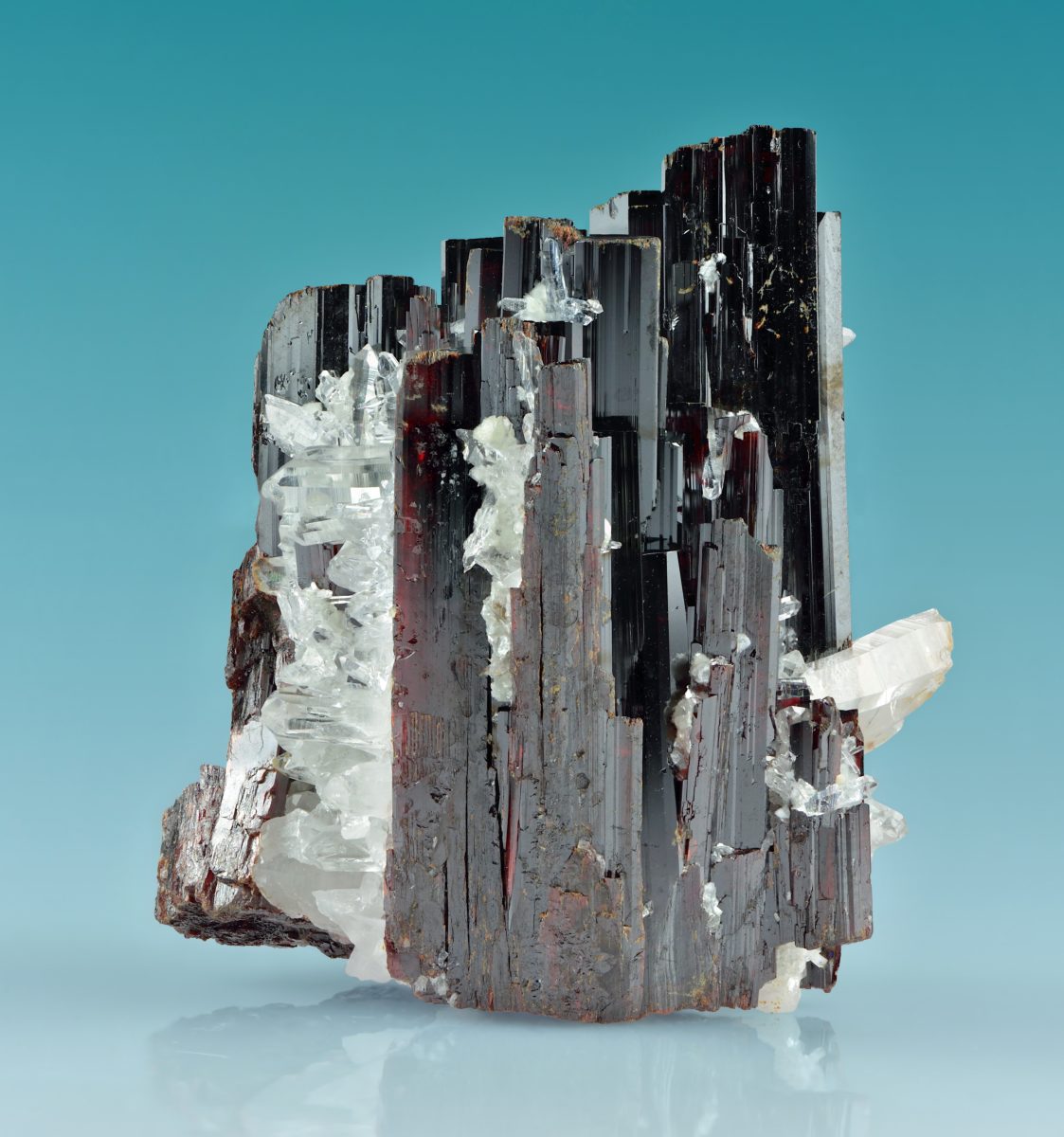
Hübnerite is a rare mineral that sometimes co-occurs with well-known gemstones such as tourmaline and topaz. Hübnerite’s color may range from dull yellow-brown to a deep and striking shade of brick red. The mineral is an ore of tungsten, an element with many commercial industrial uses (perhaps most famously, it is used to make light bulb filaments).
Optical Properties
- Refractive Index
- 2.17-2.32
- Birefringence
- 0.13
- Pleochroism
- Perceptible: yellow to green/red-orange, yellowish brown to greenish yellow/red-orange to red, green/brick-red to red
- Optical Character
- Biaxial positive
Market Value Factors
Pricing varies for every rock and mineral, so use these universal factors to gauge Hübnerite before comparing listings or appraisals.
Size & Weight
Larger, intact specimens usually command higher prices.
Rarity & Demand
Scarce material or popular varieties sell at a premium.
Condition & Finish
Chips, repairs, and heavy wear lower value; clean prep helps.
Treatment & Provenance
Untreated specimens with documented locality are prized.
Key Characteristics
Characteristics of Hübnerite
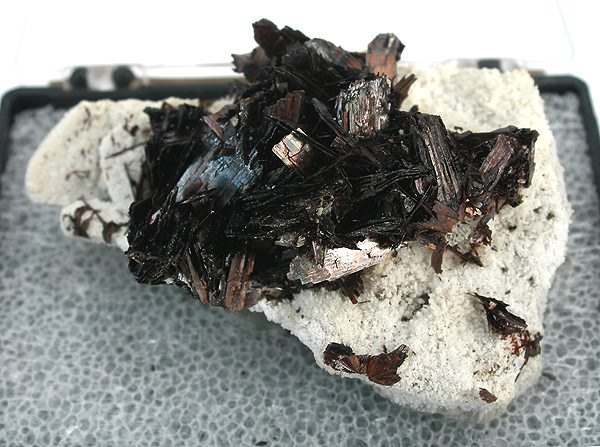
Color differences between members of the wolframite family are clear and marked. The color of hübnerite varies from yellowish brown to reddish brown. Crystal and crystalline masses of hübnerite show a variety of lusters from adamantine, submetallic to resinous luster. In thin splints, hübnerite can be either transparent or translucent. The streak is related to the color being a shade lighter. All the wolframite minerals exhibit perfect cleavage on {010}. On {100} and {102}, parting is less well-developed. Hübnerite exhibits brittle and uneven fracture. It is common for all members of the wolframite family to show simple contact twins on {100} or rarely interpenetrant twins on {001}. The hardness of hübnerite is between 4 and 4.5 and its specific gravity is between 7.12 and 7.18.
Formation of Hübnerite
Hübnerite is a rare member of the wolframite group. Hübnerite is usually found within pegmatites and high-temperature quartz veins. Hübnerite does not occur on its own, but is typically associated with other minerals such as cassiterite, scheelite, quartz, galena, arsenopyrite, native bismuth, pyrite, and sphalerite.
Composition of Hübnerite
Since hübnerite comes from a family with only two end members it would be easier to explain the composition of the wolframite family since there is not enough data on hübnerite itself. The primary formula of the wolframite series is (Fe,Mn)WO4. The predominance of either iron or manganese results in formation of one of two minerals, the compositional end-members FeWO4 (ferberite) and MnWO4 (hübnerite), respectively.. Hübnerite is rarer than ferberite because of the difficulty of substituting manganese for iron. There are also other analogues, such as MgWO4. These compounds are usually referred to as "wolframites" because they share the wolframite structure, but are not naturally occurring minerals, typically being produced for industrial applications, e.g., crystal scintillators.
More Images
Quick Facts
Physical Properties
- Color
- Yellow-brown, reddish-brown, blackish brown, black, red rare
- Hardness (Mohs)
- 4 - 4.5
- Rock tumbling
- Not recommended
- Density
- 7.234 g/cm³
- Streak
- Greenish-grey, yellow to reddish-brown
- Luster
- Resinous, Metallic, Adamantine
- Crystal System
- Monoclinic
Chemical Properties
- Chemical Formula
- MnWO4
- Elements
- Mn, O, W
Also Known As
Identify Hübnerite Instantly
- Snap a photo, get instant results
- 6,700+ rocks, minerals & crystals
- Discover collecting spots near you
Hübnerite FAQs
How do I identify Hübnerite?
Hübnerite can be identified by its hardness of 4 - 4.5 on the Mohs scale, Yellow-brown color, Resinous, Metallic, Adamantine luster, Monoclinic crystal system. Look for these key characteristics when examining specimens.
What color is Hübnerite?
Hübnerite typically appears in Yellow-brown, reddish-brown, blackish brown, black, red rare. Color can vary depending on impurities and formation conditions.
How hard is Hübnerite?
Hübnerite has a hardness of 4 - 4.5 on the Mohs scale. This gives it moderate hardness.
What is the characteristics of hübnerite of Hübnerite?
Color differences between members of the wolframite family are clear and marked. The color of hübnerite varies from yellowish brown to reddish brown. Crystal and crystalline masses of hübnerite show a variety of lusters from adamantine, submetallic to resinous luster. In thin splints, hübnerite can be either transparent or translucent. The streak is related to the color being a shade lighter. All the wolframite minerals exhibit perfect cleavage on {010}. On {100} and {102}, parting is less well-developed. Hübnerite exhibits brittle and uneven fracture. It is common for all members of the wolframite family to show simple contact twins on {100} or rarely interpenetrant twins on {001}. The hardness of hübnerite is between 4 and 4.5 and its specific gravity is between 7.12 and 7.18.
What is the formation of hübnerite of Hübnerite?
Hübnerite is a rare member of the wolframite group. Hübnerite is usually found within pegmatites and high-temperature quartz veins. Hübnerite does not occur on its own, but is typically associated with other minerals such as cassiterite, scheelite, quartz, galena, arsenopyrite, native bismuth, pyrite, and sphalerite.
What is the composition of hübnerite of Hübnerite?
Since hübnerite comes from a family with only two end members it would be easier to explain the composition of the wolframite family since there is not enough data on hübnerite itself. The primary formula of the wolframite series is (Fe,Mn)WO4. The predominance of either iron or manganese results in formation of one of two minerals, the compositional end-members FeWO4 (ferberite) and MnWO4 (hübnerite), respectively.. Hübnerite is rarer than ferberite because of the difficulty of substituting manganese for iron. There are also other analogues, such as MgWO4. These compounds are usually referred to as "wolframites" because they share the wolframite structure, but are not naturally occurring minerals, typically being produced for industrial applications, e.g., crystal scintillators.
