Molybdenite
A variety of Molybdenite Group
What is Molybdenite?
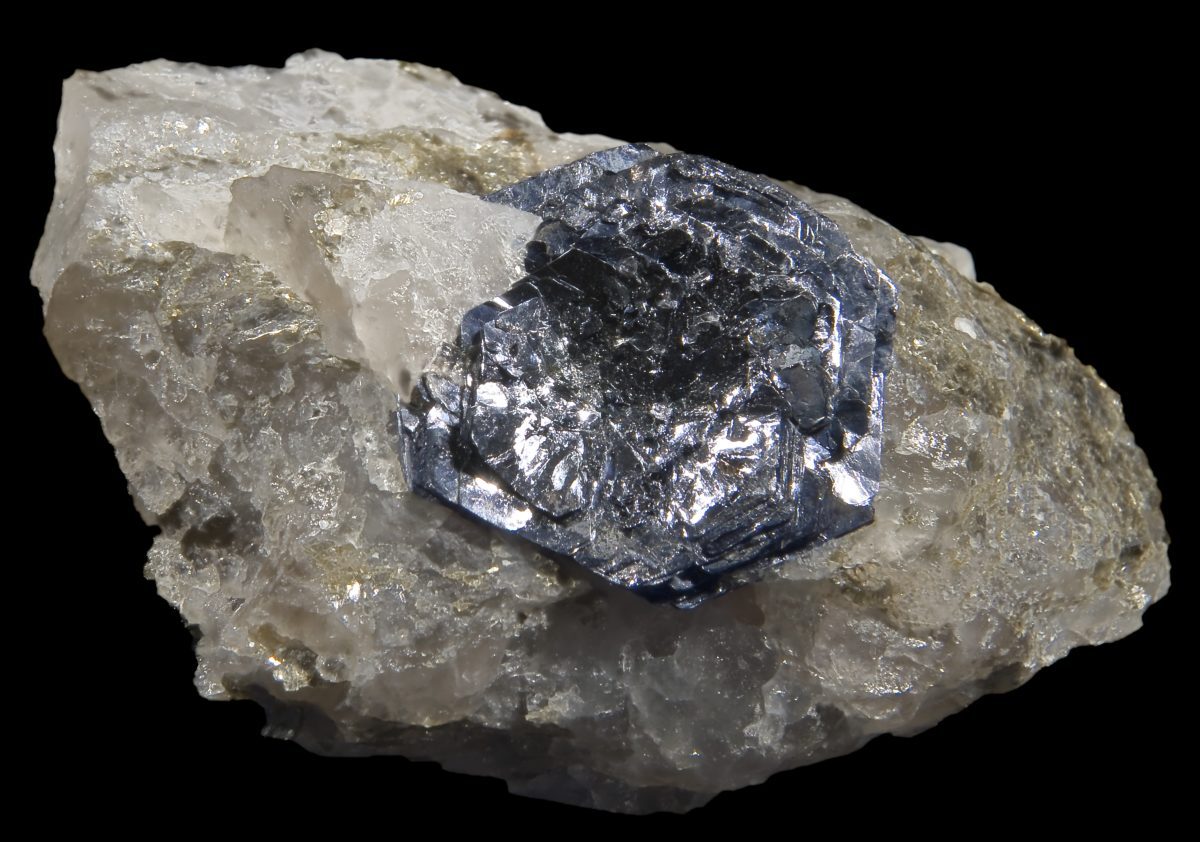
Molybdenite is the primary ore for the metal molybdenum. This is a principal material for producing specialty alloys, making them more resistant to corrosion and heat as well as harder and stronger. Molybdenite has physical similarities with graphite, causing the two to be confused. It is also used in electronics and for semiconductor and transistor material.
Uses & Applications
Molybdenite is typically used to make alloys like steel, which has many applications such as engines, heating elements, and saw blades. It conducts electricity, strengthens the metal it is added to, and is resistant to corrosion. It is also a lubricant additive, used in the ink for circuit boards and other pigments.
Healing Properties
Molybdenite is believed to empower creativity and encourage new ideas while providing a smooth passage necessary for achievement. This stone may encourage self-awareness, boost confidence, and enable one to shun old methods of thinking or patterns of bad behavior. It is connected to all of the chakras to promote health and well-being.
Market Value Factors
Pricing varies for every rock and mineral, so use these universal factors to gauge Molybdenite before comparing listings or appraisals.
Size & Weight
Larger, intact specimens usually command higher prices.
Rarity & Demand
Scarce material or popular varieties sell at a premium.
Condition & Finish
Chips, repairs, and heavy wear lower value; clean prep helps.
Treatment & Provenance
Untreated specimens with documented locality are prized.
Where to Find Molybdenite
RockHoundR, the free-to-download rockhounding map from the Ruby Glint team, shows where collectors find molybdenite in the US, with land-access notes for BLM land and national forests. Collecting is banned in national parks.
See where to find molybdeniteAlways check the local rules and get the landowner's permission before you collect.
Associated Chakras







Key Characteristics
Formation of Molybdenite
Molybdenite occurs in high temperature hydrothermal ore deposits. Its associated minerals include pyrite, chalcopyrite, quartz, anhydrite, fluorite, and scheelite. Important deposits include the disseminated porphyry molybdenum deposits at Questa, New Mexico and the Henderson and Climax mines in Colorado. Molybdenite also occurs in porphyry copper deposits of Arizona, Utah, and Mexico. The element rhenium is always present in molybdenite as a substitute for molybdenum, usually in the parts per million (ppm) range, but often up to 1–2%. High rhenium content results in a structural variety detectable by X-ray diffraction techniques. Molybdenite ores are essentially the only source for rhenium. The presence of the radioactive isotope rhenium-187 and its daughter isotope osmium-187 provides a useful geochronologic dating technique.
Health & Safety Information
- ⚠️Molybdenite dust is toxic because it contains heavy metals Molybdenum.
- ⚠️Molybdenite is considered low risk for typical human exposure, but it can be toxic to some animals, such as cattle and sheep. It's important to store it out of the reach of animals.
More Images
Quick Facts
Physical Properties
- Color
- Black, lead gray, gray
- Hardness (Mohs)
- 1 - 1.5
- Rock tumbling
- Not recommended
- Density
- 4.998 g/cm³
- Streak
- Bluish gray
- Luster
- Metallic
- Crystal System
- Hexagonal
Chemical Properties
- Chemical Formula
- MoS2
- Elements
- Mo, S
Also Known As
Identify Molybdenite Instantly
- Snap a photo, get instant results
- 6,700+ rocks, minerals & crystals
- Discover collecting spots near you
Molybdenite FAQs
How do I identify Molybdenite?
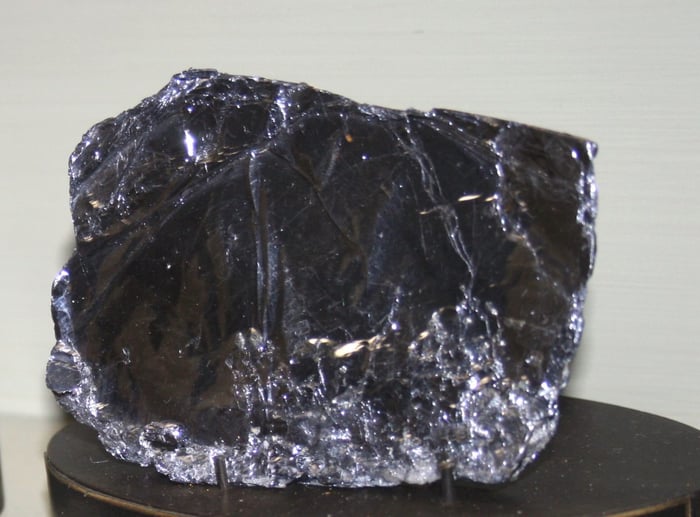
Molybdenite can be identified by its hardness of 1 - 1.5 on the Mohs scale, Black color, Metallic luster, Hexagonal crystal system. Look for these key characteristics when examining specimens.
What color is Molybdenite?
Molybdenite typically appears in Black, lead gray, gray. Color can vary depending on impurities and formation conditions.
How hard is Molybdenite?
Molybdenite has a hardness of 1 - 1.5 on the Mohs scale. This makes it a soft mineral that can be scratched easily.
What is the formation of molybdenite of Molybdenite?
Molybdenite occurs in high temperature hydrothermal ore deposits. Its associated minerals include pyrite, chalcopyrite, quartz, anhydrite, fluorite, and scheelite. Important deposits include the disseminated porphyry molybdenum deposits at Questa, New Mexico and the Henderson and Climax mines in Colorado. Molybdenite also occurs in porphyry copper deposits of Arizona, Utah, and Mexico. The element rhenium is always present in molybdenite as a substitute for molybdenum, usually in the parts per million (ppm) range, but often up to 1–2%. High rhenium content results in a structural variety detectable by X-ray diffraction techniques. Molybdenite ores are essentially the only source for rhenium. The presence of the radioactive isotope rhenium-187 and its daughter isotope osmium-187 provides a useful geochronologic dating technique.