Roselite
A variety of Roselite Group
What is Roselite?
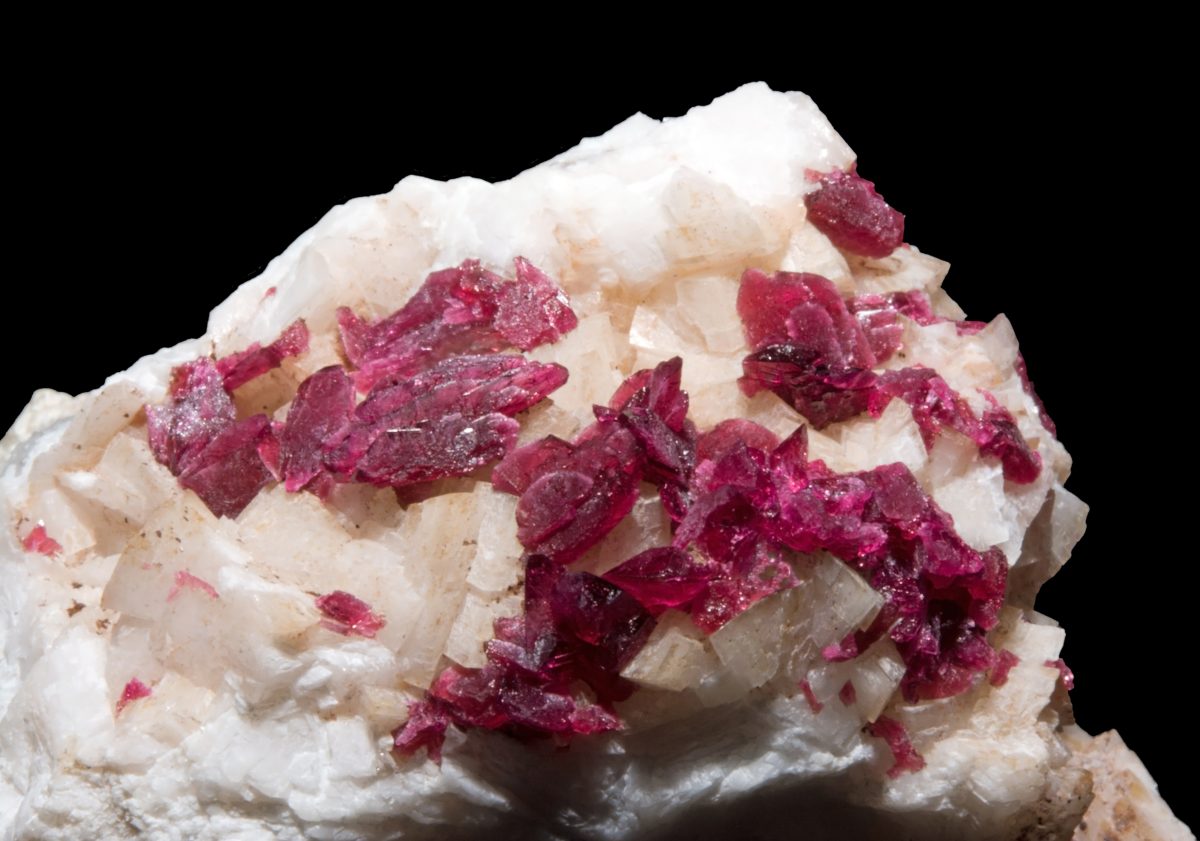
Roselite is a rare mineral that is so-named due to its deep magenta- or rose-hued crystals. Though it has no industrial uses, handsome specimens are sought after by collectors, and large crystals may be carved for jewelry or other ornamental pieces. Though found at several locales around the world, much roselite comes from Germany, where it was originally discovered and described.
Etymology & Origins
It was first described in 1825 for an occurrence in the Rappold mines of Schneeberg, Saxony, Germany and named by Armand Lévy after German mineralogist Gustav Rose.
Uses & Applications
Roselite is a rarely-occurring mineral, and thus few uses in human society. However, its beautiful rose-like color makes it highly desired for jewelry or decorative purposes, as well as a popular collector's gemstone. The small crystal size in which this mineral occurs means that its faceted gems are tiny, but they fetch a high price due to their striking color and rarity.
Healing Properties
Roselite is believed to help bond the physical, emotional, and spiritual characteristics of an individual. Some say that it will unlock the unconscious mind and allow for inner growth and transformation. It is said to enhance passion and encourage the love of another. It should be used at the second and fourth chakras for best practices.
Market Value Factors
Pricing varies for every rock and mineral, so use these universal factors to gauge Roselite before comparing listings or appraisals.
Size & Weight
Larger, intact specimens usually command higher prices.
Rarity & Demand
Scarce material or popular varieties sell at a premium.
Condition & Finish
Chips, repairs, and heavy wear lower value; clean prep helps.
Treatment & Provenance
Untreated specimens with documented locality are prized.
Associated Chakras

Key Characteristics
Rock Types of Roselite
The pleochroism of roselite depends on chemical composition with darker rose colored varieties being higher in cobalt content and lighter rose colored varieties are higher in calcium and magnesium content (Palache et al., 1960). This gives rise to two different pleochroism schemes, one for dark rose and one for light rose. Dark rose varieties have X: dark rose, Y: pale rose, Z: paler rose. Light rose varieties have X: pale rose, Y: paler rose, Z: palest rose.
Health & Safety Information
- ⚠️Roselite dust is toxic because it contains heavy metals Arsenic, Cobalt.
- ⚠️Arsenic, Cobalt
- ⚠️It's advisable to handle roselite carefully to avoid generating dust and wash hands thoroughly afterward. When cutting or polishing roselite, wear a dust mask to prevent inhaling heavy metal particles. Store roselite in a sealed container in a well-ventilated area, away from children and pets. For those involved in crystal healing, never put it in your mouth.
Quick Facts
Physical Properties
- Color
- Rose-red, pink, rose coloured in transmitted light
- Hardness (Mohs)
- 3.5
- Rock tumbling
- Not recommended
- Density
- 3.65 g/cm³
- Streak
- White to pale pink
- Luster
- Vitreous, Resinous, Sub-vitreous
- Crystal System
- Monoclinic
Chemical Properties
- Chemical Formula
- Ca2(Co2+,Mg)(AsO4)2 · 2H2O
- Elements
- As, Ca, Co, H, O
Identify Roselite Instantly
- Snap a photo, get instant results
- 6,700+ rocks, minerals & crystals
- Discover collecting spots near you
Roselite FAQs
How do I identify Roselite?
Roselite can be identified by its hardness of 3.5 on the Mohs scale, Rose-red color, Vitreous, Resinous, Sub-vitreous luster, Monoclinic crystal system. Look for these key characteristics when examining specimens.
What color is Roselite?
Roselite typically appears in Rose-red, pink, rose coloured in transmitted light. Color can vary depending on impurities and formation conditions.
How hard is Roselite?
Roselite has a hardness of 3.5 on the Mohs scale. This gives it moderate hardness.
What is the rock types of roselite of Roselite?
The pleochroism of roselite depends on chemical composition with darker rose colored varieties being higher in cobalt content and lighter rose colored varieties are higher in calcium and magnesium content (Palache et al., 1960). This gives rise to two different pleochroism schemes, one for dark rose and one for light rose. Dark rose varieties have X: dark rose, Y: pale rose, Z: paler rose. Light rose varieties have X: pale rose, Y: paler rose, Z: palest rose.