Wulfenite
A variety of Scheelite Group
What is Wulfenite?
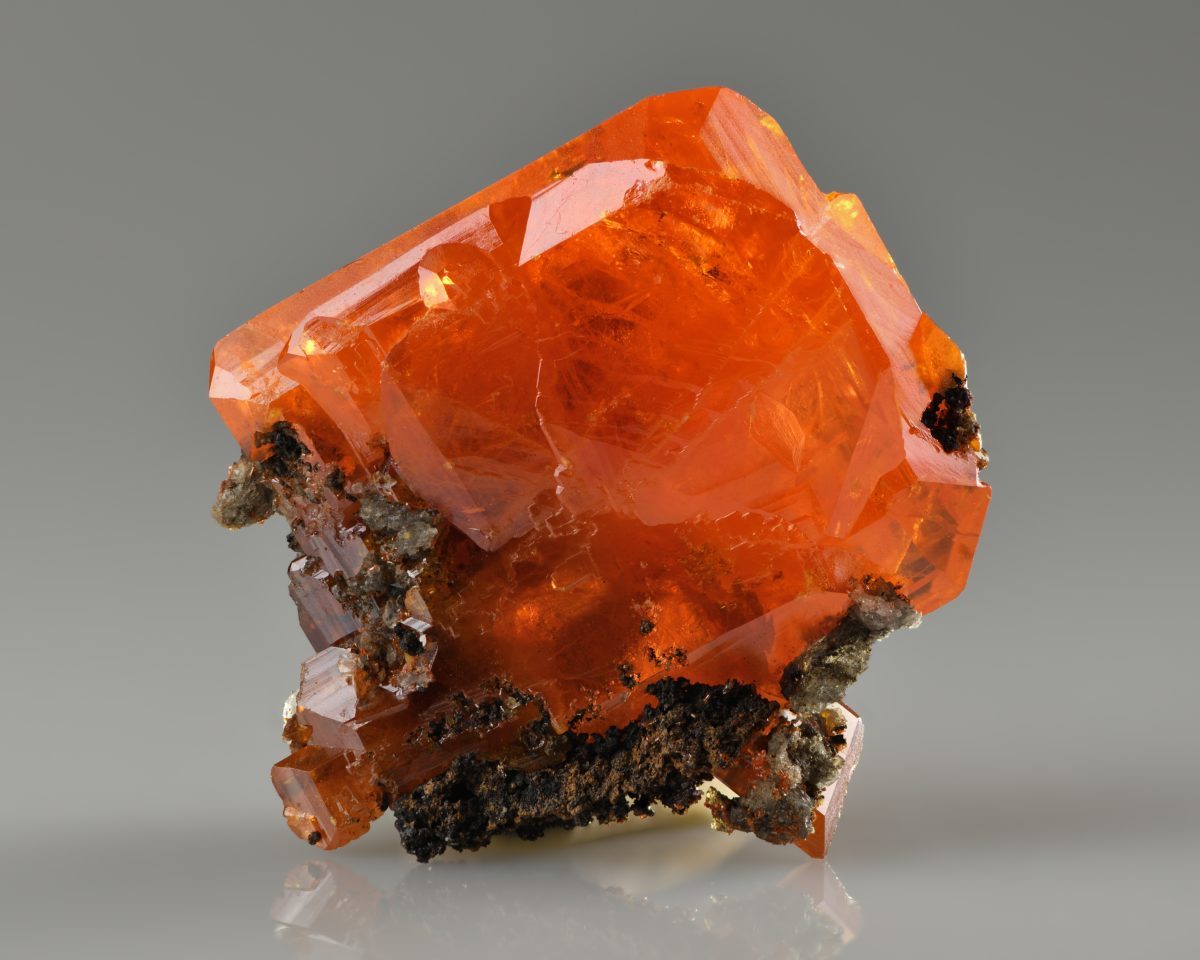
Wulfenite is incredibly common and easy to collect, with some of the most spectacular examples coming from areas of northern Mexico. It was first discovered in 1845 in Austria and named after a famed Austrian mineralogist. It is high in lead content, so use caution when handling this beautiful gem.
Uses & Applications
Wulfenite is a source of molybdenum in some areas. Molybdenum is used to increase the strength of alloys, as a lubricant additive, and in circuit board inks. This mineral is not commonly used for jewelry due to its softness, but is a popular specimen among collectors.
Healing Properties
Wulfenite is a stone that is said to work with the Crown chakra to encourage spiritual growth and wisdom. It is believed to help with depression and self-doubt. It encourages its user to remain steadfast even when surrounded by negative forces or tempting challenges. It enables the person to find courage and replace doubt with confidence. Most helpful for those seeking to break away from toxic behaviors and move forward to a greater purpose in life.
Optical Properties
- Refractive Index
- 2.280-2.405
- Birefringence
- 0.120-0.122
- Optical Character
- Uniaxial negative
Market Value Factors
Pricing varies for every rock and mineral, so use these universal factors to gauge Wulfenite before comparing listings or appraisals.
Size & Weight
Larger, intact specimens usually command higher prices.
Rarity & Demand
Scarce material or popular varieties sell at a premium.
Condition & Finish
Chips, repairs, and heavy wear lower value; clean prep helps.
Treatment & Provenance
Untreated specimens with documented locality are prized.
Associated Chakras


Key Characteristics
Characteristics of Wulfenite
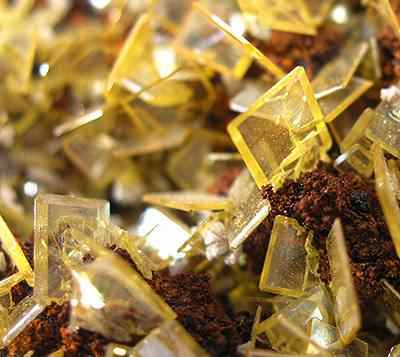
The crystals of wulfenite are usually more tabular and thinner than those of scheelite, however, the more pyramidal and prismatic crystals show distinct hemimorphism.
Formation of Wulfenite
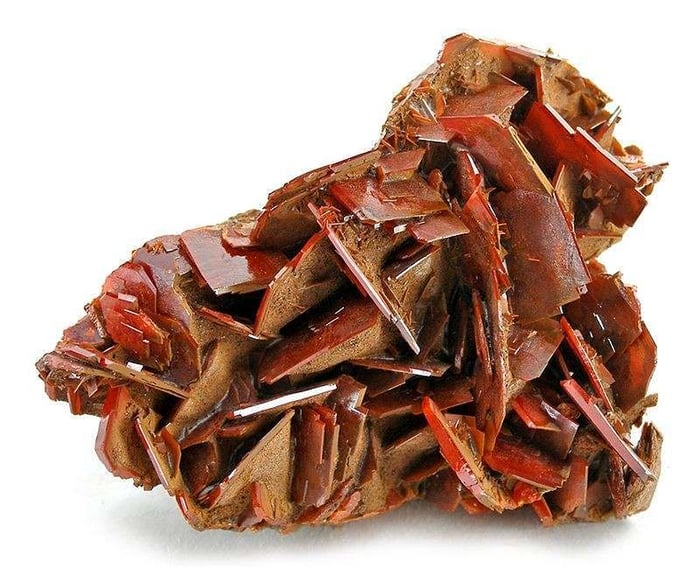
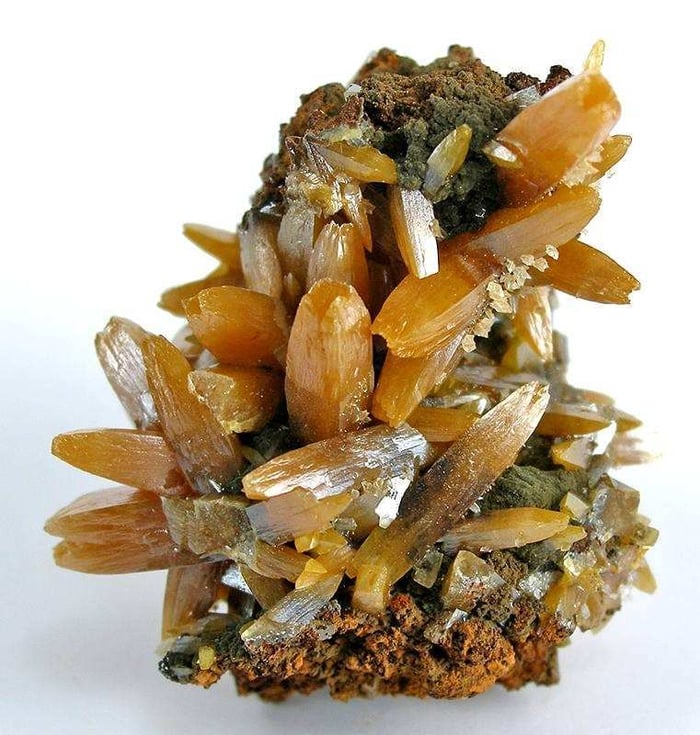
Wulfenite was first described in 1845 for an occurrence in Bad Bleiberg, Carinthia, Austria. It was named for Franz Xavier von Wulfen (1728–1805), an Austrian mineralogist. It occurs as a secondary mineral in oxidized hydrothermal lead deposits. It occurs with cerussite, anglesite, smithsonite, hemimorphite, vanadinite, pyromorphite, mimetite, descloizite, plattnerite and various iron and manganese oxides. A noted locality for wulfenite is the Red Cloud Mine in Arizona. Crystals are deep red in color and usually very well-formed. The Los Lamentos locality in Mexico produced very thick tabular orange crystals. Another locality is Mount Peca in Slovenia. The crystals are yellow, often with well-developed pyramids and bipyramids. In 1997, the crystal was depicted on a stamp by the Post of Slovenia. Lesser known localities of wulfenite include: Sherman Tunnel, St. Peter's Dome, Tincup-Tomichi-Moncarch mining districts, Pride of America mine and Bandora mine in Colorado. Small crystals also occur in Bulwell and Kirkby-in-Ashfield, England. These crystals occur in a galena-wulfenite-uraniferous asphaltite horizon in a magnesian limestone. The wulfenite found in this area is similar in properties (paragenetic sequence, low silver and antimony contents of the galenas and absence of pyromorphite) to the wulfenites of the Alps and may be similar in origin.
Health & Safety Information
- ⚠️Wulfenite dust is toxic because it contains heavy metals Lead.
- ⚠️Lead
- ⚠️It's advisable to handle wulfenite carefully to avoid generating dust and wash hands thoroughly afterward. When cutting or polishing wulfenite, wear a dust mask to prevent inhaling heavy metal particles. Store wulfenite in a sealed container in a well-ventilated area, away from children and pets. For those involved in crystal healing, never put it in your mouth.
More Images
Quick Facts
Physical Properties
- Color
- Orange-yellow, yellow, honey-yellow, reddish-orange, rarely colourless, grey, brown, olive-green, black
- Hardness (Mohs)
- 2.5 - 3
- Rock tumbling
- Not recommended
- Density
- 6.88 g/cm³
- Streak
- White
- Luster
- Resinous, Adamantine, Sub-adamantine
- Crystal System
- Tetragonal
Chemical Properties
- Chemical Formula
- Pb(MoO4)
- Elements
- Mo, O, Pb
Also Known As
Identify Wulfenite Instantly
- Snap a photo, get instant results
- 6,700+ rocks, minerals & crystals
- Discover collecting spots near you
Wulfenite FAQs
How do I identify Wulfenite?
Wulfenite can be identified by its hardness of 2.5 - 3 on the Mohs scale, Orange-yellow color, Resinous, Adamantine, Sub-adamantine luster, Tetragonal crystal system. Look for these key characteristics when examining specimens.
What color is Wulfenite?
Wulfenite typically appears in Orange-yellow, yellow, honey-yellow, reddish-orange, rarely colourless, grey, brown, olive-green, black. Color can vary depending on impurities and formation conditions.
How hard is Wulfenite?
Wulfenite has a hardness of 2.5 - 3 on the Mohs scale. This makes it a soft mineral that can be scratched easily.
What is the characteristics of wulfenite of Wulfenite?
The crystals of wulfenite are usually more tabular and thinner than those of scheelite, however, the more pyramidal and prismatic crystals show distinct hemimorphism.
What is the formation of wulfenite of Wulfenite?
Wulfenite was first described in 1845 for an occurrence in Bad Bleiberg, Carinthia, Austria. It was named for Franz Xavier von Wulfen (1728–1805), an Austrian mineralogist. It occurs as a secondary mineral in oxidized hydrothermal lead deposits. It occurs with cerussite, anglesite, smithsonite, hemimorphite, vanadinite, pyromorphite, mimetite, descloizite, plattnerite and various iron and manganese oxides. A noted locality for wulfenite is the Red Cloud Mine in Arizona. Crystals are deep red in color and usually very well-formed. The Los Lamentos locality in Mexico produced very thick tabular orange crystals. Another locality is Mount Peca in Slovenia. The crystals are yellow, often with well-developed pyramids and bipyramids. In 1997, the crystal was depicted on a stamp by the Post of Slovenia. Lesser known localities of wulfenite include: Sherman Tunnel, St. Peter's Dome, Tincup-Tomichi-Moncarch mining districts, Pride of America mine and Bandora mine in Colorado. Small crystals also occur in Bulwell and Kirkby-in-Ashfield, England. These crystals occur in a galena-wulfenite-uraniferous asphaltite horizon in a magnesian limestone. The wulfenite found in this area is similar in properties (paragenetic sequence, low silver and antimony contents of the galenas and absence of pyromorphite) to the wulfenites of the Alps and may be similar in origin.

