Zektzerite
A variety of Tuhualite Group

What is Zektzerite?
The mineral zektzerite is a member of the tuhualite group and was first found in 1966 by Seattle mineralogist Benjamin Bartlett "Bart" Cannon. It was discovered in the Willow creek basin below Silver Star mountain in miarolitic cavities within the alkaline arfvedsonite granite phase of the Golden Horn batholith, Okanogan County, Washington. It is named for Jack Zektzer (born 1936), mathematician and mineral collector of Seattle, Washington. The mineral was misidentified as alkali beryl (morganite) at that time. Subsequently, in September, 1975, additional specimens of the mineral were found in a float boulder on the north side of Kangaroo Ridge at an approximate elevation of 6500 feet; it was recognized that the material was not beryl.
Optical Properties
- Refractive Index
- 1.582-1.585
- Birefringence
- 0.003
- Optical Character
- Biaxial negative
Market Value Factors
Pricing varies for every rock and mineral, so use these universal factors to gauge Zektzerite before comparing listings or appraisals.
Size & Weight
Larger, intact specimens usually command higher prices.
Rarity & Demand
Scarce material or popular varieties sell at a premium.
Condition & Finish
Chips, repairs, and heavy wear lower value; clean prep helps.
Treatment & Provenance
Untreated specimens with documented locality are prized.
Key Characteristics
Characteristics of Zektzerite
Synthesis: by fusion of Li2CO3, Na2CO3, SiO2, ZrO2. The resulting material has a brilliant blue white fluorescence under short wave ultraviolet light.
Formation of Zektzerite
Zektzerite is a mineral of agpaitic granites with arfvedsonite. It occurs with smoky quartz, microcline, okanoganite, sogdianite, astrophyllite, and zircon. It is found in cavities as euhedral crystals in the agpaitic-granite phase of the Golden Horn batholith, Okanogan County, Washington. It also occurs in blocks of pegmatite as rock-forming grains in a moraine of the Dara Pioz glacier in northern Tajikistan; in the Del Salto pluton in Aysén Province, Chile;as euhedral crystals at Virikkollen, Haneholmveien, Sandefjord, Norway; Ampasibitika, Ampasindava Peninsula, Madagascar; and as gemmy crystals up to 3 cm from Mt. Malosa Malawi.
Quick Facts
Physical Properties
- Color
- Colourless, pink
- Hardness (Mohs)
- 6
- Rock tumbling
- With care
- Streak
- White
Chemical Properties
- Chemical Formula
- LiNaZrSi6O15
- Elements
- Li, Na, O, Si, Zr
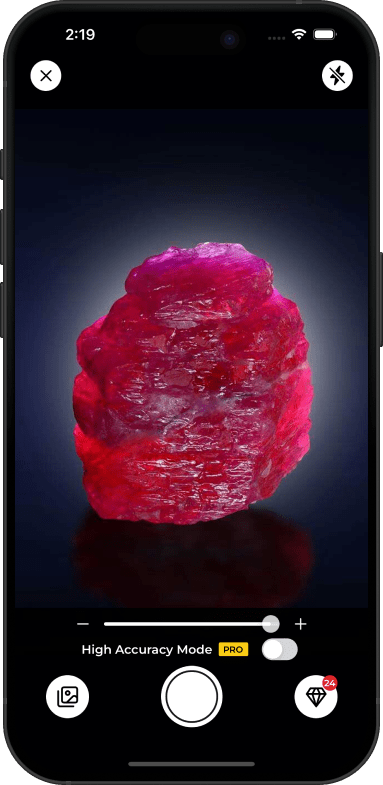
Identify Zektzerite Instantly
- Snap a photo, get instant results
- 6,700+ rocks, minerals & crystals
- Discover collecting spots near you
Zektzerite FAQs
How do I identify Zektzerite?
Zektzerite can be identified by its hardness of 6 on the Mohs scale, Colourless color. Look for these key characteristics when examining specimens.
What color is Zektzerite?
Zektzerite typically appears in Colourless, pink. Color can vary depending on impurities and formation conditions.
How hard is Zektzerite?
Zektzerite has a hardness of 6 on the Mohs scale. This gives it moderate hardness.
What is the characteristics of zektzerite of Zektzerite?
Synthesis: by fusion of Li2CO3, Na2CO3, SiO2, ZrO2. The resulting material has a brilliant blue white fluorescence under short wave ultraviolet light.
What is the formation of zektzerite of Zektzerite?
Zektzerite is a mineral of agpaitic granites with arfvedsonite. It occurs with smoky quartz, microcline, okanoganite, sogdianite, astrophyllite, and zircon. It is found in cavities as euhedral crystals in the agpaitic-granite phase of the Golden Horn batholith, Okanogan County, Washington. It also occurs in blocks of pegmatite as rock-forming grains in a moraine of the Dara Pioz glacier in northern Tajikistan; in the Del Salto pluton in Aysén Province, Chile;as euhedral crystals at Virikkollen, Haneholmveien, Sandefjord, Norway; Ampasibitika, Ampasindava Peninsula, Madagascar; and as gemmy crystals up to 3 cm from Mt. Malosa Malawi.