Cassiterite
A variety of Rutile Group
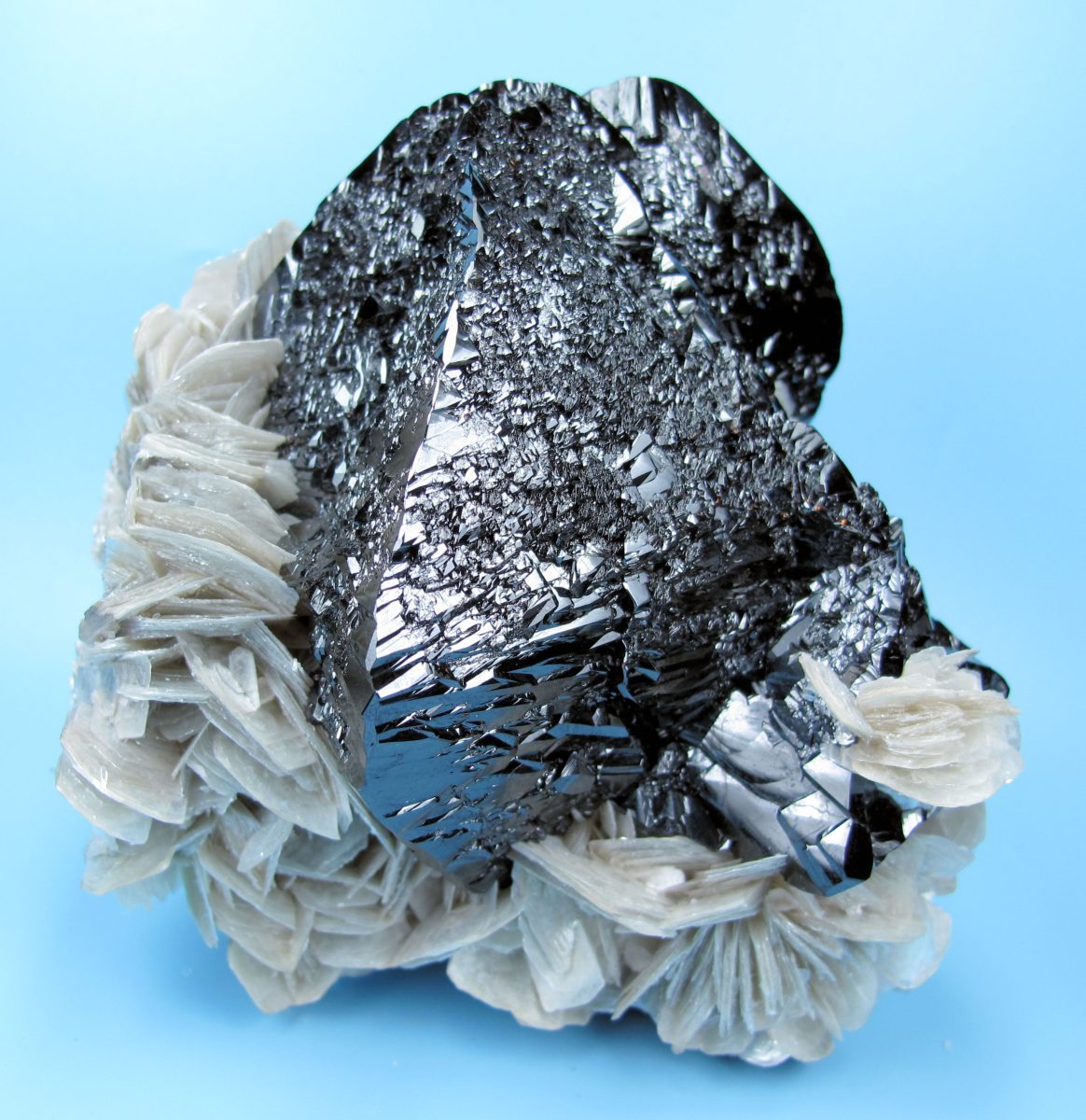
What is Cassiterite?
Cassiterite is a vital mineral that is the world's foremost source of tin. To get to usable forms of cassiterite, miners must excavate deep into the earth, where they can find masses snuggled up against geothermal veins. It can be completely clear when pure, but the presence of iron can turn it brown or black.
Etymology & Origins
The name derives from the Greek kassiteros for "tin": this comes from the Phoenician word Cassiterid referring to the islands of Ireland and Great Britain, the ancient sources of tin; or, as Roman Ghirshman (1954) suggests, from the region of the Kassites, an ancient people in west and central Iran.
Uses & Applications
Cassiterite is the most important source of tin in the world. Tin is an essential metal used in plates, cans, containers, solders, and polishing compounds and alloys. More attractive specimens of cassiterite are used as gemstones, either in jewelry or mineral collections.
Healing Properties
Cassiterite offers much healing for those overcoming feelings of rejection, helping them to release the negative energy and allowing spiritual growth. The stone is powerful enough that even small pieces are useful for protection against danger. Often found beneficial when a person is facing death, it has been said to help alleviate the fear one might feel when passing from this world to the next.
Optical Properties
- Refractive Index
- 1.990-2.105
- Birefringence
- 0.096-0.098
- Pleochroism
- Weak to strong: green-yellow, brown, red-brown
- Optical Character
- Biaxial positive
- Dispersion
- 0.071
Market Value Factors
Pricing varies for every rock and mineral, so use these universal factors to gauge Cassiterite before comparing listings or appraisals.
Size & Weight
Larger, intact specimens usually command higher prices.
Rarity & Demand
Scarce material or popular varieties sell at a premium.
Condition & Finish
Chips, repairs, and heavy wear lower value; clean prep helps.
Treatment & Provenance
Untreated specimens with documented locality are prized.
Associated Chakras

Key Characteristics
Formation of Cassiterite
Most sources of cassiterite today are found in alluvial or placer deposits containing the resistant weathered grains. The best sources of primary cassiterite are found in the tin mines of Bolivia, where it is found in hydrothermal veins. Rwanda has a nascent cassiterite mining industry. Fighting over cassiterite deposits (particularly in Walikale) is a major cause of the conflict waged in eastern parts of the Democratic Republic of the Congo. This has led to cassiterite being considered a conflict mineral. Cassiterite is a widespread minor constituent of igneous rocks. The Bolivian veins and the old exhausted workings of Cornwall, England, are concentrated in high temperature quartz veins and pegmatites associated with granitic intrusives. The veins commonly contain tourmaline, topaz, fluorite, apatite, wolframite, molybdenite, and arsenopyrite. The mineral occurs extensively in Cornwall as surface deposits on Bodmin Moor, for example, where there are extensive traces of an hydraulic mining method known as streaming. The current major tin production comes from placer or alluvial deposits in Malaysia, Thailand, Indonesia, the Maakhir region of Somalia, and Russia. Hydraulic mining methods are used to concentrate mined ore, a process which relies on the high specific gravity of the SnO2 ore, of about 7.0.
More Images
Quick Facts
Physical Properties
- Color
- Black, yellow, brown, red, white
- Hardness (Mohs)
- 6 - 7
- Rock tumbling
- With care
- Density
- 6.993 g/cm³
- Streak
- Brownish white, white, greyish
- Luster
- Greasy, Metallic, Adamantine
- Crystal System
- Tetragonal
Chemical Properties
- Chemical Formula
- SnO2
- Elements
- O, Sn
Also Known As
Identify Cassiterite Instantly
- Snap a photo, get instant results
- 6,700+ rocks, minerals & crystals
- Discover collecting spots near you
Cassiterite FAQs
How do I identify Cassiterite?
Cassiterite can be identified by its hardness of 6 - 7 on the Mohs scale, Black color, Greasy, Metallic, Adamantine luster, Tetragonal crystal system. Look for these key characteristics when examining specimens.
What color is Cassiterite?
Cassiterite typically appears in Black, yellow, brown, red, white. Color can vary depending on impurities and formation conditions.
How hard is Cassiterite?
Cassiterite has a hardness of 6 - 7 on the Mohs scale. This gives it moderate hardness.
What is the formation of cassiterite of Cassiterite?
Most sources of cassiterite today are found in alluvial or placer deposits containing the resistant weathered grains. The best sources of primary cassiterite are found in the tin mines of Bolivia, where it is found in hydrothermal veins. Rwanda has a nascent cassiterite mining industry. Fighting over cassiterite deposits (particularly in Walikale) is a major cause of the conflict waged in eastern parts of the Democratic Republic of the Congo. This has led to cassiterite being considered a conflict mineral. Cassiterite is a widespread minor constituent of igneous rocks. The Bolivian veins and the old exhausted workings of Cornwall, England, are concentrated in high temperature quartz veins and pegmatites associated with granitic intrusives. The veins commonly contain tourmaline, topaz, fluorite, apatite, wolframite, molybdenite, and arsenopyrite. The mineral occurs extensively in Cornwall as surface deposits on Bodmin Moor, for example, where there are extensive traces of an hydraulic mining method known as streaming. The current major tin production comes from placer or alluvial deposits in Malaysia, Thailand, Indonesia, the Maakhir region of Somalia, and Russia. Hydraulic mining methods are used to concentrate mined ore, a process which relies on the high specific gravity of the SnO2 ore, of about 7.0.

