Ephesite
A variety of Trioctahedral micas Group
What is Ephesite?
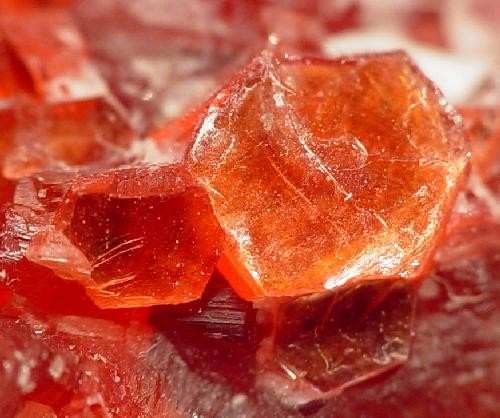
Ephesite is a rare member of the mica silicate mineral group, phyllosilicate. It is restricted to quartz-free, alumina rich mineral assemblages and has been found in South African deposits in the Postmasburg district as well as Ephesus, Turkey.
Market Value Factors
Pricing varies for every rock and mineral, so use these universal factors to gauge Ephesite before comparing listings or appraisals.
Size & Weight
Larger, intact specimens usually command higher prices.
Rarity & Demand
Scarce material or popular varieties sell at a premium.
Condition & Finish
Chips, repairs, and heavy wear lower value; clean prep helps.
Treatment & Provenance
Untreated specimens with documented locality are prized.
Key Characteristics
Characteristics of Ephesite
Ephesite found in its natural state is translucent and pink in color. It has a vitreous luster and pearly on the cleavages. Categorized as a triclinic crystal system and belongs with the point group 1 symmetry elements, this crystal class includes a one-fold rotation with or without inversion. As a group the micas are characterized by their perfect basal cleavage, giving thin, flexible, and elastic cleavage plates. Crystals are usually tabular with prominent basal planes and hexagonal in outline. Ephesite has been found as 2M1 and 1M polytype series and shows perfect cleavage on the {001} axis.
Composition of Ephesite
Ephesite has an ideal chemical formula of NaLiAl2(Al2Si2)O10(OH)2. Ephesite and paragonite are closely related due to their substitution of sodium in place of potassium. The general form of most micas, which can vary such as in the place of ephesite, can be written as W(X,Y)2-3Z4O10(OH,F)2 as observed by many sources. In the case of ephesite the W compound is sodium and the (X,Y) is lithium and aluminium, it also bears two hydroxides as the end members.
Quick Facts
Physical Properties
- Color
- Translucent pink
- Hardness (Mohs)
- 3.5 - 4.5
- Rock tumbling
- Not recommended
Chemical Properties
- Chemical Formula
- NaLiAl2(Al2Si2O10)(OH)2
- Elements
- Al, H, Li, Na, O, Si
Also Known As
Identify Ephesite Instantly
- Snap a photo, get instant results
- 6,700+ rocks, minerals & crystals
- Discover collecting spots near you
Ephesite FAQs
How do I identify Ephesite?
Ephesite can be identified by its hardness of 3.5 - 4.5 on the Mohs scale, Translucent pink color. Look for these key characteristics when examining specimens.
What color is Ephesite?
Ephesite typically appears in Translucent pink. Color can vary depending on impurities and formation conditions.
How hard is Ephesite?
Ephesite has a hardness of 3.5 - 4.5 on the Mohs scale. This gives it moderate hardness.
What is the characteristics of ephesite of Ephesite?
Ephesite found in its natural state is translucent and pink in color. It has a vitreous luster and pearly on the cleavages. Categorized as a triclinic crystal system and belongs with the point group 1 symmetry elements, this crystal class includes a one-fold rotation with or without inversion. As a group the micas are characterized by their perfect basal cleavage, giving thin, flexible, and elastic cleavage plates. Crystals are usually tabular with prominent basal planes and hexagonal in outline. Ephesite has been found as 2M1 and 1M polytype series and shows perfect cleavage on the {001} axis.
What is the composition of ephesite of Ephesite?
Ephesite has an ideal chemical formula of NaLiAl2(Al2Si2)O10(OH)2. Ephesite and paragonite are closely related due to their substitution of sodium in place of potassium. The general form of most micas, which can vary such as in the place of ephesite, can be written as W(X,Y)2-3Z4O10(OH,F)2 as observed by many sources. In the case of ephesite the W compound is sodium and the (X,Y) is lithium and aluminium, it also bears two hydroxides as the end members.
