Magnetite
A variety of Spinel Subgroup

What is Magnetite?
A well-known and very common mineral, magnetite is an iron oxide similar to Hematite, but it differs by both its coloration and magnetic properties. Magnetite is the most strongly magnetic mineral in nature. Its particles can be picked up with a magnet, while some specimens are naturally magnetic themselves, called "lodestones." This mineral is the most common ore of iron and can be found in all three types of rock.
Uses & Applications
Magnetite is a principal and important iron ore. As the name suggests, it is also magnetic and can sometimes be used as a magnet in its naturally-occurring form. These pieces are called lodestone. It is commonly reduced to pig iron to be made into steel, and is also used in magnetic recording and some coal mining processes.
Healing Properties
Magnetite is a powerful stone that believers use to help a person attract the things, people, and situations they most desire for their life. Often referred to as lodestone, it has natural magnetic properties. When placed on the Crown and Root chakras it will align all of the chakras and bring a sense of balance throughout the body. Wear it daily for psychic protection and increased mental clarity.
Optical Properties
- Refractive Index
- 2.42
- Optical Character
- Isotropic
Market Value Factors
Pricing varies for every rock and mineral, so use these universal factors to gauge Magnetite before comparing listings or appraisals.
Size & Weight
Larger, intact specimens usually command higher prices.
Rarity & Demand
Scarce material or popular varieties sell at a premium.
Condition & Finish
Chips, repairs, and heavy wear lower value; clean prep helps.
Treatment & Provenance
Untreated specimens with documented locality are prized.
Where to Find Magnetite
RockHoundR, the free-to-download rockhounding map from the Ruby Glint team, shows where collectors find magnetite in the US, with land-access notes for BLM land and national forests. Collecting is banned in national parks.
See where to find magnetiteAlways check the local rules and get the landowner's permission before you collect.
The Meaning
Magnetite is part of ancient Greek myth that relates the story of a Greek shepherd in today's southern Turkey who came across some mysterious black stones. The iron tip of his staff was oddly drawn to these stones. They were made of magnetite, and had a magnetic attraction to the iron.
Associated Chakras







Key Characteristics
Characteristics of Magnetite
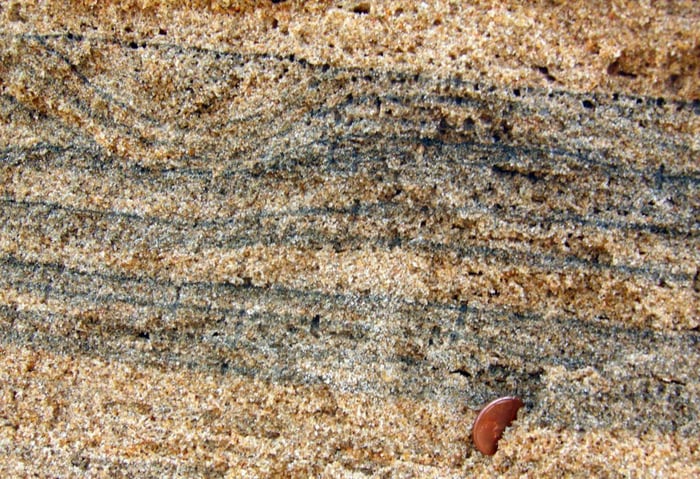
In addition to igneous rocks, magnetite also occurs in sedimentary rocks, including banded iron formations and in lake and marine sediments as both detrital grains and as magnetofossils. Magnetite nanoparticles are also thought to form in soils, where they probably oxidize rapidly to maghemite.
Formation of Magnetite
Biomagnetism is usually related to the presence of biogenic crystals of magnetite, which occur widely in organisms. These organisms range from bacteria (e.g., Magnetospirillum magnetotacticum) to animals, including humans, where magnetite crystals (and other magnetically-sensitive compounds) are found in different organs, depending on the species. Biomagnetites account for the effects of weak magnetic fields on biological systems. There is also a chemical basis for cellular sensitivity to electric and magnetic fields (galvanotaxis). Pure magnetite particles are biomineralized in magnetosomes, which are produced by several species of magnetotactic bacteria. Magnetosomes consist of long chains of oriented magnetite particle that are used by bacteria for navigation. After the death of these bacteria, the magnetite particles in magnetosomes may be preserved in sediments as magnetofossils. Some types of anaerobic bacteria that are not magnetotactic can also create magnetite in oxygen free sediments by reducing amorphic ferric oxide to magnetite. Several species of birds are known to incorporate magnetite crystals in the upper beak for magnetoreception, which (in conjunction with cryptochromes in the retina) gives them the ability to sense the direction, polarity, and magnitude of the ambient magnetic field. Chitons, a type of mollusk, have a tongue-like structure known as a radula, covered with magnetite-coated teeth, or denticles. The hardness of the magnetite helps in breaking down food, and its magnetic properties may additionally aid in navigation. Biological magnetite may store information about the magnetic fields the organism was exposed to, potentially allowing scientists to learn about the migration of the organism or about changes in the Earth's magnetic field over time.
Composition of Magnetite
The chemical composition of magnetite is FeFe2O4. The main details of its structure were established in 1915. It was one of the first crystal structures to be obtained using X-ray diffraction. The structure is inverse spinel, with O ions forming a face-centered cubic lattice and iron cations occupying interstitial sites. Half of the Fe cations occupy tetrahedral sites while the other half, along with Fe cations, occupy octahedral sites. The unit cell consists of 32 O ions and unit cell length is a = 0.839 nm. Magnetite contains both ferrous and ferric iron, requiring environments containing intermediate levels of oxygen availability to form. Magnetite differs from most other iron oxides in that it contains both divalent and trivalent iron. As a member of the spinel group, magnetite can form solid solutions with similarly structured minerals, including ulvospinel (Fe2TiO4), hercynite (FeAl2O4) and chromite (FeCr2O4). Titanomagnetite, also known as titaniferous magnetite, is a solid solution between magnetite and ulvospinel that crystallizes in many mafic igneous rocks. Titanomagnetite may undergo oxyexsolution during cooling, resulting in ingrowths of magnetite and ilmenite.
More Images

Quick Facts
Physical Properties
- Color
- Greyish black or iron black
- Hardness (Mohs)
- 5.5 - 6.5
- Rock tumbling
- With care
- Density
- 5.2 g/cm³
- Streak
- Black
- Luster
- Metallic
- Crystal System
- Isometric
Chemical Properties
- Chemical Formula
- Fe2+Fe3+2O4
- Elements
- Fe, O
Also Known As
Identify Magnetite Instantly
- Snap a photo, get instant results
- 6,700+ rocks, minerals & crystals
- Discover collecting spots near you
Magnetite FAQs
How do I identify Magnetite?
Magnetite can be identified by its hardness of 5.5 - 6.5 on the Mohs scale, Greyish black or iron black color, Metallic luster, Isometric crystal system. Look for these key characteristics when examining specimens.
What color is Magnetite?
Magnetite typically appears in Greyish black or iron black. Color can vary depending on impurities and formation conditions.
How hard is Magnetite?
Magnetite has a hardness of 5.5 - 6.5 on the Mohs scale. This gives it moderate hardness.
What is the characteristics of magnetite of Magnetite?
In addition to igneous rocks, magnetite also occurs in sedimentary rocks, including banded iron formations and in lake and marine sediments as both detrital grains and as magnetofossils. Magnetite nanoparticles are also thought to form in soils, where they probably oxidize rapidly to maghemite.
What is the formation of magnetite of Magnetite?
Biomagnetism is usually related to the presence of biogenic crystals of magnetite, which occur widely in organisms. These organisms range from bacteria (e.g., Magnetospirillum magnetotacticum) to animals, including humans, where magnetite crystals (and other magnetically-sensitive compounds) are found in different organs, depending on the species. Biomagnetites account for the effects of weak magnetic fields on biological systems. There is also a chemical basis for cellular sensitivity to electric and magnetic fields (galvanotaxis). Pure magnetite particles are biomineralized in magnetosomes, which are produced by several species of magnetotactic bacteria. Magnetosomes consist of long chains of oriented magnetite particle that are used by bacteria for navigation. After the death of these bacteria, the magnetite particles in magnetosomes may be preserved in sediments as magnetofossils. Some types of anaerobic bacteria that are not magnetotactic can also create magnetite in oxygen free sediments by reducing amorphic ferric oxide to magnetite. Several species of birds are known to incorporate magnetite crystals in the upper beak for magnetoreception, which (in conjunction with cryptochromes in the retina) gives them the ability to sense the direction, polarity, and magnitude of the ambient magnetic field. Chitons, a type of mollusk, have a tongue-like structure known as a radula, covered with magnetite-coated teeth, or denticles. The hardness of the magnetite helps in breaking down food, and its magnetic properties may additionally aid in navigation. Biological magnetite may store information about the magnetic fields the organism was exposed to, potentially allowing scientists to learn about the migration of the organism or about changes in the Earth's magnetic field over time.
What is the composition of magnetite of Magnetite?
The chemical composition of magnetite is FeFe2O4. The main details of its structure were established in 1915. It was one of the first crystal structures to be obtained using X-ray diffraction. The structure is inverse spinel, with O ions forming a face-centered cubic lattice and iron cations occupying interstitial sites. Half of the Fe cations occupy tetrahedral sites while the other half, along with Fe cations, occupy octahedral sites. The unit cell consists of 32 O ions and unit cell length is a = 0.839 nm. Magnetite contains both ferrous and ferric iron, requiring environments containing intermediate levels of oxygen availability to form. Magnetite differs from most other iron oxides in that it contains both divalent and trivalent iron. As a member of the spinel group, magnetite can form solid solutions with similarly structured minerals, including ulvospinel (Fe2TiO4), hercynite (FeAl2O4) and chromite (FeCr2O4). Titanomagnetite, also known as titaniferous magnetite, is a solid solution between magnetite and ulvospinel that crystallizes in many mafic igneous rocks. Titanomagnetite may undergo oxyexsolution during cooling, resulting in ingrowths of magnetite and ilmenite.