Spinel
A variety of Spinel Subgroup
What is Spinel?
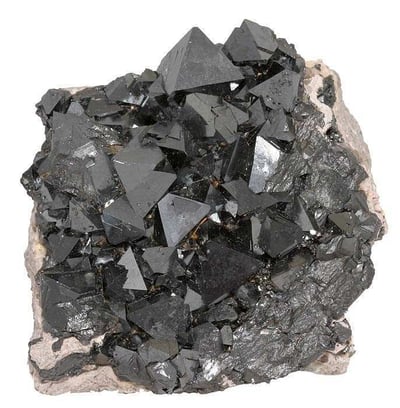
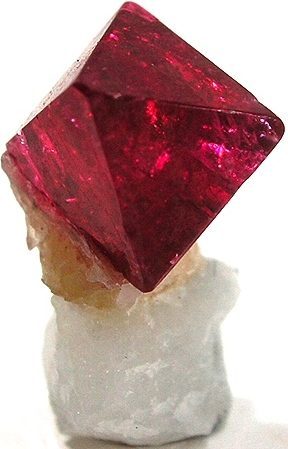
Spinel is a rare mineral that has been used decoratively since ancient times. Spinels can take on a wide array of hues (though they are most often blue, red, or green in color), they are hard, and they cut and polish well - each of these traits combining to make them excellent gemstones. Natural crystals may also be quite impressive, with large, colorful octohedral specimens being sought after by collectors.
Etymology & Origins
Its name comes from the Latin word spinella, which means spine in reference to its pointed crystals.
Uses & Applications
Spinel is may be carved as a gemstone, and in that guise has often been mistaken for ruby. Occasionally, spinel also has somewhat magnetic properties, and historically was used in compasses in order to tell directions.
Healing Properties
Spinel is believed to help relieve stress and restore vitality. Many use it to detoxify their mind, body, and spirit. Often used by workaholics, it allows the individual to achieve success while still remaining humble. It is said that the stone will boost creativity, allow greater mental clarity, and open your heart to kindness and compassion.
Optical Properties
- Refractive Index
- 1.710-1.735
- Pleochroism
- None
- Optical Character
- Isotropic
- Dispersion
- 0.02
Discover Values
This stone excels in beauty.
Market Value Factors
Pricing varies for every rock and mineral, so use these universal factors to gauge Spinel before comparing listings or appraisals.
Size & Weight
Larger, intact specimens usually command higher prices.
Rarity & Demand
Scarce material or popular varieties sell at a premium.
Condition & Finish
Chips, repairs, and heavy wear lower value; clean prep helps.
Treatment & Provenance
Untreated specimens with documented locality are prized.
The Meaning
A historically important mineral, spinel was often confused with other gems, particularly ruby. Called "balas rubies", these stones were treasured as true rubies. The most famous example of this misidentification is a so-called "Black Prince's Ruby", mined in the 14th century and set in England’s Imperial State Crown and now displayed in the Tower of London.
Associated Chakras
Key Characteristics
Characteristics of Spinel
Spinel crystallizes in the isometric system; common crystal forms are octahedra, usually twinned. It has an imperfect octahedral cleavage and a conchoidal fracture. Its hardness is 8, its specific gravity is 3.5–4.1, and it is transparent to opaque with a vitreous to dull luster. It may be colorless, but is usually various shades of pink, rose, red, blue, green, yellow, brown, black, or (uncommon) violet. There is a unique natural white spinel, now lost, that surfaced briefly in what is now Sri Lanka. Some spinels are among the most famous gemstones; among them are the Black Prince's Ruby and the "Timur ruby" in the British Crown Jewels, and the "Côte de Bretagne", formerly from the French Crown jewels. The Samarian Spinel is the largest known spinel in the world, weighing 500 carats (100 g). The transparent red spinels were called spinel-rubies or balas rubies. In the past, before the arrival of modern science, spinels and rubies were equally known as rubies. After the 18th century the word ruby was only used for the red gem variety of the mineral corundum and the word spinel came to be used. "Balas" is derived from Balascia, the ancient name for Badakhshan, a region in central Asia situated in the upper valley of the Panj River, one of the principal tributaries of the Oxus River. Mines in the Gorno Badakhshan region of Tajikistan constituted for centuries the main source for red and pink spinels.
Quick Facts
Physical Properties
- Color
- Black, blue, red, violet, green, brown, pink
- Hardness (Mohs)
- 7.5 - 8
- Rock tumbling
- Tumbles well
- Density
- 3.578 g/cm³
- Streak
- Greyish white
- Luster
- Vitreous
- Crystal System
- Isometric
Chemical Properties
- Chemical Formula
- MgAl2O4
- Elements
- Al, Mg, O
Also Known As
Identify Spinel Instantly
- Snap a photo, get instant results
- 6,700+ rocks, minerals & crystals
- Discover collecting spots near you
Spinel FAQs
How do I identify Spinel?
Spinel can be identified by its hardness of 7.5 - 8 on the Mohs scale, Black color, Vitreous luster, Isometric crystal system. Look for these key characteristics when examining specimens.
What color is Spinel?
Spinel typically appears in Black, blue, red, violet, green, brown, pink. Color can vary depending on impurities and formation conditions.
How hard is Spinel?
Spinel has a hardness of 7.5 - 8 on the Mohs scale. This makes it a relatively hard mineral suitable for jewelry.
What is the characteristics of spinel of Spinel?
Spinel crystallizes in the isometric system; common crystal forms are octahedra, usually twinned. It has an imperfect octahedral cleavage and a conchoidal fracture. Its hardness is 8, its specific gravity is 3.5–4.1, and it is transparent to opaque with a vitreous to dull luster. It may be colorless, but is usually various shades of pink, rose, red, blue, green, yellow, brown, black, or (uncommon) violet. There is a unique natural white spinel, now lost, that surfaced briefly in what is now Sri Lanka. Some spinels are among the most famous gemstones; among them are the Black Prince's Ruby and the "Timur ruby" in the British Crown Jewels, and the "Côte de Bretagne", formerly from the French Crown jewels. The Samarian Spinel is the largest known spinel in the world, weighing 500 carats (100 g). The transparent red spinels were called spinel-rubies or balas rubies. In the past, before the arrival of modern science, spinels and rubies were equally known as rubies. After the 18th century the word ruby was only used for the red gem variety of the mineral corundum and the word spinel came to be used. "Balas" is derived from Balascia, the ancient name for Badakhshan, a region in central Asia situated in the upper valley of the Panj River, one of the principal tributaries of the Oxus River. Mines in the Gorno Badakhshan region of Tajikistan constituted for centuries the main source for red and pink spinels.