Marcasite
A variety of Marcasite Group

What is Marcasite?
Marcasite in today's market can be found in antique jewelry stores in pins and other adornments. It wasn't always a desirably accessory, though, and was first famous as a source for sulfur. Chemically, it is identical to pyrite; however, they differ structurally due to differences in development processes.
Uses & Applications
Marcasite was historically mined and refined as a source of sulfur. However, this mineral does not have any practical applications in modern times. Some interesting specimens may be sought out by mineral collectors.
Optical Properties
- Pleochroism
- None
Discover Values
Market Value Factors
Pricing varies for every rock and mineral, so use these universal factors to gauge Marcasite before comparing listings or appraisals.
Size & Weight
Larger, intact specimens usually command higher prices.
Rarity & Demand
Scarce material or popular varieties sell at a premium.
Condition & Finish
Chips, repairs, and heavy wear lower value; clean prep helps.
Treatment & Provenance
Untreated specimens with documented locality are prized.
Where to Find Marcasite
RockHoundR, the free-to-download rockhounding map from the Ruby Glint team, shows where collectors find marcasite in the US, with land-access notes for BLM land and national forests. Collecting is banned in national parks.
See where to find marcasiteAlways check the local rules and get the landowner's permission before you collect.
Key Characteristics
Rock Types of Marcasite
Blueite (S.H.Emmons): Nickel variety of marcasite, found in Denison Drury and Townships, Sudbury Dist., Ontario, Canada. Lonchidite (August Breithaupt): Arsenic variety of marcasite, found at Churprinz Friedrich August Erbstolln Mine (Kurprinz Mine), Großschirma Freiberg, Erzgebirge, Saxony, Germany; ideal formula Fe(S, As)2 . Synonyms for this variety: kausimkies, kyrosite, lonchandite, metalonchidite (Sandberger) described at Bernhard Mine near Hausach (Baden), Germany. Sperkise : designates a marcasite having twin spearhead crystal on {101}. Sperkise derives from the German Speerkies (Speer meaning spear and Kies gravel or stone). This twin is very common in the marcasite of a chalky origin, particularly those from the Cap Blanc Nez.
Formation of Marcasite
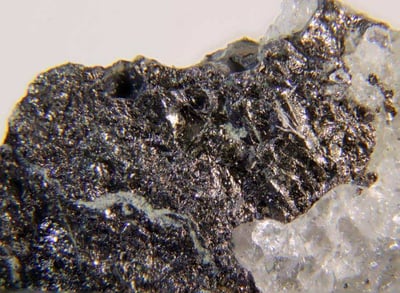
Marcasite can be formed as both a primary or a secondary mineral. It typically forms under low-temperature highly acidic conditions. It occurs in sedimentary rocks (shales, limestones and low grade coals) as well as in low temperature hydrothermal veins. Commonly associated minerals include pyrite, pyrrhotite, galena, sphalerite, fluorite, dolomite, and calcite. As a primary mineral it forms nodules, concretions, and crystals in a variety of sedimentary rock, such as in the chalk layers found on both sides of the English Channel at Dover, Kent, England, and at Cap Blanc Nez, Pas de Calais, France, where it forms as sharp individual crystals and crystal groups, and nodules (similar to those shown here). As a secondary mineral it forms by chemical alteration of a primary mineral such as pyrrhotite or chalcopyrite.
Health & Safety Information
- ⚠️Others
- ⚠️Marcasite is generally safe to handle. However, it reacts with water or moisture in the air, releasing irritating sulfuric acid. Avoid getting marcasite wet, wash hands after handling it, and store it in a dry place with low humidity (below 60% is ideal). When cutting or polishing marcasite, wear a dust mask to prevent lung irritation from dust inhalation.
More Images


Quick Facts
Physical Properties
- Color
- Pale brass-yellow, tin-white on fresh exposures
- Hardness (Mohs)
- 6 - 6.5
- Rock tumbling
- Not recommended
- Density
- 4.875 g/cm³
- Streak
- Dark-gray to black
- Luster
- Metallic, Sub-metallic
- Crystal System
- Orthorhombic
Chemical Properties
- Chemical Formula
- FeS2
- Elements
- Fe, S
Also Known As
Identify Marcasite Instantly
- Snap a photo, get instant results
- 6,700+ rocks, minerals & crystals
- Discover collecting spots near you
Marcasite FAQs
How do I identify Marcasite?
Marcasite can be identified by its hardness of 6 - 6.5 on the Mohs scale, Pale brass-yellow color, Metallic, Sub-metallic luster, Orthorhombic crystal system. Look for these key characteristics when examining specimens.
What color is Marcasite?
Marcasite typically appears in Pale brass-yellow, tin-white on fresh exposures. Color can vary depending on impurities and formation conditions.
How hard is Marcasite?
Marcasite has a hardness of 6 - 6.5 on the Mohs scale. This gives it moderate hardness.
What is the rock types of marcasite of Marcasite?
Blueite (S.H.Emmons): Nickel variety of marcasite, found in Denison Drury and Townships, Sudbury Dist., Ontario, Canada. Lonchidite (August Breithaupt): Arsenic variety of marcasite, found at Churprinz Friedrich August Erbstolln Mine (Kurprinz Mine), Großschirma Freiberg, Erzgebirge, Saxony, Germany; ideal formula Fe(S, As)2 . Synonyms for this variety: kausimkies, kyrosite, lonchandite, metalonchidite (Sandberger) described at Bernhard Mine near Hausach (Baden), Germany. Sperkise : designates a marcasite having twin spearhead crystal on {101}. Sperkise derives from the German Speerkies (Speer meaning spear and Kies gravel or stone). This twin is very common in the marcasite of a chalky origin, particularly those from the Cap Blanc Nez.
What is the formation of marcasite of Marcasite?
Marcasite can be formed as both a primary or a secondary mineral. It typically forms under low-temperature highly acidic conditions. It occurs in sedimentary rocks (shales, limestones and low grade coals) as well as in low temperature hydrothermal veins. Commonly associated minerals include pyrite, pyrrhotite, galena, sphalerite, fluorite, dolomite, and calcite. As a primary mineral it forms nodules, concretions, and crystals in a variety of sedimentary rock, such as in the chalk layers found on both sides of the English Channel at Dover, Kent, England, and at Cap Blanc Nez, Pas de Calais, France, where it forms as sharp individual crystals and crystal groups, and nodules (similar to those shown here). As a secondary mineral it forms by chemical alteration of a primary mineral such as pyrrhotite or chalcopyrite.