Pegmatite
A variety of Igneous

What is Pegmatite?
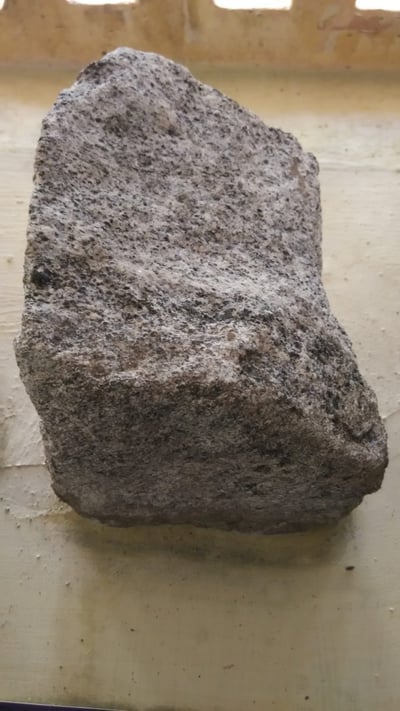
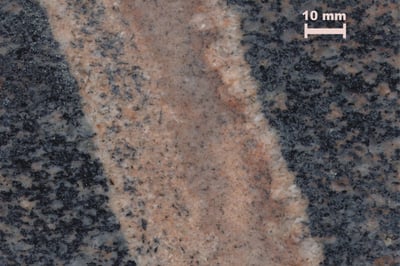
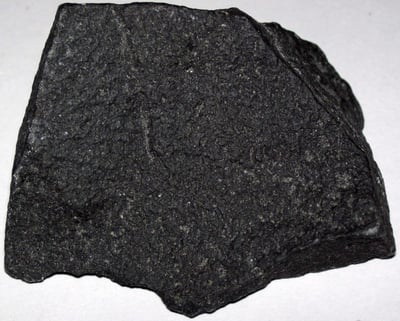
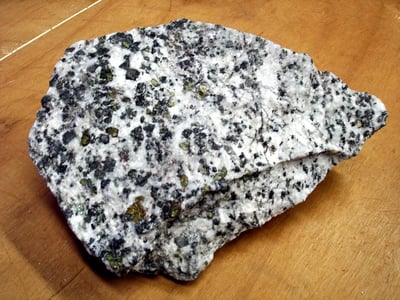
This igneous rock is characterized by its large and often interlocking crystals. Specimens may contain rare minerals as well as gemstones, including tourmaline, aquamarine, rubies, and sapphires. Pegmatite is also a primary source of lithium, an important component of electronics and batteries. Pegmatites that boast large, showy crystals are sought-after by rockhounds and gem collectors.
Etymology & Origins
Pegmatites can be classified according to the elements or mineral of interest, for instance "lithian pegmatite" to describe a Li-bearing or Li-mineral bearing pegmatite, or "boron pegmatite" for those containing tourmaline. There is often no meaningful way to distinguish pegmatites according to chemistry due to the difficulty of obtaining a representative sample, but often groups of pegmatites can be distinguished on contact textures, orientation, accessory minerals and timing. These may be named formally or informally as a class of intrusive rock or within a larger igneous association. While difficult to be certain of derivation of pegmatite in the strictest sense, often pegmatites are referred to as "metamorphic", "granitic" or "metasomatic", based on the interpretations of the investigating geologist. Rocks with similar texture to pegmatites are called pegmatitic.
Uses & Applications
Pegmatite contains very large crystals that may often be mined from the rock for various uses. For example, beryl and topaz are common components of this rock that may be used as gemstones, whereas minerals such as flourite may be used as a source of flouride. The crystal composition of the specific pegmatite can have a huge impact on its use.
Discover Values
Market Value Factors
Pricing varies for every rock and mineral, so use these universal factors to gauge Pegmatite before comparing listings or appraisals.
Size & Weight
Larger, intact specimens usually command higher prices.
Rarity & Demand
Scarce material or popular varieties sell at a premium.
Condition & Finish
Chips, repairs, and heavy wear lower value; clean prep helps.
Treatment & Provenance
Untreated specimens with documented locality are prized.
Geochemistry
Pegmatite is difficult to sample representatively due to the large size of the constituent mineral crystals. Often, bulk samples of some 50–60 kg of rock must be crushed to obtain a meaningful and repeatable result. Hence, pegmatite is often characterised by sampling the individual minerals that compose the pegmatite, and comparisons are made according to mineral chemistry. Geochemically, pegmatites typically have major element compositions approximating "granite", however, when found in association with granitic plutons it is likely that a pegmatite dike will have a different trace element composition with greater enrichment in large-ion lithophile (incompatible) elements, boron, beryllium, aluminium, potassium and lithium, uranium, thorium, cesium, et cetera. Occasionally, enrichment in the unusual trace elements will result in crystallisation of equally unusual and rare minerals such as beryl, tourmaline, columbite, tantalite, zinnwaldite and so forth. In most cases, there is no particular genetic significance to the presence of rare mineralogy within a pegmatite, however it is possible to see some causative and genetic links between, say, tourmaline-bearing granite dikes and tourmaline-bearing pegmatites within the area of influence of a composite granite intrusion (Mount Isa Inlier, Queensland, Australia).
Key Characteristics
Composition of Pegmatite
Most pegmatite are composed of quartz, feldspar and mica, having a similar silicic composition as granite. Rarer intermediate composition and mafic pegmatites containing amphibole, Ca-plagioclase feldspar, pyroxene, feldspathoids and other unusual minerals are known, found in recrystallised zones and apophyses associated with large layered intrusions.
More Images


Quick Facts
Physical Properties
- Color
- White, pink, grey, etc.
- Hardness (Mohs)
- 6 - 7
- Rock tumbling
- With care
- Density
- 2.6 - 2.65 g/cm³
Chemical Properties
Identify Pegmatite Instantly
- Snap a photo, get instant results
- 6,700+ rocks, minerals & crystals
- Discover collecting spots near you
Pegmatite FAQs
How do I identify Pegmatite?
Pegmatite can be identified by its hardness of 6 - 7 on the Mohs scale, White color. Look for these key characteristics when examining specimens.
What color is Pegmatite?
Pegmatite typically appears in White, pink, grey, etc.. Color can vary depending on impurities and formation conditions.
How hard is Pegmatite?
Pegmatite has a hardness of 6 - 7 on the Mohs scale. This gives it moderate hardness.
What is the composition of pegmatite of Pegmatite?
Most pegmatite are composed of quartz, feldspar and mica, having a similar silicic composition as granite. Rarer intermediate composition and mafic pegmatites containing amphibole, Ca-plagioclase feldspar, pyroxene, feldspathoids and other unusual minerals are known, found in recrystallised zones and apophyses associated with large layered intrusions.