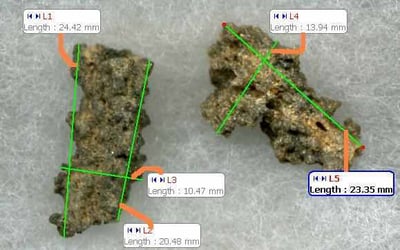
Quartzite
A variety of Metamorphic
What is Quartzite?
Quartzite is a metamorphic rock formed under immense heat and pressure in the earth. It can be polished to a glassy shine, and its beautiful colors and patterns make it popular for use as kitchen countertops, stairs, and flooring. Commercial uses include making roofing tiles and using the crushed stone in road construction.
Etymology & Origins
The term quartzite is derived from German: Quarzit.
Uses & Applications
Quartzite is a strong and durable rock, making it popular choice in construction materials, though it is often too tough to be be used frequently without damaging construction tools in the process. Quartzite can also be mined to manufacture glass due to its high silica content. Colorful specimens are also used as adornments in jewelry.
Discover Values
Market Value Factors
Pricing varies for every rock and mineral, so use these universal factors to gauge Quartzite before comparing listings or appraisals.
Size & Weight
Larger, intact specimens usually command higher prices.
Rarity & Demand
Scarce material or popular varieties sell at a premium.
Condition & Finish
Chips, repairs, and heavy wear lower value; clean prep helps.
Treatment & Provenance
Untreated specimens with documented locality are prized.
The Meaning
Quartzite has been used to make tools since the Old Stone Age. Though not as sharp as some of the stones used to make blades, it was a strong material for making axes and hammers. It was believed to be a source of divine light by earlier civilizations. Like many other stones, it was later used for decoration of homes and buildings and also used to make jewelry.
Key Characteristics
Formation of Quartzite
In the United States, formations of quartzite can be found in some parts of Pennsylvania, the Washington DC area, eastern South Dakota, Central Texas, southwest Minnesota, Devil's Lake State Park in the Baraboo Range in Wisconsin, the Wasatch Range in Utah, near Salt Lake City, Utah and as resistant ridges in the Appalachians and other mountain regions. Quartzite is also found in the Morenci Copper Mine in Arizona. The town of Quartzsite in western Arizona derives its name from the quartzites in the nearby mountains in both Arizona and Southeastern California. A glassy vitreous quartzite has been described from the Belt Supergroup in the Coeur d’Alene district of northern Idaho. In the United Kingdom, a craggy ridge of quartzite called the Stiperstones (early Ordovician – Arenig Epoch, 500 Ma) runs parallel with the Pontesford-Linley fault, 6 km north-west of the Long Mynd in south Shropshire. Also to be found in England are the Cambrian "Wrekin quartzite" (in Shropshire), and the Cambrian "Hartshill quartzite" (Nuneaton area). In Wales, Holyhead Mountain and most of Holy island off Anglesey sport excellent Precambrian quartzite crags and cliffs. In the Scottish Highlands, several mountains (e.g. Foinaven, Arkle) composed of Cambrian quartzite can be found in the far north-west Moine Thrust Belt running in a narrow band from Loch Eriboll in a south-westerly direction to Skye. In Ireland areas of quartzite are found across the northwest, with Errigal in Donegal as the most prominent outcrop. In continental Europe, various regionally isolated quartzite deposits exist at surface level in a belt from the Rhenish Massif and the German Central Highlands into the Western Czech Republic, for example in the Taunus and Harz mountains. In Poland quartzite deposits at surface level exists in Świętokrzyskie Mountains. In Canada, the La Cloche Mountains in Ontario are composed primarily of white quartzite. The highest mountain in Mozambique, Monte Binga (2436 m), as well as the rest of the surrounding Chimanimani Plateau are composed of very hard, pale grey, Precambrian quartzite. Quartzite is also mined in Brazil for use in kitchen countertops.
Clasts of Quartzite
Cemented with iron and manganese oxides
Health & Safety Information
- ⚠️Quartzite in powdered form can be toxic due to its Crystalline Silica content.
- ⚠️As quartzite is a form of silica, it is a possible cause for concern in various workplaces. Cutting, grinding, chipping, sanding, drilling, and polishing natural and manufactured stone products can release hazardous levels of very small, crystalline silica dust particles into the air that workers breathe. Crystalline silica of respirable size is a recognized human carcinogen and may lead to other diseases of the lungs such as silicosis and pulmonary fibrosis.
- ⚠️Quartz, silica, crystalline silica and flint are non-toxic materials, but very fine dust containing quartz, known as respirable crystalline silicon (RCS), can cause serious and fatal lung disease. Lapidaries should exercise caution when cutting silica.
- ⚠️Quartzite is typically non-toxic unless it's in powder form. Long-term exposure to finely ground powder may lead to silicosis. Therefore, when cutting or polishing quartzite, be sure to wear a dust mask to avoid inhaling its dust.
Quick Facts
Physical Properties
- Color
- White, gray, pink, red, tan, brown, etc.
- Hardness (Mohs)
- 7
- Rock tumbling
- With care
- Density
- 2.64 - 2.69 g/cm³
Chemical Properties
Identify Quartzite Instantly
- Snap a photo, get instant results
- 6,700+ rocks, minerals & crystals
- Discover collecting spots near you
Quartzite FAQs
How do I identify Quartzite?
Quartzite can be identified by its hardness of 7 on the Mohs scale, White color. Look for these key characteristics when examining specimens.
What color is Quartzite?
Quartzite typically appears in White, gray, pink, red, tan, brown, etc.. Color can vary depending on impurities and formation conditions.
How hard is Quartzite?
Quartzite has a hardness of 7 on the Mohs scale. This makes it a relatively hard mineral suitable for jewelry.
What is the formation of quartzite of Quartzite?
In the United States, formations of quartzite can be found in some parts of Pennsylvania, the Washington DC area, eastern South Dakota, Central Texas, southwest Minnesota, Devil's Lake State Park in the Baraboo Range in Wisconsin, the Wasatch Range in Utah, near Salt Lake City, Utah and as resistant ridges in the Appalachians and other mountain regions. Quartzite is also found in the Morenci Copper Mine in Arizona. The town of Quartzsite in western Arizona derives its name from the quartzites in the nearby mountains in both Arizona and Southeastern California. A glassy vitreous quartzite has been described from the Belt Supergroup in the Coeur d’Alene district of northern Idaho. In the United Kingdom, a craggy ridge of quartzite called the Stiperstones (early Ordovician – Arenig Epoch, 500 Ma) runs parallel with the Pontesford-Linley fault, 6 km north-west of the Long Mynd in south Shropshire. Also to be found in England are the Cambrian "Wrekin quartzite" (in Shropshire), and the Cambrian "Hartshill quartzite" (Nuneaton area). In Wales, Holyhead Mountain and most of Holy island off Anglesey sport excellent Precambrian quartzite crags and cliffs. In the Scottish Highlands, several mountains (e.g. Foinaven, Arkle) composed of Cambrian quartzite can be found in the far north-west Moine Thrust Belt running in a narrow band from Loch Eriboll in a south-westerly direction to Skye. In Ireland areas of quartzite are found across the northwest, with Errigal in Donegal as the most prominent outcrop. In continental Europe, various regionally isolated quartzite deposits exist at surface level in a belt from the Rhenish Massif and the German Central Highlands into the Western Czech Republic, for example in the Taunus and Harz mountains. In Poland quartzite deposits at surface level exists in Świętokrzyskie Mountains. In Canada, the La Cloche Mountains in Ontario are composed primarily of white quartzite. The highest mountain in Mozambique, Monte Binga (2436 m), as well as the rest of the surrounding Chimanimani Plateau are composed of very hard, pale grey, Precambrian quartzite. Quartzite is also mined in Brazil for use in kitchen countertops.
What is the clasts of quartzite of Quartzite?
Cemented with iron and manganese oxides