Chert
A variety of Sedimentary

What is Chert?
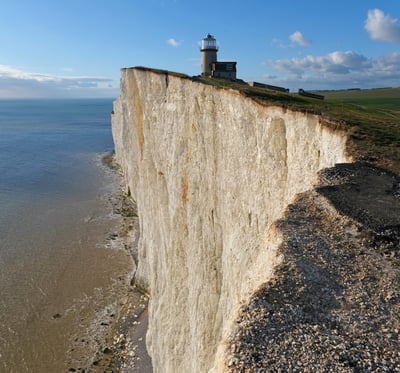
Chert is a very hard sedimentary rock composed of tiny quarts crystals. Though it has few uses today, this material was invaluable to paleolithic humans. Hard and able to keep a sharp edge when knapped, chert was commonly used for arrowheads, knives, scrapers, and other tools. It also creates sparks when struck against steel, and so it was used as a firestarter, and later as a component in flintlock firearms.
Etymology & Origins
In petrology the term "chert" is used to refer generally to all rocks composed primarily of microcrystalline, cryptocrystalline and microfibrous quartz. The term does not include quartzite. Chalcedony is a microfibrous (microcrystalline with a fibrous structure) variety of quartz. Strictly speaking, the term "flint" is reserved for varieties of chert which occur in chalk and marly limestone formations. Among non-geologists, the distinction between "flint" and "chert" is often one of quality – chert being lower quality than flint. This usage of the terminology is prevalent in North America and is likely caused by early immigrants who brought the terms from England where most true flint (that found in chalk formations) was indeed of better quality than "common chert" (from limestone formations). Among petrologists e.g. Philip King, Robert B. Neuman, Jarvis B. Hadley, chalcedony is sometimes considered separately from chert due to its fibrous structure. Since many cherts contain both microcrystalline and microfibrous quartz, it is sometimes difficult to classify a rock as completely chalcedony, thus its general inclusion as a variety of chert.
Uses & Applications
Chert was once a popular stone for creating blades and weapons because it is hard and has a very particular fracture pattern. However, in the modern day it is more often used as an aggregate material for construction, though it is not the most popular choice as it can crack easily.
Discover Values
Market Value Factors
Pricing varies for every rock and mineral, so use these universal factors to gauge Chert before comparing listings or appraisals.
Size & Weight
Larger, intact specimens usually command higher prices.
Rarity & Demand
Scarce material or popular varieties sell at a premium.
Condition & Finish
Chips, repairs, and heavy wear lower value; clean prep helps.
Treatment & Provenance
Untreated specimens with documented locality are prized.
Where to Find Chert
RockHoundR, the free-to-download rockhounding map from the Ruby Glint team, shows where collectors find chert in the US, with land-access notes for BLM land and national forests. Collecting is banned in national parks.
See where to find chertAlways check the local rules and get the landowner's permission before you collect.
Key Characteristics
Rock Types of Chert
There are numerous varieties of chert, classified based on their visible, microscopic and physical characteristics. Some of the more common varieties are: Flint is a compact microcrystalline quartz. It was originally the name for chert found in chalk or marly limestone formations formed by a replacement of calcium carbonate with silica. Commonly found as nodules, this variety was often used in past times to make bladed tools. Today, some geologists refer to any dark gray to black chert as flint. "Common chert" is a variety of chert which forms in limestone formations by replacement of calcium carbonate with silica. This is the most abundantly found variety of chert. It is generally considered to be less attractive for producing gem stones and bladed tools than flint. Jasper is a variety of chert formed as primary deposits, found in or in connection with magmatic formations which owes its red color to iron(III) inclusions. Jasper frequently also occurs in black, yellow or even green (depending on the type of iron it contains). Jasper is usually opaque to near opaque. Radiolarite is a variety of chert formed as primary deposits and containing radiolarian microfossils. Chalcedony is a microfibrous quartz. Agate is distinctly banded chalcedony with successive layers differing in color or value. Onyx is a banded agate with layers in parallel lines, often black and white. Opal is a hydrated silicon dioxide. It is often of a Neogenic origin. In fact it is not a mineral (it is a mineraloid) and it is generally not considered a variety of chert, although some varieties of opal (opal-C and opal-CT) are microcrystalline and contain much less water (sometime none). Often people without petrological training confuse opal with chert due to similar visible and physical characteristics. Magadi-type chert is a variety that forms from a sodium silicate precursor in highly alkaline lakes such as Lake Magadi in Kenya. Porcelanite is a term used for fine-grained siliceous rocks with a texture and a fracture resembling those of unglazed porcelain. Tripolitic chert (or tripoli) is a light-colored porous friable siliceous (largely chalcedonic) sedimentary rock, which results from the weathering (decalcification) of chert or siliceous limestone. Siliceous sinter is porous, low-density, light-colored siliceous rock deposited by waters of hot springs and geysers. Mozarkite a varicolored, easily polished Ordovician chert that takes a high polish. It is the state rock of Missouri.
Characteristics of Chert
The cryptocrystalline nature of chert, combined with its above average ability to resist weathering, recrystallization and metamorphism has made it an ideal rock for preservation of early life forms. For example: The 3.2 Ga chert of the Fig Tree Formation in the Barberton Mountains between Swaziland and South Africa preserved non-colonial unicellular bacteria-like fossils. The Gunflint Chert of western Ontario (1.9 to 2.3 Ga) preserves not only bacteria and cyanobacteria but also organisms believed to be ammonia-consuming and some that resemble green algae and fungus-like organisms. The Apex Chert (3.4 Ga) of the Pilbara craton, Australia preserved eleven taxa of prokaryotes. The Bitter Springs Formation of the Amadeus Basin, Central Australia, preserves 850 Ma cyanobacteria and algae. The Rhynie chert (410 Ma) of Scotland has remains of a Devonian land flora and fauna with preservation so perfect that it allows cellular studies of the fossils.
Clasts of Chert
None
Health & Safety Information
- ⚠️Chert in powdered form can be toxic due to its Crystalline Silica content.
- ⚠️Quartz, silica, crystalline silica and flint are non-toxic materials, but very fine dust containing quartz, known as respirable crystalline silicon (RCS), can cause serious and fatal lung disease. Lapidaries should exercise caution when cutting silica.
- ⚠️Chert is typically non-toxic unless it's in powder form. Long-term exposure to finely ground powder may lead to silicosis. Therefore, when cutting or polishing chert, be sure to wear a dust mask to avoid inhaling its dust.
More Images

Quick Facts
Physical Properties
- Color
- Gray, white, black, brown
- Hardness (Mohs)
- 6.5 - 7
- Rock tumbling
- Tumbles well
- Density
- 2.5 - 2.8 g/cm³
Also Known As
Identify Chert Instantly
- Snap a photo, get instant results
- 6,700+ rocks, minerals & crystals
- Discover collecting spots near you
Chert FAQs
How do I identify Chert?
Chert can be identified by its hardness of 6.5 - 7 on the Mohs scale, Gray color. Look for these key characteristics when examining specimens.
What color is Chert?
Chert typically appears in Gray, white, black, brown. Color can vary depending on impurities and formation conditions.
How hard is Chert?
Chert has a hardness of 6.5 - 7 on the Mohs scale. This gives it moderate hardness.
What is the rock types of chert of Chert?
There are numerous varieties of chert, classified based on their visible, microscopic and physical characteristics. Some of the more common varieties are: Flint is a compact microcrystalline quartz. It was originally the name for chert found in chalk or marly limestone formations formed by a replacement of calcium carbonate with silica. Commonly found as nodules, this variety was often used in past times to make bladed tools. Today, some geologists refer to any dark gray to black chert as flint. "Common chert" is a variety of chert which forms in limestone formations by replacement of calcium carbonate with silica. This is the most abundantly found variety of chert. It is generally considered to be less attractive for producing gem stones and bladed tools than flint. Jasper is a variety of chert formed as primary deposits, found in or in connection with magmatic formations which owes its red color to iron(III) inclusions. Jasper frequently also occurs in black, yellow or even green (depending on the type of iron it contains). Jasper is usually opaque to near opaque. Radiolarite is a variety of chert formed as primary deposits and containing radiolarian microfossils. Chalcedony is a microfibrous quartz. Agate is distinctly banded chalcedony with successive layers differing in color or value. Onyx is a banded agate with layers in parallel lines, often black and white. Opal is a hydrated silicon dioxide. It is often of a Neogenic origin. In fact it is not a mineral (it is a mineraloid) and it is generally not considered a variety of chert, although some varieties of opal (opal-C and opal-CT) are microcrystalline and contain much less water (sometime none). Often people without petrological training confuse opal with chert due to similar visible and physical characteristics. Magadi-type chert is a variety that forms from a sodium silicate precursor in highly alkaline lakes such as Lake Magadi in Kenya. Porcelanite is a term used for fine-grained siliceous rocks with a texture and a fracture resembling those of unglazed porcelain. Tripolitic chert (or tripoli) is a light-colored porous friable siliceous (largely chalcedonic) sedimentary rock, which results from the weathering (decalcification) of chert or siliceous limestone. Siliceous sinter is porous, low-density, light-colored siliceous rock deposited by waters of hot springs and geysers. Mozarkite a varicolored, easily polished Ordovician chert that takes a high polish. It is the state rock of Missouri.
What is the characteristics of chert of Chert?
The cryptocrystalline nature of chert, combined with its above average ability to resist weathering, recrystallization and metamorphism has made it an ideal rock for preservation of early life forms. For example: The 3.2 Ga chert of the Fig Tree Formation in the Barberton Mountains between Swaziland and South Africa preserved non-colonial unicellular bacteria-like fossils. The Gunflint Chert of western Ontario (1.9 to 2.3 Ga) preserves not only bacteria and cyanobacteria but also organisms believed to be ammonia-consuming and some that resemble green algae and fungus-like organisms. The Apex Chert (3.4 Ga) of the Pilbara craton, Australia preserved eleven taxa of prokaryotes. The Bitter Springs Formation of the Amadeus Basin, Central Australia, preserves 850 Ma cyanobacteria and algae. The Rhynie chert (410 Ma) of Scotland has remains of a Devonian land flora and fauna with preservation so perfect that it allows cellular studies of the fossils.
What is the clasts of chert of Chert?
None