Conichalcite
A variety of Adelite-descloizite Group
What is Conichalcite?
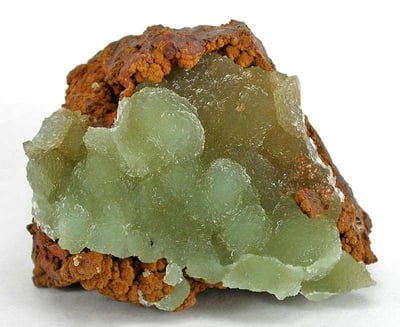
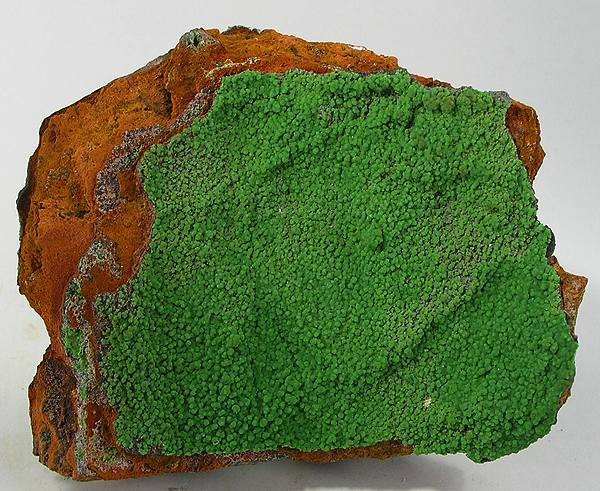
Conichalcite is found intermingled in copper deposits and appears in areas where the ore has become oxidized. The name is derived from the Latin root words of "powder" and "copper," as it is forms as a powdery crust on copper ore. The brilliant green color makes it hard to pass and very easy to recognize!
Uses & Applications
Industrially, conichalcite has been used as an ore as it contains some copper, which has a wide variety of applications from wiring to radiation protection. Since it is soft, brittle, and typically found in small crystals, it is rarely used for jewelry. Specimens are sometimes also collected.
Healing Properties
Conichalcite is said to remove negative energy and allow positive energy to flow, for healing of the body, mind, and spirit. It is often used by beginners of meditation as it works on the Heart chakra to help the person to embrace love and allows for better focus and understanding of the mind. It can be held in the hand for heightened support during difficult changes and transitions throughout life.
Market Value Factors
Pricing varies for every rock and mineral, so use these universal factors to gauge Conichalcite before comparing listings or appraisals.
Size & Weight
Larger, intact specimens usually command higher prices.
Rarity & Demand
Scarce material or popular varieties sell at a premium.
Condition & Finish
Chips, repairs, and heavy wear lower value; clean prep helps.
Treatment & Provenance
Untreated specimens with documented locality are prized.
Associated Chakras
Key Characteristics
Formation of Conichalcite
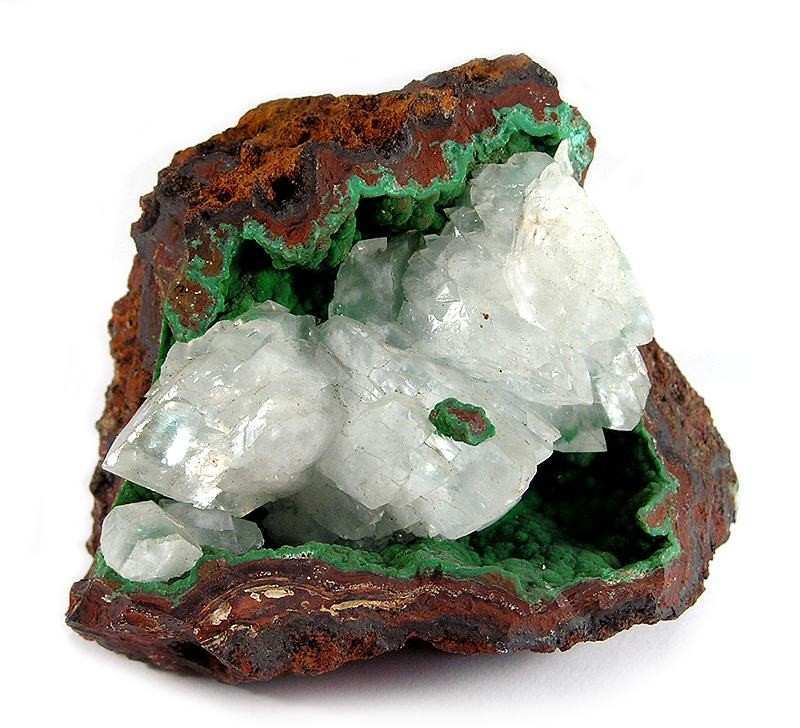
Conichalcite forms in the oxidation zones of copper orebodies. Here groundwater enriched with oxygen react with copper sulfide and copper oxide to produce an array of minerals such as malachite, azurite and linarite. Conichalcite is often found encrusted on to limonitic rocks that have yellow to red colors. Conichalcite will also form a solid solution series with the mineral calciovolborthite. When these two minerals form a solid solution series, the two interchanging elements are arsenic and vanadium. Conichalcite is the arsenic rich end member of the series and calciovolborthite is the vanadium rich end member. Notable occurrences of conichalcite include Juab Co., Utah; Lincoln and Lyon counties of Nevada and Bisbee, Arizona, in the US; Durango, Mexico; Collahuasi, Tarapaca, Chile; Calstock, Cornwall and Caldbeck Fells, Cumbria, England; Andalusia, Spain; and Tsumeb, Namibia.
Health & Safety Information
- ⚠️Conichalcite dust is toxic because it contains heavy metals Arsenic, Copper.
- ⚠️Arsenic, Copper
- ⚠️It's advisable to handle conichalcite carefully to avoid generating dust and wash hands thoroughly afterward. When cutting or polishing conichalcite, wear a dust mask to prevent inhaling heavy metal particles. Store conichalcite in a sealed container in a well-ventilated area, away from children and pets. For those involved in crystal healing, never put it in your mouth.
More Images
Quick Facts
Physical Properties
- Color
- Green, yellow-green, greenish yellow, light green to yellowish green in transmitted light
- Hardness (Mohs)
- 4.5
- Rock tumbling
- Not recommended
- Density
- 4.29 g/cm³
- Streak
- Light green
- Luster
- Greasy, Dull, Sub-vitreous
- Crystal System
- Orthorhombic
Chemical Properties
- Chemical Formula
- CaCu(AsO4)(OH)
- Elements
- As, Ca, Cu, H, O
Also Known As
Identify Conichalcite Instantly
- Snap a photo, get instant results
- 6,700+ rocks, minerals & crystals
- Discover collecting spots near you
Conichalcite FAQs
How do I identify Conichalcite?
Conichalcite can be identified by its hardness of 4.5 on the Mohs scale, Green color, Greasy, Dull, Sub-vitreous luster, Orthorhombic crystal system. Look for these key characteristics when examining specimens.
What color is Conichalcite?
Conichalcite typically appears in Green, yellow-green, greenish yellow, light green to yellowish green in transmitted light. Color can vary depending on impurities and formation conditions.
How hard is Conichalcite?
Conichalcite has a hardness of 4.5 on the Mohs scale. This gives it moderate hardness.
What is the formation of conichalcite of Conichalcite?
Conichalcite forms in the oxidation zones of copper orebodies. Here groundwater enriched with oxygen react with copper sulfide and copper oxide to produce an array of minerals such as malachite, azurite and linarite. Conichalcite is often found encrusted on to limonitic rocks that have yellow to red colors. Conichalcite will also form a solid solution series with the mineral calciovolborthite. When these two minerals form a solid solution series, the two interchanging elements are arsenic and vanadium. Conichalcite is the arsenic rich end member of the series and calciovolborthite is the vanadium rich end member. Notable occurrences of conichalcite include Juab Co., Utah; Lincoln and Lyon counties of Nevada and Bisbee, Arizona, in the US; Durango, Mexico; Collahuasi, Tarapaca, Chile; Calstock, Cornwall and Caldbeck Fells, Cumbria, England; Andalusia, Spain; and Tsumeb, Namibia.