Fluorapatite
A variety of Apatite Group

What is Fluorapatite?
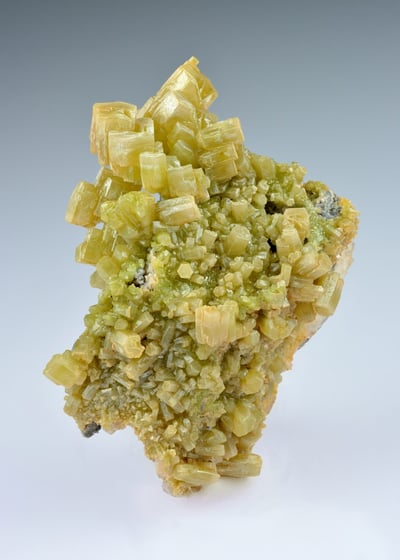
Fluorapatite is the most common member of the Apatite group. Aside from mines around the world, this mineral also occurs in human teeth that are exposed to fluoride (e.g. through toothpaste). Though colorless when pure, crystals are often formed with minor impurities that give them a wide range of colors. Some particularly attractive or deeply-colored specimens may be sought after by collectors. On the industrial side of things, fluorapatite is sometimes mined as a source of phosphorus.
Uses & Applications
Fluorapatite is commonly used to prevent tooth decay, and it is utilized in toothpaste and other dental products. It also occurs in a variety of colors ranging from green to blue, and sometimes occurs in shades of yellow or may be entirely colorless, making it a popular and very versatile gemstone.
Optical Properties
- Pleochroism
- Weak to strong
- Optical Character
- Uniaxial negative
Market Value Factors
Pricing varies for every rock and mineral, so use these universal factors to gauge Fluorapatite before comparing listings or appraisals.
Size & Weight
Larger, intact specimens usually command higher prices.
Rarity & Demand
Scarce material or popular varieties sell at a premium.
Condition & Finish
Chips, repairs, and heavy wear lower value; clean prep helps.
Treatment & Provenance
Untreated specimens with documented locality are prized.
Where to Find Fluorapatite
RockHoundR, the free-to-download rockhounding map from the Ruby Glint team, shows where collectors find fluorapatite in the US, with land-access notes for BLM land and national forests. Collecting is banned in national parks.
See where to find fluorapatiteAlways check the local rules and get the landowner's permission before you collect.
Key Characteristics
Formation of Fluorapatite
Fluorapatite as a mineral is the most common phosphate mineral. It occurs widely as an accessory mineral in igneous rocks and in calcium rich metamorphic rocks. It commonly occurs as a detrital or diagenic mineral in sedimentary rocks and is an essential component of phosphorite ore deposits. It occurs as a residual mineral in lateritic soils.
More Images
Quick Facts
Physical Properties
- Color
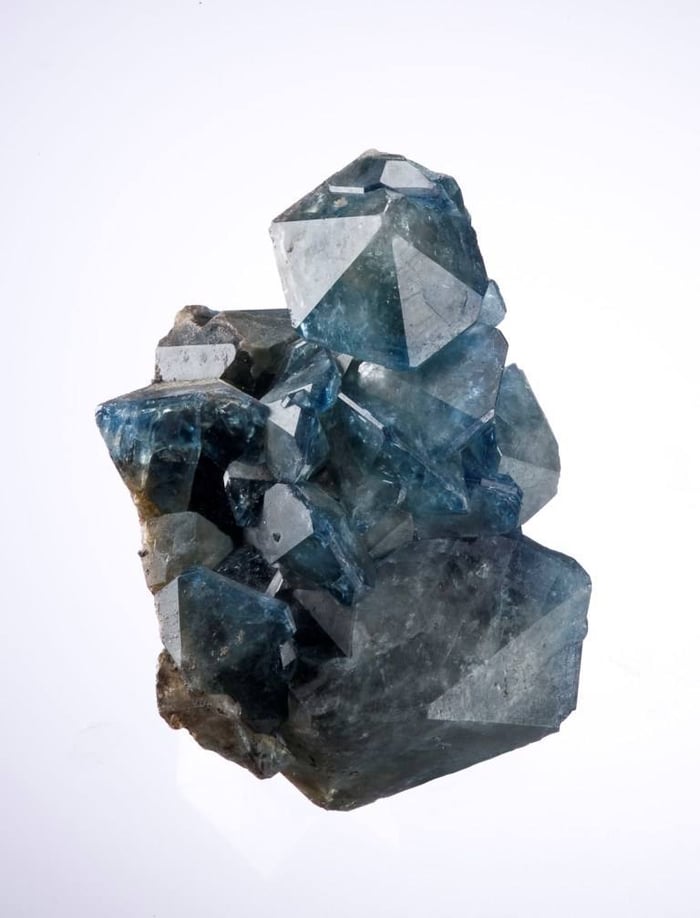
- Colourless to white when pure, also green, blue, pink, yellow, brown, violet, purple
- Hardness (Mohs)
- 5
- Rock tumbling
- With care
- Density
- 3.18 g/cm³
- Streak
- White
- Luster
- Greasy, Vitreous, Resinous, Waxy, Sub-vitreous
- Crystal System
- Hexagonal
Chemical Properties
- Chemical Formula
- Ca5(PO4)3F
- Elements
- Ca, F, O, P
Also Known As
Identify Fluorapatite Instantly
- Snap a photo, get instant results
- 6,700+ rocks, minerals & crystals
- Discover collecting spots near you
Fluorapatite FAQs
How do I identify Fluorapatite?
Fluorapatite can be identified by its hardness of 5 on the Mohs scale, Colourless to white when pure color, Greasy, Vitreous, Resinous, Waxy, Sub-vitreous luster, Hexagonal crystal system. Look for these key characteristics when examining specimens.
What color is Fluorapatite?
Fluorapatite typically appears in Colourless to white when pure, also green, blue, pink, yellow, brown, violet, purple. Color can vary depending on impurities and formation conditions.
How hard is Fluorapatite?
Fluorapatite has a hardness of 5 on the Mohs scale. This gives it moderate hardness.
What is the formation of fluorapatite of Fluorapatite?
Fluorapatite as a mineral is the most common phosphate mineral. It occurs widely as an accessory mineral in igneous rocks and in calcium rich metamorphic rocks. It commonly occurs as a detrital or diagenic mineral in sedimentary rocks and is an essential component of phosphorite ore deposits. It occurs as a residual mineral in lateritic soils.