Lead
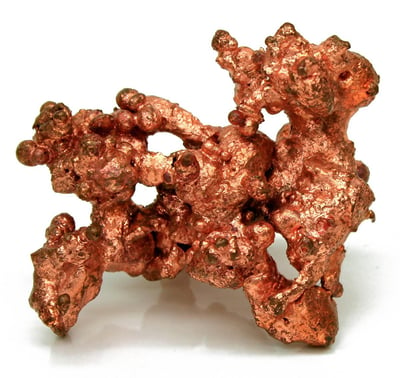
A variety of Copper Group

What is Lead?
Lead is a chemical element with the symbol Pb (from the Latin plumbum) and atomic number 82. It is a heavy metal that is denser than most common materials. Lead is soft and malleable, and also has a relatively low melting point. When freshly cut, lead is silvery with a hint of blue; it tarnishes to a dull gray color when exposed to air. Lead has the highest atomic number of any stable element and three of its isotopes are endpoints of major nuclear decay chains of heavier elements. Lead is a relatively unreactive post-transition metal. Its weak metallic character is illustrated by its amphoteric nature; lead and lead oxides react with acids and bases, and it tends to form covalent bonds. Compounds of lead are usually found in the +2 oxidation state rather than the +4 state common with lighter members of the carbon group. Exceptions are mostly limited to organolead compounds. Like the lighter members of the group, lead tends to bond with itself; it can form chains and polyhedral structures. Lead is easily extracted from its ores; prehistoric people in Western Asia knew of it. Galena is a principal ore of lead which often bears silver. Interest in silver helped initiate widespread extraction and use of lead in ancient Rome. Lead production declined after the fall of Rome and did not reach comparable levels until the Industrial Revolution. In 2014, the annual global production of lead was about ten million tonnes, over half of which was from recycling. Lead's high density, low melting point, ductility and relative inertness to oxidation make it useful. These properties, combined with its relative abundance and low cost, resulted in its extensive use in construction, plumbing, batteries, bullets and shot, weights, solders, pewters, fusible alloys, white paints, leaded gasoline, and radiation shielding. In the late 19th century, lead's toxicity was recognized, and its use has since been phased out of many applications. However, many countries still allow the sale of products that expose humans to lead, including some types of paints and bullets. Lead is a neurotoxin that accumulates in soft tissues and bones; it damages the nervous system and interferes with the function of biological enzymes, causing neurological disorders, such as brain damage and behavioral problems.
Uses & Applications
Contrary to popular belief, pencil leads in wooden pencils have never been made from lead. When the pencil originated as a wrapped graphite writing tool, the particular type of graphite used was named plumbago (literally, act for lead or lead mockup).
Market Value Factors
Pricing varies for every rock and mineral, so use these universal factors to gauge Lead before comparing listings or appraisals.
Size & Weight
Larger, intact specimens usually command higher prices.
Rarity & Demand
Scarce material or popular varieties sell at a premium.
Condition & Finish
Chips, repairs, and heavy wear lower value; clean prep helps.
Treatment & Provenance
Untreated specimens with documented locality are prized.
Where to Find Lead
RockHoundR, the free-to-download rockhounding map from the Ruby Glint team, shows where collectors find lead in the US, with land-access notes for BLM land and national forests. Collecting is banned in national parks.
See where to find leadAlways check the local rules and get the landowner's permission before you collect.
The Meaning
Lead was a component of paint used by many famous artists, and there are arguments that painters suffered from lead poisoning due to it. Michelangelo, Van Gogh (who sucked on his brushes while painting), and Goya are among those who suffered depressions, delusions, or physical ailments that could be tied back to the lead in their paints.
Geochemistry
Bulk lead exposed to moist air forms a protective layer of varying composition. Lead(II) carbonate is a common constituent; the sulfate or chloride may also be present in urban or maritime settings. This layer makes bulk lead effectively chemically inert in the air. Finely powdered lead, as with many metals, is pyrophoric, and burns with a bluish-white flame. Fluorine reacts with lead at room temperature, forming lead(II) fluoride. The reaction with chlorine is similar but requires heating, as the resulting chloride layer diminishes the reactivity of the elements. Molten lead reacts with the chalcogens to give lead(II) chalcogenides. Lead metal resists sulfuric and phosphoric acid but not hydrochloric or nitric acid; the outcome depends on insolubility and subsequent passivation of the product salt. Organic acids, such as acetic acid, dissolve lead in the presence of oxygen. Concentrated alkalis will dissolve lead and form plumbites.
Health & Safety Information
- ⚠️Lead is a highly poisonous metal (whether inhaled or swallowed), affecting almost every organ and system in the human body. At airborne levels of 100 mg/m, it is immediately dangerous to life and health. Most ingested lead is absorbed into the bloodstream. The primary cause of its toxicity is its predilection for interfering with the proper functioning of enzymes. It does so by binding to the sulfhydryl groups found on many enzymes, or mimicking and displacing other metals which act as cofactors in many enzymatic reactions. Among the essential metals that lead interacts with are calcium, iron, and zinc. High levels of calcium and iron tend to provide some protection from lead poisoning; low levels cause increased susceptibility.
More Images


Quick Facts
Physical Properties
- Color
- Grey, often coated with white hydrocerussite or related phases
- Hardness (Mohs)
- 1.5
- Rock tumbling
- Not recommended
- Density
- 11.341 g/cm³
- Streak
- Grey
Chemical Properties
- Chemical Formula
- Pb
- Elements
- Pb
Also Known As
Identify Lead Instantly
- Snap a photo, get instant results
- 6,700+ rocks, minerals & crystals
- Discover collecting spots near you
Lead FAQs
How do I identify Lead?
Lead can be identified by its hardness of 1.5 on the Mohs scale, Grey color. Look for these key characteristics when examining specimens.
What color is Lead?
Lead typically appears in Grey, often coated with white hydrocerussite or related phases. Color can vary depending on impurities and formation conditions.
How hard is Lead?
Lead has a hardness of 1.5 on the Mohs scale. This makes it a soft mineral that can be scratched easily.