Ruby Value Calculator
Find out what your ruby is worth in seconds, based on real market data. Use this ruby price calculator to estimate value by carat, color, clarity, origin, and treatment.
Last updated:
Whether you are buying, selling, or getting a ruby appraisal, this tool gives you a realistic price range based on the factors that matter most to gemstone dealers and collectors.
Ruby Value Calculator
Question 1 of 6
Valuing: Ruby
Estimate the carat weight of your ruby:
Ruby Price Per Carat: 2026 Market Reference
Approximate ruby value per carat across quality tiers. Use the calculator above for a personalized estimate.
| Carat Range | Commercial | Good / Strong Red | Fine / Vivid Red |
|---|---|---|---|
| Under 0.5 ct | $300-$1,200 | $1,200-$4,000 | $4,000-$8,000 |
| 0.5-1 ct | $300-$2,000 | $2,000-$4,000 | $4,000-$10,000 |
| 1-2 ct | $500-$3,000 | $5,000-$12,000 | $15,000-$45,000 |
| 2-3 ct | $1,000-$8,000 | $12,000-$30,000 | $30,000-$50,000 |
| 3-5 ct | $2,000-$10,000 | $25,000-$60,000 | $60,000-$150,000+ |
| 5+ ct | $3,000-$10,000 | $40,000-$120,000 | $100,000-$500,000+ |
Prices reflect 2026 reference ranges by carat size and market tier. Origin, treatment, certification, and especially top Burmese unheated stones can move prices materially above or below these bands. Use the calculator above for a personalized estimate.
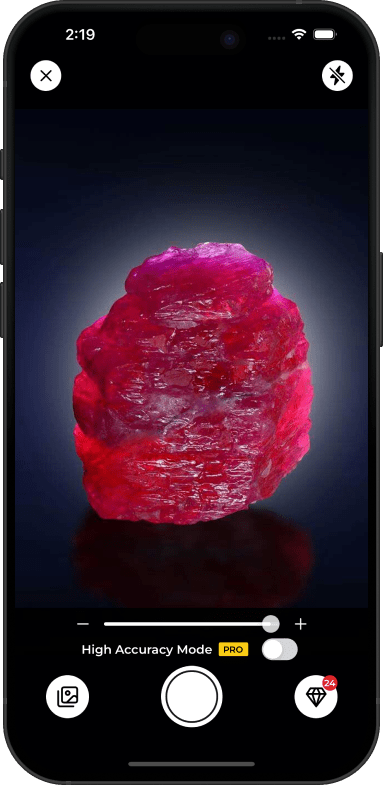
Want a photo-based estimate? Upload a ruby photo to our gemstone value calculator for an AI-powered appraisal that considers visual quality factors beyond what a form can capture.
What Determines How Much a Ruby Is Worth?
Six factors drive ruby gemstone value. Here is how each one works.
Color: The #1 Factor
Color is the single most important factor in ruby valuation. The ideal is “pigeon blood red,” a vivid, saturated red with a slight blue undertone that creates an almost glowing appearance. This color standard originated in Burma and remains the benchmark for the finest rubies in the world.
Gemologists evaluate ruby color by three components: hue (the dominant wavelength, with pure red being ideal), tone (lightness or darkness, with medium to medium-dark being best), and saturation (the intensity of color, where vivid saturation commands the highest prices). Rubies that shift toward pink, purple, or brown lose value progressively. A strong pigeon blood ruby can be worth 5–10× more than a comparable stone with pinkish or brownish color.
Origin Matters More Than You Think
Burmese rubies, particularly from the Mogok Valley, command the highest premiums in the market, often 100–200% more than visually identical stones from other sources. This premium reflects centuries of historical reputation, distinctive fluorescence under UV light, and the strong association between Burma and pigeon blood color.
Mozambique has emerged as a major ruby source since the 2009 discovery of the Montepuez deposit. High-quality Mozambique rubies rival Burmese stones visually and are increasingly accepted by dealers and collectors at strong prices. Sri Lankan rubies tend toward lighter, pinkish-red tones and appeal to buyers who prefer that aesthetic. Origin is verified through laboratory certification from GIA, AGL, Gübelin, or SSEF; without a certificate, origin cannot be reliably confirmed and buyers typically discount the stone accordingly.
Treated vs. Untreated: The Price Gap
Heat treatment is the most common ruby enhancement and is widely accepted in the market. It improves color and clarity without adding foreign materials. The vast majority of rubies on the market, estimated at over 90%, have been heat treated.
Unheated rubies with fine natural color are rare and typically command 2–5× the price of comparable heated stones. At the opposite end, lead-glass filling dramatically improves appearance but is not considered a permanent treatment, so these rubies sell for a fraction of untreated or heat-only prices. Flux healing falls between these extremes, repairing fractures with borax residue during heating. Treatment status should always be verified by a reputable gem laboratory before purchase.
Clarity in Rubies Is Different
Unlike diamonds, nearly all rubies contain visible inclusions. The practical clarity standard for rubies is “eye clean,” meaning no inclusions are visible to the unaided eye at normal viewing distance. A loupe-clean ruby is extraordinarily rare and commands exceptional premiums.
Some inclusions can actually enhance value. Fine “silk,” microscopic rutile needles, can scatter light and produce a velvety appearance that is highly prized in Burmese rubies. However, heavy inclusions that reduce transparency, create visible dark zones, or threaten durability significantly decrease value.
Carat Weight and the Exponential Price Curve
Ruby prices do not scale linearly with size. A 2-carat ruby is not simply twice the price of a 1-carat stone; it can be 3–4× the total price because fine rubies above 1 carat become dramatically rarer.
Per-carat prices jump significantly at key thresholds: 1 carat, 2 carats, 3 carats, and 5 carats. A fine 5-carat ruby is genuinely rare and commands auction-level prices. Above 10 carats, fine-quality rubies are museum-grade specimens with values that can exceed $200,000 per carat for the best stones.
Cut Quality
Unlike diamonds, rubies are not cut to a standardized set of ideal proportions. Instead, cutters optimize for color. The goal is to maximize the intensity and evenness of the red through the face-up view. A well-cut ruby shows bright, even color without dark extinction zones or visible windowing.
The most common ruby cuts are oval and cushion, which typically retain the most weight from the rough crystal. Cabochon cuts, with smooth domed surfaces and no facets, are used for star rubies and lower-clarity material. Round cuts exist but waste more rough, making them less common and sometimes more expensive per carat.
Ruby Prices by Origin: Burma vs. Mozambique vs. Others
Origin is one of the strongest price drivers in the ruby market.
Burmese Rubies (Myanmar)
Burma, specifically the Mogok Valley and more recently Mong Hsu, is the most storied ruby source in the world. Burmese rubies are prized for their exceptional fluorescence, which makes the red color appear to glow even in indirect light. The finest Burmese pigeon blood rubies set auction records regularly.
Price range (fine quality): $5,000–$35,000/ct for heated, $15,000–$100,000+/ct for unheated pigeon blood.
Mozambique Rubies
Since the Montepuez deposit was discovered in 2009, Mozambique has become the world's largest ruby producer by volume. Top Mozambique rubies exhibit vivid red color with excellent saturation and are increasingly compared favorably to Burmese stones. They offer exceptional value relative to their visual quality.
Price range (fine quality): $1,500–$8,000/ct for heated, $4,000–$20,000/ct for unheated.
Sri Lankan Rubies
Sri Lanka (formerly Ceylon) produces rubies with lighter, pinkish-red tones that have a distinctive aesthetic. While they rarely reach the vivid saturation of top Burmese or Mozambique stones, fine Sri Lankan rubies are valued for their brightness and transparency. The line between a pink sapphire and a light ruby can be blurry at this origin.
Price range (fine quality): $800–$4,000/ct for heated, $2,000–$10,000/ct for unheated.
Thailand and Other Origins
Thai rubies, particularly from the Chanthaburi-Trat region, tend toward darker, more brownish reds with higher iron content that reduces fluorescence. While historically important, Thai ruby production has declined significantly. Madagascar produces rubies across a range of qualities. Vietnamese rubies from Luc Yen can occasionally rival Burmese stones but production is limited.
Price range (fine quality): $100–$1,500/ct depending on specific origin and quality.
How to Use Our Ruby Value Calculator
Four steps to a personalized ruby price estimate
STEP 01
Enter Carat Weight
Use the slider or type the weight of your ruby. If unsure, a local jeweler can provide an exact measurement.
STEP 02
Select Color Grade
Choose the closest color match. Pigeon blood red is the most valuable, while dark or brownish tones are less desirable.
STEP 03
Choose Clarity, Origin, Treatment & Cut
Select from the dropdowns. If you don't know a detail, the default values provide a reasonable mid-range estimate.
STEP 04
View Your Estimate
See the estimated price range per carat and total value, along with a quality grade and explanation of the result.
Not sure about your ruby's details? The default values provide a reasonable mid-range estimate. For the most accurate valuation, have your ruby examined by a local jeweler or upload a photo to our gemstone value calculator for an AI-powered assessment.
Frequently Asked Questions About Ruby Value
Get answers to common questions about rock identification, rockhounding, and using our platform.
This calculator provides market-range estimates based on standard gemological grading factors including color, clarity, origin, treatment, cut, and carat weight. For insurance, legal, or high-value transactions, consult a GIA or AGL certified gemologist for a formal appraisal.
The most valuable rubies are unheated pigeon blood red stones from Burma (Myanmar) with eye-clean clarity. A fine 3+ carat Burmese unheated pigeon blood ruby can exceed $100,000 per carat at auction. These stones are exceptionally rare.
A 1-carat ruby typically ranges from about $500–$3,000 per carat for commercial stones, around $5,000–$12,000 per carat for good to strong red stones, and roughly $15,000–$45,000 per carat for fine vivid red examples. Origin, treatment, and certification can move the final price higher or lower.
Yes. Burmese (Myanmar) rubies typically command a 100–200% premium over comparable rubies from other origins. This premium reflects the historical reputation, distinctive fluorescence, and the pigeon blood color most associated with Mogok Valley rubies.
Heat treatment can only be reliably detected by a gemological laboratory using microscopic examination. Heated rubies may show altered inclusion patterns and dissolved silk. A lab certificate from GIA, AGL, or Gübelin will specify treatment status.
Fine-quality rubies have historically appreciated in value, especially unheated stones from Burma. Commercial-grade and heavily treated rubies tend to hold value less reliably. Like any investment, past performance does not guarantee future returns.
Pigeon blood refers to a vivid red with a slight blue undertone, considered the ideal ruby color. The term originated in Burma and describes rubies with exceptional saturation and fluorescence. Pigeon blood rubies command premiums because this color occurs naturally in very few stones.
A 2-carat ruby often falls in the $1,000–$8,000 per carat range for commercial quality, about $12,000–$30,000 per carat for good to strong red material, and around $30,000–$50,000 per carat for fine vivid red stones. Prices rise sharply once rubies cross the 2-carat mark because high-quality stones at that size are much rarer.
For a professional appraisal, visit a GIA Graduate Gemologist or an AGL-certified appraiser. You can also use our gemstone value calculator to upload a photo for an initial AI-powered estimate before seeking formal certification.
This calculator estimates loose stone value only. Ruby jewelry includes additional value from the metal setting, craftsmanship, brand, and design. For jewelry valuation, subtract the metal and setting value, or consult a jewelry appraiser who considers the complete piece.
More Gemstone Tools from RubyGlint
Explore our other free identification and valuation tools
Gemstone Value Calculator
Upload a gemstone photo and get an AI-powered value estimate for any gem type.
Try photo valuationCrystal Value Calculator
Estimate the value of crystals and mineral specimens with our photo-based tool.
Value crystalsGemstone Identifier
Not sure what gemstone you have? Upload a photo to identify it instantly.
Identify gemstonesRock Value Estimator
Get value estimates for rocks, minerals, crystals, and gemstones by photo.
Estimate rock valueWant Unlimited Gemstone Valuations?
Download Ruby Glint for unlimited value checks, saved reports, and deeper stone analysis tools.


Ready to Estimate Your Ruby's Value?
Scroll up and enter your ruby's details to get an instant price estimate.