Emerald Value Calculator
Find out what your emerald is worth in seconds, with 2026 market data. Use this emerald price calculator to estimate value by carat, color, clarity, origin, and oil treatment.
Last updated:
Whether you are buying, selling, insuring, or getting an emerald appraisal, this tool returns a realistic price range using the same factors GIA, AGL, Gübelin, and SSEF labs grade on — with emerald-specific weight on treatment.
Emerald Value Calculator
Question 1 of 6
Valuing: Emerald
Estimate the carat weight of your emerald:
Emerald Price Per Carat: 2026 Market Reference
Approximate emerald value per carat across quality tiers (assumes typical minor-to-moderate oiling).
| Carat Range | Commercial | Fine Green | Top Vivid (Muzo / Kagem) |
|---|---|---|---|
| Under 0.5 ct | $50-$300 | $400-$1,500 | $1,500-$4,000 |
| 0.5-1 ct | $100-$500 | $700-$2,500 | $2,500-$6,000 |
| 1-2 ct | $200-$1,000 | $1,500-$5,000 | $5,000-$15,000 |
| 2-3 ct | $500-$2,500 | $3,000-$10,000 | $10,000-$30,000 |
| 3-5 ct | $1,000-$4,000 | $5,000-$18,000 | $20,000-$60,000 |
| 5+ ct | $1,500-$5,000 | $8,000-$25,000 | $40,000-$300,000+ |
Ranges assume minor-to-moderate oil treatment, which covers about 85% of market stones. Certified “no oil” or “insignificant” treatment grades can lift prices 2–4× at fine quality. Heavy resin/Opticon or dyed material trades well below these bands.
Want a photo-based estimate? Upload an emerald photo to our gemstone value calculator for an AI-powered appraisal that factors in saturation and the fissure pattern visible in the photograph.
What Different Emeralds Look Like
Color saturation, jardin, and oil treatment all change the per-carat price. These examples show how Colombian rough cuts into very different finished stones.
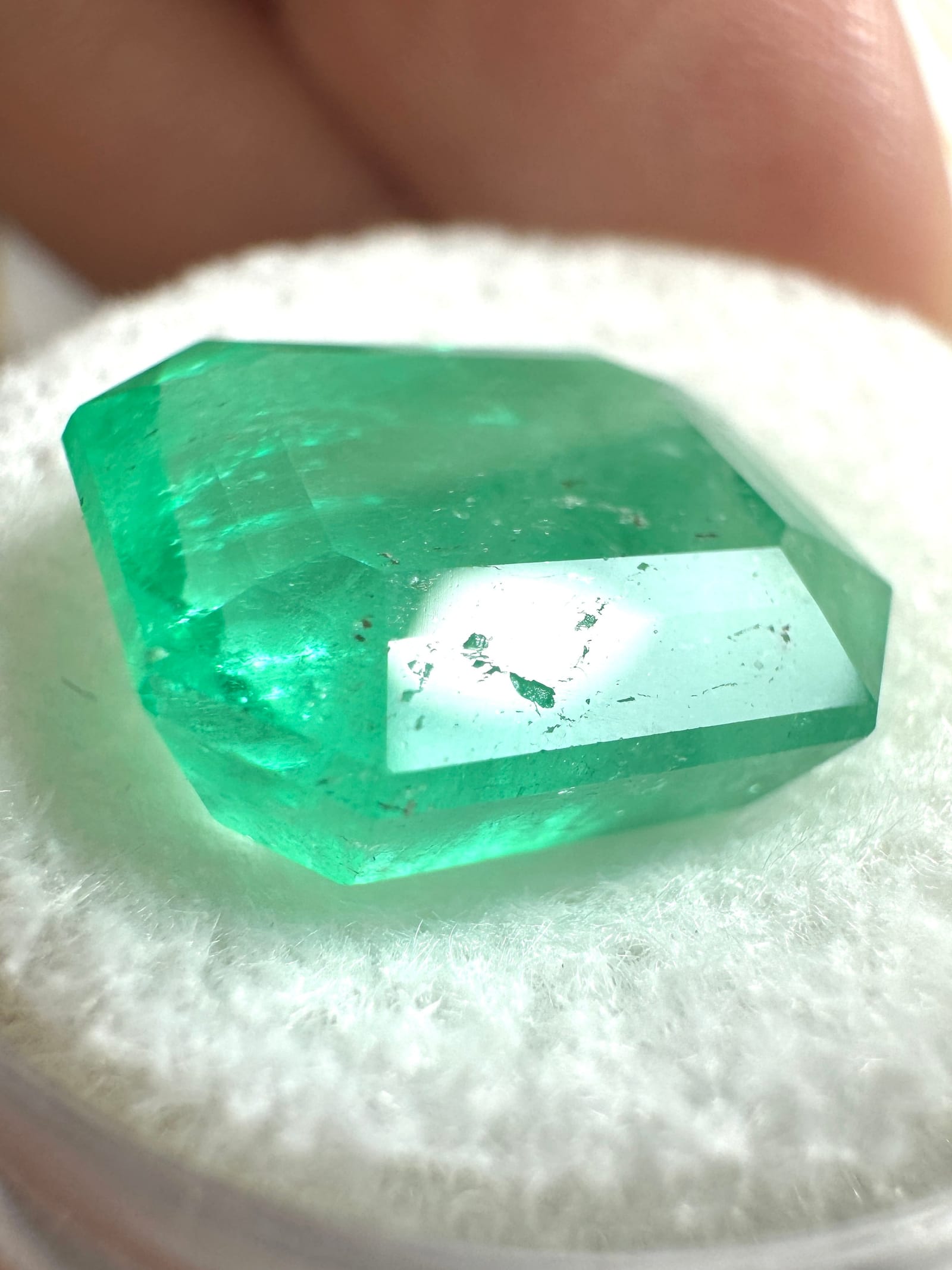
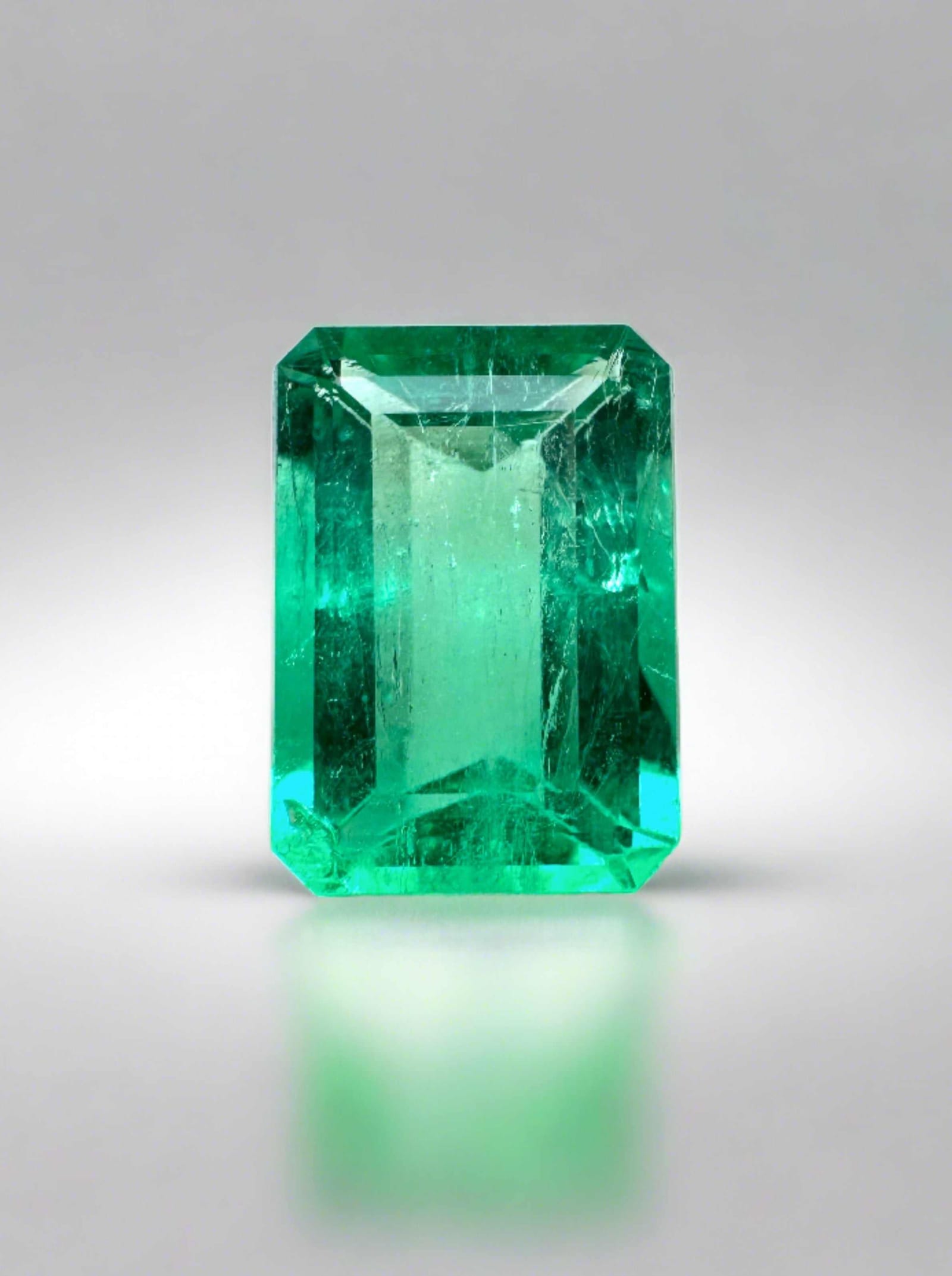
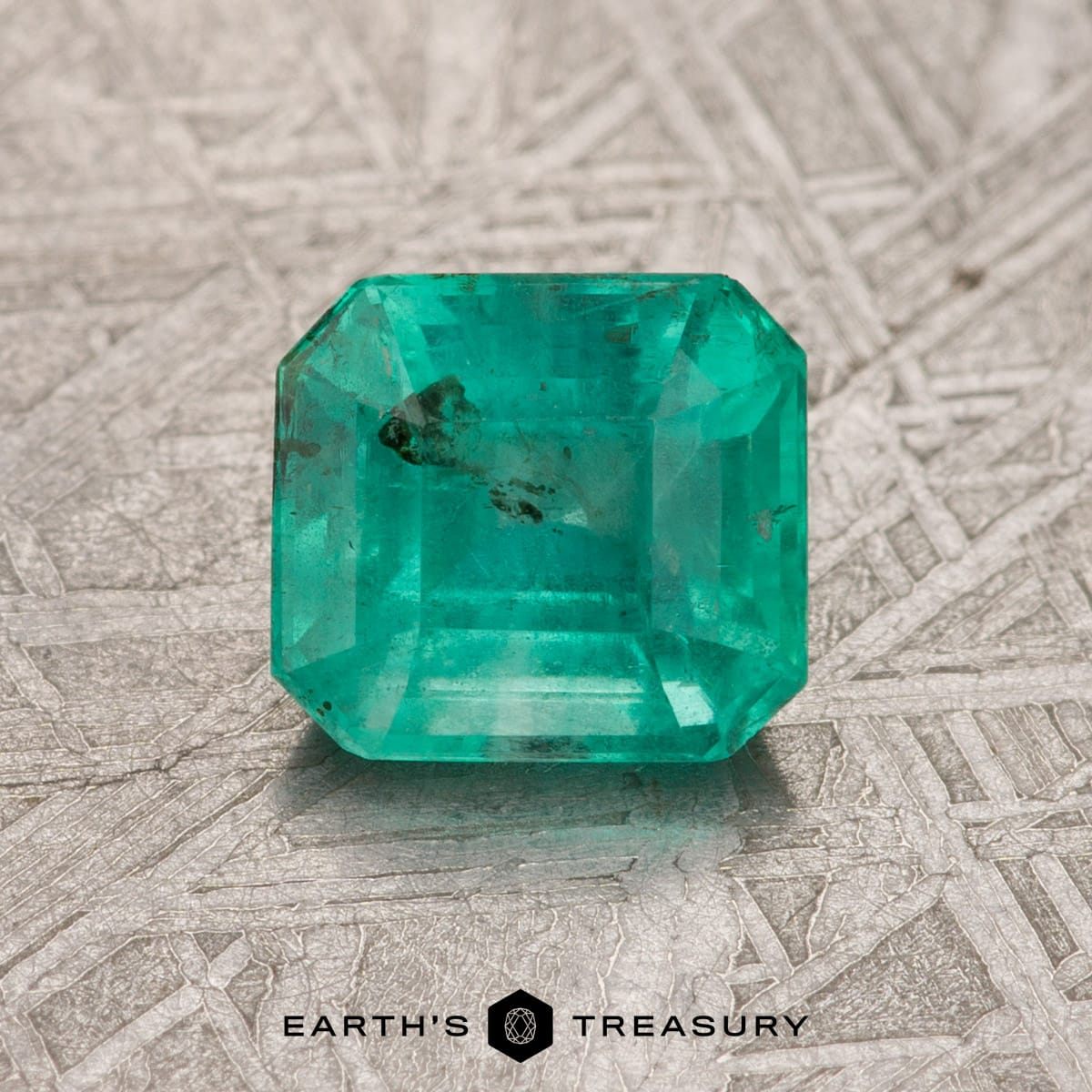
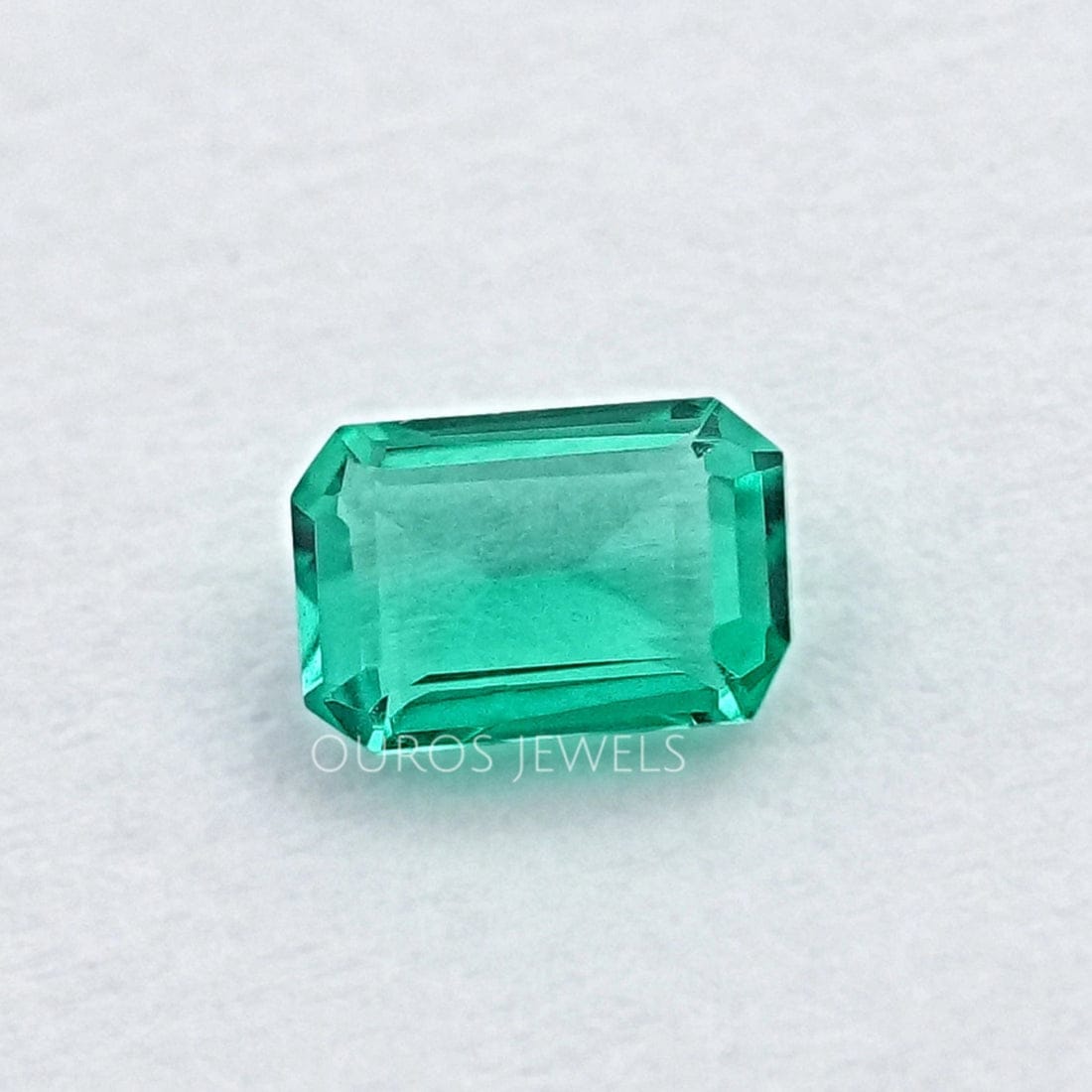
What Determines How Much an Emerald Is Worth?
Six factors drive emerald gemstone value — and emerald weights them differently than ruby or sapphire.
Color: Vivid Pure Green Wins
Color carries even more weight in emerald than in most gems — frequently 60% or more of total value. The ideal is a vivid, slightly bluish-green (the classic Muzo green) with medium to medium-dark tone and strong saturation. Stones that drift toward yellow-green (often Zambian or Brazilian material) or pale green lose significant value.
Saturation and tone interact: a too-dark stone loses brilliance and reads almost black under fluorescent light, while a too-light stone reads as “green beryl” rather than emerald. The gem laboratories actually have a minimum saturation/tone threshold below which the same material is classified as green beryl and trades at a fraction of emerald prices.
Origin: Colombia, Zambia, Brazil, Ethiopia
Colombia is the benchmark, and Muzo provenance carries the strongest premium thanks to its pure-green color and centuries of mining history. Chivor stones lean slightly bluer; Coscuez is bluer still. Colombian provenance on a certificate typically adds 30–80% over the same stone with unknown origin.
Zambia (Kagem) produces excellent bluish-green emeralds with often-superior clarity to Colombian material, and the gap to Colombia has narrowed significantly in the last decade. Brazil (Belmont, Itabira) produces large clean rough at accessible prices. Ethiopia (Shakiso) emerged in 2017 and produces vivid stones with a distinctive character. Afghan Panjshir and Russian Ural Mountain emeralds are scarce and carry collector premiums.
Treatment: The Emerald-Specific Wildcard
Practically every emerald on the market has oil or resin filling its surface-reaching fissures. The lab grading scale runs None → Insignificant (F1) → Minor (F2) → Moderate (F3) → Significant (F4). Each step up the scale reduces the stone's price by roughly 15–30% at fine quality.
Cedar oil and pure paraffin are the trade-accepted “light” fillers. Synthetic resins (Opticon, Palma) are more durable but harder to remove and grade lower. Dyed green resin in pale stones reduces value 70–90% versus a comparable natural-color emerald. Always have high-value stones lab graded before purchase, and avoid ultrasonic cleaning — it removes the oil and can leave the stone looking dramatically more included.
Clarity: Jardin Is Expected
Emerald is a GIA Type III gem, meaning inclusions are expected and tolerated. The trade calls the inclusion pattern “jardin” — the French word for garden — and a stone with attractive jardin can actually command its own following from purists who value un-meddled-with character.
The practical clarity standard is “eye-clean”: visible jardin under magnification is fine, but no inclusion should dominate the face-up view. Inclusions that break the surface (especially in vulnerable areas like a culet) reduce durability and value. Three-phase inclusions — gas, liquid, and a tiny crystal — are characteristic of Colombian emeralds and act as a fingerprint of origin.
Carat Weight and the Rarity Curve
Fine emerald above 3 carats becomes rare quickly. A 2-carat fine vivid green emerald can be 3× the per-carat price of a 1-carat stone of the same quality, and 5-carat fine stones routinely exceed $20,000 per carat. The biggest single price jumps land at the 2, 3, 5, and 10-carat thresholds.
Emerald is also less dense than ruby or sapphire (specific gravity around 2.7 vs 4.0), so a 1-carat emerald looks noticeably larger than a 1-carat ruby. Buyers shopping by visual size should compare millimeter dimensions, not just carat weight.
Cut Quality: The “Emerald Cut” Exists for a Reason
The emerald cut — a step-cut rectangle with cropped corners — was developed specifically for emerald. It protects the brittle corners from chipping during setting, maximizes color saturation, and shows off the jardin in a controlled way. Most fine emeralds are cut this way for a reason.
Oval, pear, and cushion cuts are common at the commercial end. A well-cut emerald shows even color face-up with no windowing in the center and minimal extinction zones. Lopsided or windowed cuts reduce value 15–40%.
Emerald Prices by Origin: Colombia, Zambia, Brazil & Ethiopia
Origin is one of the strongest signals in the emerald market. Here is what each major source typically trades for.
Colombian Emeralds (Muzo, Chivor, Coscuez)
Colombia is the historical and modern benchmark for emerald. Muzo produces vivid pure green with a slight warm cast; Chivor stones lean cooler and bluish; Coscuez is bluer still. Colombian emeralds typically show three-phase inclusions under magnification, which act as a fingerprint of origin and are confirmed on lab certificates from GIA, AGL, and Gübelin.
Price range (fine quality): $2,000–$15,000/ct for oiled Muzo; $8,000–$100,000+/ct for certified “no oil” Muzo above 3 carats.
Zambian Emeralds (Kagem)
Zambia, primarily through the Kagem mine, is the world's largest emerald producer by volume. Zambian emeralds are often more transparent than Colombian and have a slightly blue-green hue with darker tone. The market has rerated them upward over the last decade as buyers learned to appreciate the clarity advantage.
Price range (fine quality): $1,500–$10,000/ct oiled; $5,000–$25,000/ct for fine no-oil pieces.
Brazilian Emeralds (Belmont, Itabira, Capoeirana)
Brazil produces large, clean rough that yields well in big sizes. Color is typically a slightly yellowish-green that is brighter but less “deep” than Colombian or Zambian. Brazilian emeralds offer some of the best value at the commercial-to-fine border, especially in larger sizes.
Price range (fine quality): $500–$3,000/ct oiled; $1,500–$8,000/ct for very fine stones.
Ethiopian, Afghan & Russian Emeralds
Ethiopia (Shakiso) emerged commercially in 2017 with vivid green stones that are increasingly mainstream. Afghan Panjshir Valley emeralds are rare but produce some of the finest pure-green color in the world. Russian Ural Mountain emeralds are historically important and carry strong collector premiums when fine quality with full provenance.
Price range (fine quality): $1,000–$6,000/ct for Ethiopia; $3,000–$15,000/ct for Panjshir; collector premiums for Russian Ural pieces.
How to Use Our Emerald Value Calculator
Four steps to a personalized emerald price estimate
STEP 01
Enter Carat Weight
Pick a preset range or type the exact weight. Emerald is lighter than ruby or sapphire, so a 1-carat emerald looks larger than a 1-carat ruby.
STEP 02
Select Color Grade
Match the closest tone. Vivid Muzo green is the benchmark; bluish-green Chivor and Zambian stones come close at fine quality.
STEP 03
Choose Clarity, Origin, Treatment & Cut
Emerald is a Type III gem, so visible "jardin" is normal. Tell the calculator how much oil/resin treatment you know your stone has had.
STEP 04
View Your Estimate
See an estimated price range per carat, plus total value and a short explanation of why your emerald grades where it does.
Not sure about your emerald's details? The default values give a fair mid-range estimate. For the most accurate valuation, have your emerald examined by a local jeweler or upload a photo to our gemstone value calculator for an AI-powered assessment.
Frequently Asked Questions About Emerald Value
Get answers to common questions about rock identification, rockhounding, and using our platform.
It produces a realistic 2026 market range based on the same six factors gem dealers price on: color, clarity, origin, treatment, cut, and carat. Because emerald is fissure-prone and oiling is near-universal, the treatment grade has a particularly large effect — the calculator weights it accordingly. For insurance or estate valuation, follow up with a GIA, AGL, Gübelin, or SSEF certificate.
A 1-carat emerald typically ranges from about $100–$500/ct for commercial material, $700–$2,500/ct for fine green stones, and $2,500–$6,000/ct for top vivid green examples. Certified Colombian Muzo provenance and a "no oil" or "insignificant" treatment grade can push a fine 1-carat well above those bands.
The most expensive emeralds are certified Colombian Muzo stones with vivid pure green color, eye-clean to slightly included clarity, and an "insignificant" or "no oil" treatment grade. Fine examples above 5 carats can exceed $100,000 per carat at auction. The all-time record per-carat prices are held by 18th–20th century Muzo emeralds with full provenance.
Effectively yes. Emerald rough is naturally fissured (the inclusion pattern is called "jardin," French for garden), and oils — traditionally cedar oil, more recently Opticon and Palma — fill surface-reaching fissures and improve apparent clarity. The trade standard certificates grade this as None, Insignificant (F1), Minor (F2), Moderate (F3), or Significant (F4). The lighter the treatment, the higher the value.
Not always. Fine Zambian emeralds — especially from Kagem — are often more transparent and have a slightly blue-green character that many modern buyers prefer over Colombian green. At commercial and fine grades Zambian material trades within 10–25% of comparable Colombian stones; only at the very top (vivid Muzo green with full Colombian provenance) does Colombia pull meaningfully ahead.
A "no oil" or "no treatment" emerald is a stone that a gem lab has examined and found to have no detectable filler in its fissures. Because almost every emerald is oiled, finding one that doesn't need it implies excellent natural clarity. Certified no-oil emeralds typically trade at 2–4× the price of moderately oiled stones of comparable color and size.
Look for natural "jardin" inclusions — small wisps, three-phase inclusions, and crystal needles — under 10× magnification. Synthetics (Chatham, Biron) tend to look unnaturally clean or show telltale flux veils, and dyed beryl or green glass shows different inclusions and lower hardness. For final confirmation, send the stone to GIA, AGL, Gübelin, or SSEF.
Colombian emeralds in commercial quality run about $200–$1,000/ct, fine quality $1,500–$8,000/ct, and top Muzo-grade vivid green stones $8,000–$25,000/ct (heated/oiled) or $15,000–$100,000+/ct for certified Muzo no-oil pieces above 3 carats. Chivor (bluish green) stones tend to trade at 70–85% of Muzo pricing.
Top-quality Colombian Muzo emeralds with certified provenance have appreciated reliably over the last two decades, particularly stones above 3 carats. Commercial-grade and heavily oiled emeralds are not investment-grade — they hold value poorly. As with all collectibles, illiquid markets and grading subjectivity mean past performance is not a guarantee of future returns.
This tool estimates loose stone value. Emerald jewelry adds value from the setting metal, craftsmanship, brand, and design. For jewelry, treat the calculator result as the stone-only component and add the appraised value of the mount, or consult a jewelry appraiser for a complete valuation.
More Gemstone Tools from Ruby Glint
Explore our other free identification and valuation tools
Ruby Value Calculator
Get an instant ruby price estimate by carat, color, clarity, origin, and treatment.
Value rubiesSapphire Value Calculator
Estimate sapphire worth by color, clarity, origin (Kashmir, Burma, Ceylon), and treatment.
Value sapphiresOpal Value Calculator
Price black, boulder, crystal, and fire opals by body tone and play-of-color.
Value opalsGemstone Value Calculator
Upload a gemstone photo and get an AI-powered value estimate for any gem type.
Try photo valuationWant Unlimited Emerald Valuations?
Download Ruby Glint for unlimited value checks, saved reports, and deeper stone analysis tools.


Ready to Estimate Your Emerald's Value?
Scroll up and enter your emerald's details to get an instant price estimate.