Opal Value Calculator
Find out what your opal is worth in seconds, with 2026 market data. Use this opal price calculator to estimate value by type, body tone, play-of-color, origin, and treatment.
Last updated:
Whether you have a black opal from Lightning Ridge, a boulder opal from Queensland, a Welo crystal opal, or a Mexican fire opal, this tool produces a realistic opal appraisal range using the same factors opal cutters and dealers use at the mine and at trade shows.
Opal Value Calculator
Question 1 of 6
Valuing: Opal
Estimate the carat weight of your opal:
Opal Price Per Carat: 2026 Market Reference
Approximate opal value per caratacross quality tiers. “Top” band assumes solid Australian black opal with vivid play-of-color.
| Carat Range | White / Common | Crystal / Welo / Boulder | Top Black Opal |
|---|---|---|---|
| Under 1 ct | $3-$30 | $50-$300 | $300-$1,500 |
| 1-2 ct | $5-$50 | $100-$500 | $500-$2,500 |
| 2-5 ct | $10-$100 | $200-$1,200 | $1,500-$6,000 |
| 5-10 ct | $25-$200 | $400-$2,000 | $3,000-$10,000 |
| 10-20 ct | $50-$400 | $800-$3,500 | $5,000-$15,000 |
| 20+ ct | $80-$600 | $1,200-$5,000 | $8,000-$25,000+ |
Ranges assume natural solid opal. Doublets price at 5–15% of solid; triplets even lower. Smoke-treated Welo prices at 30–60% of comparable untreated. Fire opals follow a distinct curve — see the FAQ below.
Want a photo-based estimate? Upload an opal photo to our gemstone value calculator — opal valuation depends heavily on pattern and brightness that a photo captures better than a form.
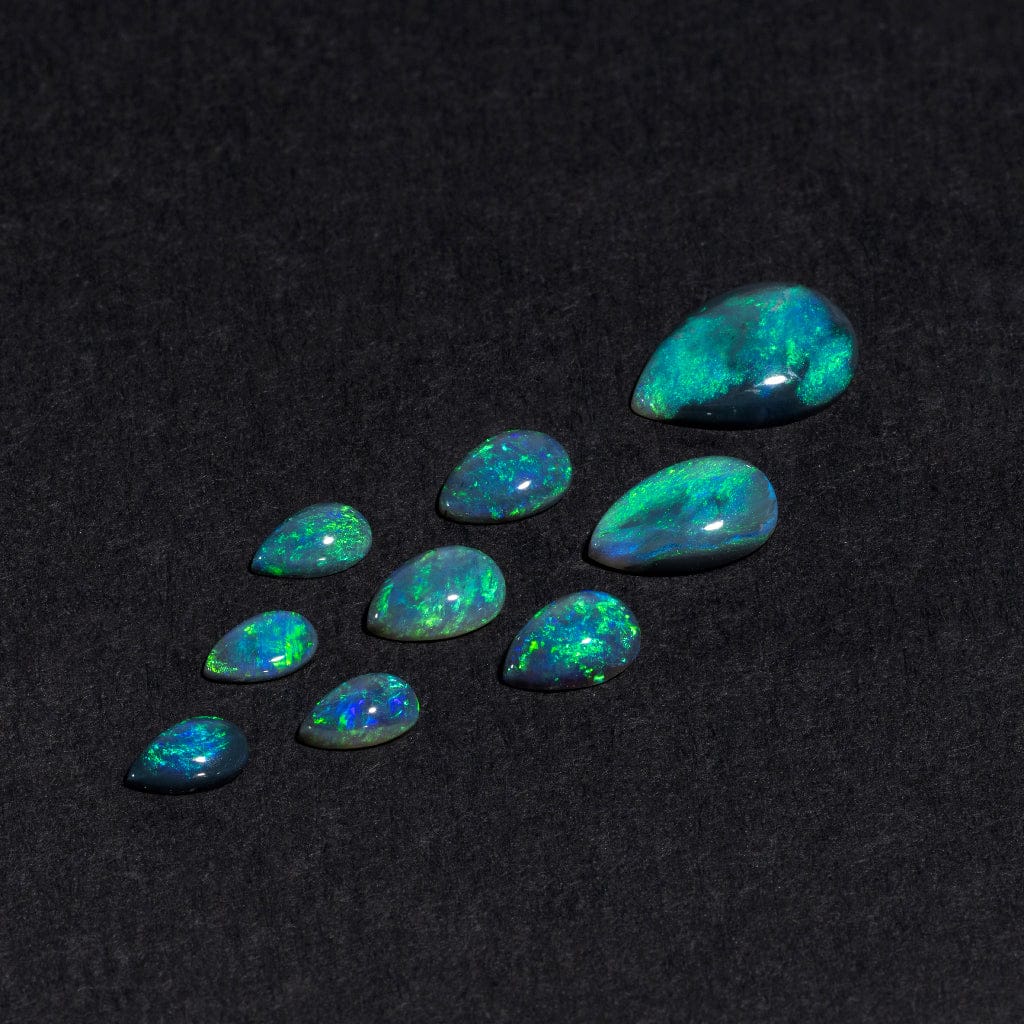
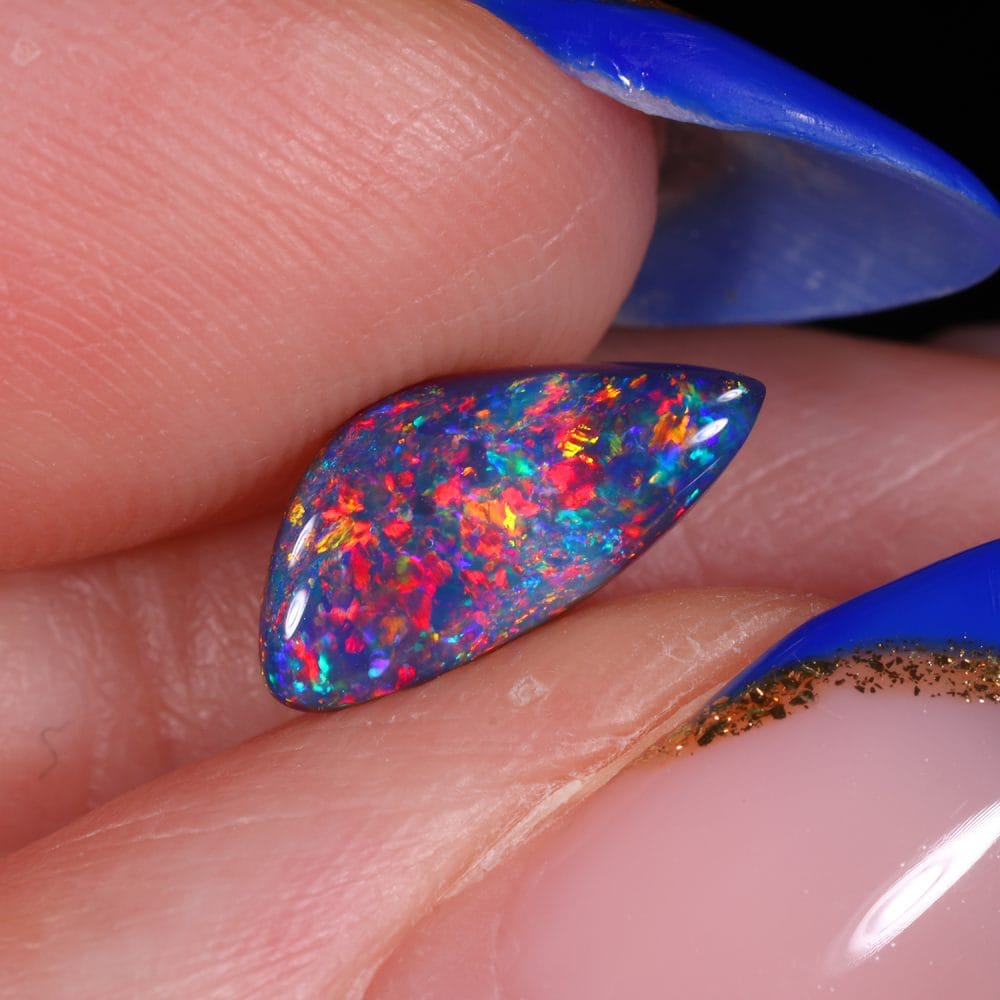
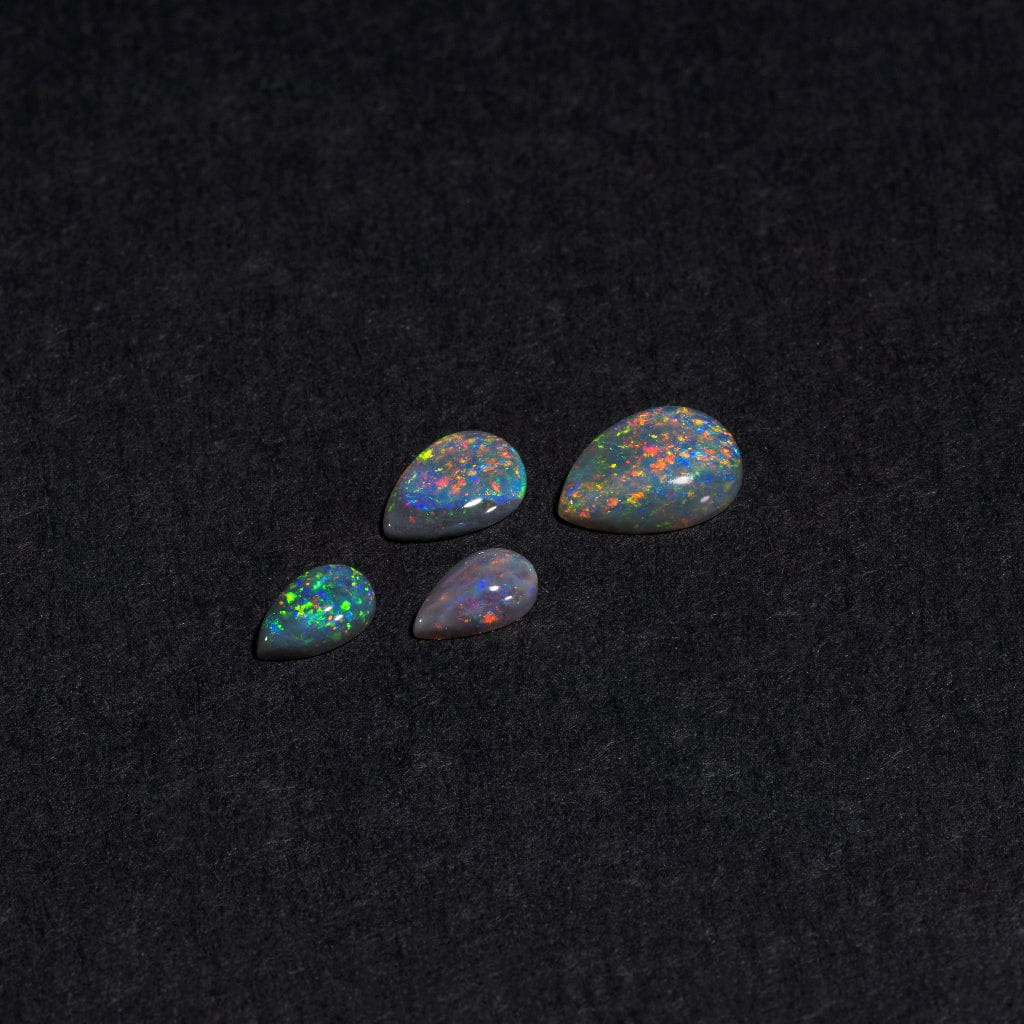
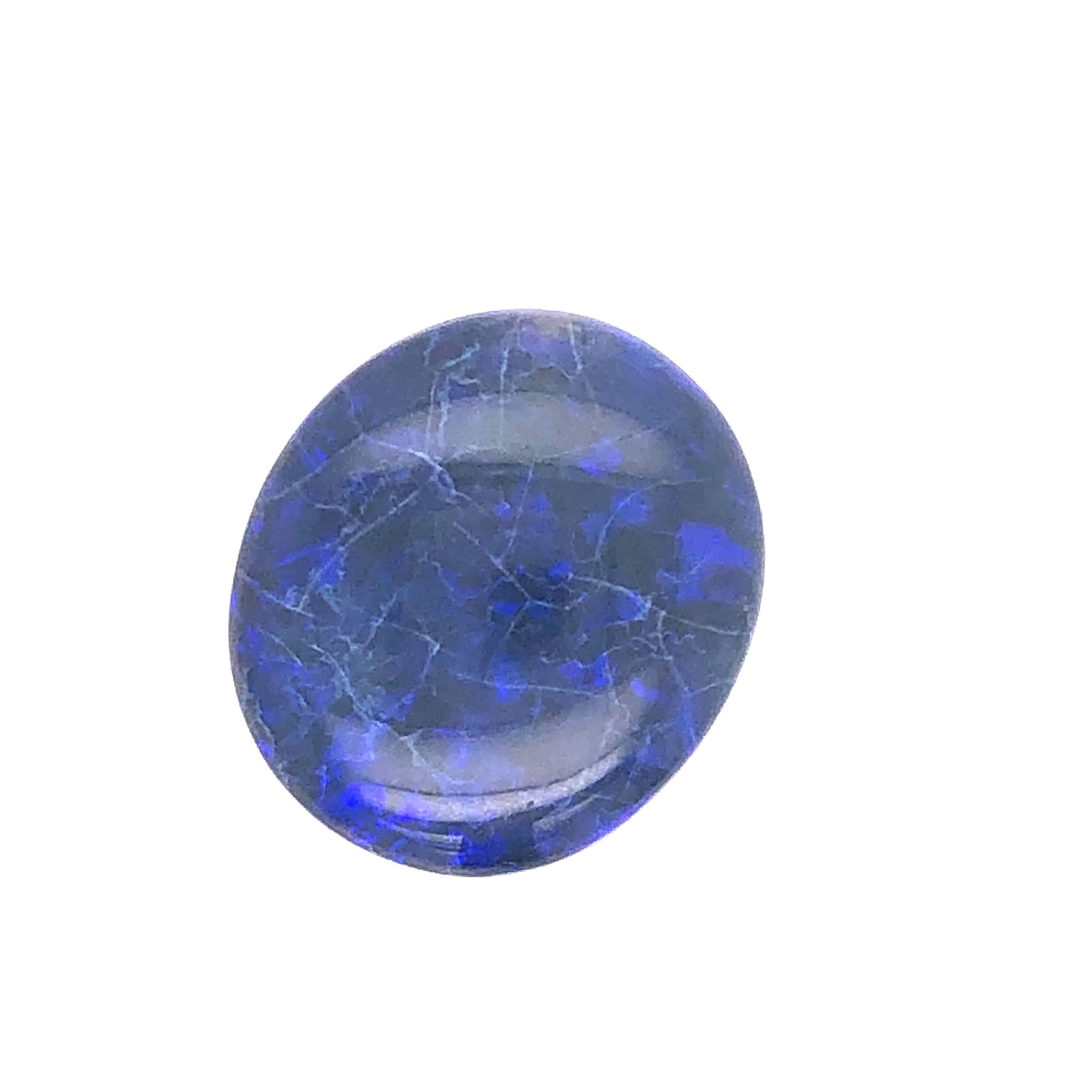
What Different Opals Look Like
Body tone, play-of-color brightness, and pattern transform the per-carat price. These Lightning Ridge examples illustrate the top of the market.
What Determines How Much an Opal Is Worth?
Six factors drive opal gemstone value — and opal is graded differently from other precious stones.
Opal Type: The Single Biggest Lever
Opal type can move price by 10–100× before any other factor kicks in. The hierarchy, top to bottom: solid black opal (Lightning Ridge), boulder opal (Queensland), crystal opal, white/light opal, Welo crystal opal (Ethiopia), fire opal (Mexico), and common opal / potch (no play-of-color).
Within each type, the same play-of-color pattern is worth dramatically more on a darker base. A vivid 3-color flash pattern on N1 black opal might price at $5,000/ct; the same pattern on N8 white opal might price at $200/ct. This is why black opal commands such a premium — every other quality factor is amplified by the dark background.
Body Tone: The N1–N9 Scale
Body tone is the darkness of the background behind the play-of-color, graded N1 (jet black) through N9 (white). The scale is published by the Australian Opal Industry Association and is the most objective single field in opal grading. A two-step move darker on the body tone scale can multiply price by 2–5× holding all else constant.
N1–N4 stones are classified as black opal; N5–N6 as semi-black or dark crystal; N7–N9 as light or white opal. Crystal opal (transparent or semi-transparent) is graded separately because the play-of-color is visible from both sides of the stone.
Play-of-Color: Brightness, Colors, and Pattern
Play-of-color is graded on three dimensions: brightness (1/5 dull to 5/5 dazzling), the colors present (red is the rarest and most valuable; orange, green, blue, violet follow in roughly that order), and pattern. Stones that show multiple bright colors across the full face — not just from one angle — command sharp premiums.
Patterns are ranked from rarest to most common: harlequin (large tessellated blocks, almost mythical at top quality), flagstone, broad flash, rolling flash, floral, pinfire, and random. A harlequin pattern can multiply price by 3–10× versus a pinfire stone of the same body tone and brightness.
Origin: Australia, Ethiopia & Mexico
Australia produces roughly 95% of the world's precious opal: black opal from Lightning Ridge (NSW), boulder opal from Queensland (Koroit, Yowah, Quilpie), white opal from Coober Pedy and Andamooka (SA). Australian opal is stable, predictable, and benchmarks the global price structure.
Ethiopia (Welo / Wollo province, since 2008) produces vivid-play crystal and white opal at lower price points. Welo opal is hydrophane — it absorbs water and can temporarily lose its play-of-color when wet — which makes collectors cautious. Mexico is the leading source of fire opal: transparent stones in vivid orange and red that are graded primarily on body color and only secondarily on any play-of-color.
Treatment: Natural, Smoked, Sugar-Acid, Doublets & Triplets
Natural solid opal is the gold standard. Smoke treatment of Welo opal artificially darkens body tone to mimic black opal and is detectable in a gem lab — treated stones price at 30–60% of comparable untreated. Sugar/acid treatment of Andamooka matrix is industry-standard and accepted, though it does shift the stone permanently toward black opal appearance.
Doublets glue a thin slice of opal to a dark backing, and triplets add a clear glass or quartz cap. Both are constructed stones, not treated solids, and they price at 5–15% (doublet) and 2–10% (triplet) of comparable solid opal. Always check the side profile of a stone before buying — a clean glue line is the giveaway. Stabilization with resin is common for fragile material and reduces value sharply.
Carat Weight, Shape & Dome
Larger opals are exponentially rarer than smaller ones, so per-carat prices climb steeply. A 5-carat fine black opal can command 3–4× the per-carat price of a 1-carat stone of the same body tone and brightness, and 10+ carat stones with premium play-of-color are auction-grade.
Shape and dome matter unusually for opal. A high domed cabochon shows play-of-color better than a flat polish, and a well-proportioned freeform shape (especially for boulder opal that follows the ironstone matrix) can price above a standard oval of the same weight. Cut weight loss is a real consideration — opal rough often loses 50–70% of weight to cutting.
Direction & Stability
Opal value drops sharply if the play-of-color is only visible from one angle (“directional” stones). Top opals show full play from every viewing angle. Similarly, “crazing” — fine internal cracks caused by drying — is a serious value killer. Reputable sellers age-test rough before cutting and offer guarantees against crazing on cut stones.
Opal Prices by Origin: Lightning Ridge, Queensland, Coober Pedy & Welo
Origin determines the type of opal, which in turn anchors the whole price structure.
Lightning Ridge, NSW Australia (Black Opal)
Lightning Ridge is the only commercially significant source of true black opal in the world. The dark base amplifies every other quality factor, which is why Lightning Ridge stones dominate the top of the global opal market.
Price range (fine quality): $1,000–$5,000/ct for solid black opal with strong play, $5,000–$15,000+/ct for N1–N2 with vivid red harlequin.
Queensland Australia (Boulder Opal)
Boulder opal — a thin layer of precious opal naturally bonded to ironstone — comes almost exclusively from Queensland (Koroit, Yowah, Winton, Quilpie). The dark ironstone backing acts like a natural body-tone enhancer and gives boulder opal its high color saturation.
Price range (fine quality): $300–$1,500/ct typical, $2,000–$8,000/ct for top full-color-dome pieces.
Coober Pedy & Andamooka, SA Australia (White / Crystal)
Coober Pedy is the world's largest producer of white opal. Andamooka produces both white opal and a distinctive matrix material that is sugar/acid treated to a black appearance. White opal is graded by play-of-color and pattern; the body tone is already at the light end of the scale.
Price range (fine quality): $30–$300/ct for typical, $400–$1,500/ct for top multi-color stones.
Welo / Wollo, Ethiopia
Discovered in 2008, the Welo opal field produces vivid-play crystal and white opal at accessible prices. Welo opal is hydrophane (absorbs water), which makes it less stable than Australian opal and a more cautious buy for jewelry. Some Welo is smoke-treated to mimic black opal — labs can detect this.
Price range (fine quality): $50–$400/ct typical natural Welo, $600–$2,500/ct for top vivid-pattern stones.
Mexico (Fire Opal) & Other Sources
Mexico is the leading source of fire opal: transparent to translucent stones in vivid orange, red, and yellow body colors, occasionally with play-of-color. Brazil and Honduras produce smaller amounts of precious opal in various types. Indonesian opal is a hydrophane similar to Welo. US opal (Nevada, Oregon) is collected primarily by enthusiasts.
Price range (fine quality): $50–$300/ct for typical Mexican fire opal, $500–$2,000/ct for top color in larger sizes; rare with play-of-color can reach $5,000/ct.
How to Use Our Opal Value Calculator
Four steps to a personalized opal price estimate
STEP 01
Enter Carat Weight
Opals are weighed in carats just like other gems. Select a preset or type the exact weight from your seller's ticket.
STEP 02
Pick Opal Type
Black, boulder, crystal, white, fire, Welo, or common potch. Type alone can move price by 10–100×, so this is the most important field.
STEP 03
Choose Body Tone, Play-of-Color, Origin & Treatment
Match the body-tone scale (N1 black to N9 white), rate the play-of-color brightness, pick the origin, and note any treatment.
STEP 04
View Your Estimate
See an estimated price range per carat, total value, and a short explanation that calls out which factors are driving the result.
Not sure about your opal's details? The default values give a fair mid-range estimate. For high-value opals — especially black or top-grade boulder — have the stone professionally graded by an AGTA, GAA, or IGS appraiser, or upload a photo to our gemstone value calculator for an AI-powered assessment.
Frequently Asked Questions About Opal Value
Get answers to common questions about rock identification, rockhounding, and using our platform.
It returns realistic 2026 market ranges based on the factors that drive opal value: type, body tone, play-of-color intensity and pattern, origin, treatment, and carat weight. Because opal pricing is unusually subjective — pattern and brightness vary stone-to-stone — high-value pieces should always be photographed and graded by an IGS, GAA, or AGTA appraiser.
A 1-carat solid black opal from Lightning Ridge typically ranges from $100–$500 per carat for stones with faint play, $500–$2,500 per carat for fine grade with vivid red/green play, and $5,000–$15,000 per carat for top N1–N2 black opal with a sharp harlequin or floral pattern. Stones with a strong red play-of-color command the highest premium.
Solid Australian black opal from Lightning Ridge with N1 jet-black body tone, vivid 5/5 brightness, and a harlequin or rolling-flash pattern is the most expensive. Top stones above 5 carats can exceed $15,000 per carat at retail. Boulder opal with a complete dome of fire on ironstone follows close behind.
Generally yes, at equivalent visual quality, though the gap is narrower than it used to be. Welo opal has only been on the market since 2008, and its hydrophane nature (it absorbs water and changes appearance temporarily) makes it less stable than Australian opal. Fine untreated Welo with sharp play-of-color trades at roughly 30–60% of comparable Australian crystal opal.
Body tone is the darkness of the background behind the play-of-color, graded on a scale from N1 (jet black) to N9 (white). Darker body tones make the play-of-color appear more vivid, so an N1–N3 black opal is far more valuable than an N7–N9 white opal of identical play-of-color brightness and pattern.
Look at the side profile under a loupe. A solid opal shows a single uniform stone; a doublet shows a clear glue line between a thin opal slice and a dark backing; a triplet adds a clear glass or quartz cap on top, often with visible curvature. Doublets price at 5–15% of comparable solid opals; triplets even less.
Harlequin is the rarest opal pattern: large, angular blocks of color tessellated like a stained-glass window across the entire stone, with no gaps. True harlequin pattern is extremely rare — most stones marketed as harlequin are more accurately described as “harlequin-like.” A genuine harlequin black opal can multiply standard pricing by 3–10×.
Mexican fire opal — transparent to translucent stones in vivid orange, red, or yellow — runs $50–$300 per carat for typical material and $500–$2,000 per carat for fine top-color rough above 3 carats. Fire opals with both vivid body color and play-of-color (rare) reach $1,500–$5,000 per carat.
Yes. Smoke treatment of Welo opal darkens the body tone artificially and reduces value 40–70%. Sugar/acid treatment is standard for Andamooka matrix and is widely accepted. Resin stabilization makes fragile material wearable but reduces value sharply. Doublets and triplets are constructed stones, not treated solids, and price accordingly.
This tool estimates loose stone value. Opal jewelry adds value from the setting metal, craftsmanship, brand, and design. For jewelry, treat the calculator result as the stone-only component, or consult a jewelry appraiser who considers the complete piece — including the protective setting style that opal often requires.
More Gemstone Tools from Ruby Glint
Explore our other free identification and valuation tools
Ruby Value Calculator
Get an instant ruby price estimate by carat, color, clarity, origin, and treatment.
Value rubiesSapphire Value Calculator
Estimate sapphire worth by color, clarity, origin (Kashmir, Burma, Ceylon), and treatment.
Value sapphiresEmerald Value Calculator
Estimate emerald worth by color, clarity, origin, and oil treatment grade.
Value emeraldsGemstone Value Calculator
Upload a gemstone photo and get an AI-powered value estimate for any gem type.
Try photo valuationWant Unlimited Opal Valuations?
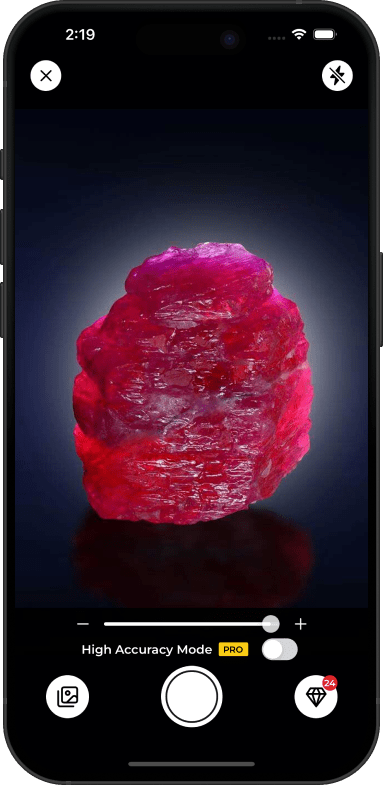
Download Ruby Glint for unlimited value checks, saved reports, and deeper stone analysis tools.


Ready to Estimate Your Opal's Value?
Scroll up and enter your opal's details to get an instant price estimate.