Chlorite

What is Chlorite?
Chlorite is a group of minerals, not a single mineral species, characterized by their layered structure and variable chemical composition. They are typically formed through the alteration of other minerals like pyroxenes, amphiboles, and micas in metamorphic and hydrothermal environments. Chlorites are often found in metamorphic rocks such as schists and phyllites, as well as in some igneous rocks. The appearance of chlorite varies depending on its composition, but it is commonly green, gray, or black, with a pearly to dull luster. Chlorite minerals are relatively soft and can be easily identified by their characteristic green color and platy or flaky habit.
Optical Properties
- Refractive Index
- 1.57-1.67
- Birefringence
- 0.020
- Pleochroism
- Weak to Moderate
- Optical Character
- Biaxial negative
Discover Values
Market Value Factors
Pricing varies for every rock and mineral, so use these universal factors to gauge Chlorite before comparing listings or appraisals.
Size & Weight
Larger, intact specimens usually command higher prices.
Rarity & Demand
Scarce material or popular varieties sell at a premium.
Condition & Finish
Chips, repairs, and heavy wear lower value; clean prep helps.
Treatment & Provenance
Untreated specimens with documented locality are prized.
Where to Find Chlorite
RockHoundR, the free-to-download rockhounding map from the Ruby Glint team, shows where collectors find chlorite in the US, with land-access notes for BLM land and national forests. Collecting is banned in national parks.
See where to find chloriteAlways check the local rules and get the landowner's permission before you collect.
Quick Facts
Physical Properties
- Color
- Green, gray, black, white
- Hardness (Mohs)
- 2-3
- Rock tumbling
- Not recommended
- Density
- 2.6 - 3.3 g/cm³
- Luster
- Pearly to dull
- Crystal System
- Monoclinic
Chemical Properties
- Chemical Formula
- (Mg,Fe,Al)6(Si,Al)4O10(OH)8
- Elements
- Si, O, Al, Fe, Mg, Mn, etc.
Also Known As
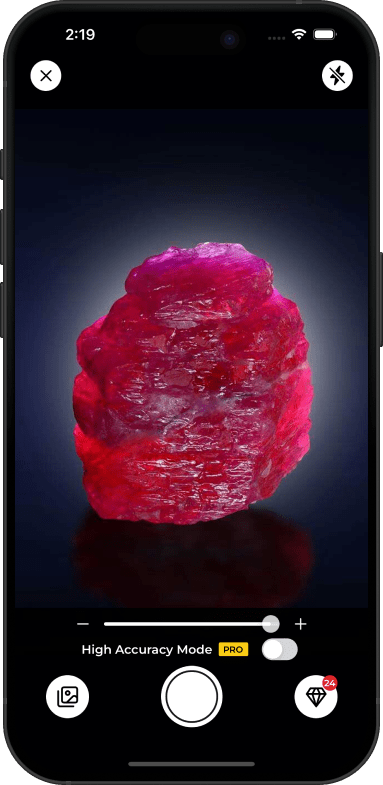
Identify Chlorite Instantly
- Snap a photo, get instant results
- 6,700+ rocks, minerals & crystals
- Discover collecting spots near you
Chlorite FAQs
How do I identify Chlorite?
Chlorite can be identified by its hardness of 2-3 on the Mohs scale, Green color, Pearly to dull luster, Monoclinic crystal system. Look for these key characteristics when examining specimens.
What color is Chlorite?
Chlorite typically appears in Green, gray, black, white. Color can vary depending on impurities and formation conditions.
How hard is Chlorite?
Chlorite has a hardness of 2-3 on the Mohs scale. This makes it a soft mineral that can be scratched easily.