Chrysocolla

What is Chrysocolla?
Chrysocolla is a hydrated copper phyllosilicate mineral. It is a secondary mineral, forming in the oxidation zone of copper ore deposits. Chrysocolla is often found as botryoidal (bubble-like) or massive formations, and can also occur as crusts or veins. It is known for its vibrant blue to green colors, which are due to the presence of copper.
Uses & Applications
Chrysocolla is primarily used in jewelry and ornamental objects. Historically, it was used as a copper ore and pigment for paints. Today it is popular among collectors and in metaphysical practices.
Healing Properties
Chrysocolla is believed to promote communication, creativity, and emotional healing. It is thought to calm emotions, enhance teaching abilities, and support those who work in communication fields. Associated with the divine feminine and goddess energy.
Optical Properties
- Refractive Index
- 1.46 to 1.57
- Birefringence
- Weak
- Pleochroism
- Weak to absent
- Optical Character
- Biaxial (-)
- Dispersion
- Moderate
Discover Values
Market Value Factors
Pricing varies for every rock and mineral, so use these universal factors to gauge Chrysocolla before comparing listings or appraisals.
Size & Weight
Larger, intact specimens usually command higher prices.
Rarity & Demand
Scarce material or popular varieties sell at a premium.
Condition & Finish
Chips, repairs, and heavy wear lower value; clean prep helps.
Treatment & Provenance
Untreated specimens with documented locality are prized.
Where to Find Chrysocolla
RockHoundR, the free-to-download rockhounding map from the Ruby Glint team, shows where collectors find chrysocolla in the US, with land-access notes for BLM land and national forests. Collecting is banned in national parks.
See where to find chrysocollaAlways check the local rules and get the landowner's permission before you collect.
The Meaning
Ancient civilizations, particularly in the Americas, valued chrysocolla for its connection to wisdom and communication. It has been called the teaching stone and is associated with empowerment, particularly for feminine energy and expression.
Geochemistry
Chrysocolla forms through the oxidation and weathering of copper sulfide deposits in arid climates. It precipitates from copper-rich solutions in the upper oxidized zones of copper ore bodies.
Associated Chakras



More Images


Quick Facts
Physical Properties
- Color
- Blue, Green, Blue-Green
- Hardness (Mohs)
- 2.5 to 3.5
- Rock tumbling
- Not recommended
- Density
- 1.9 to 2.4 g/cm³
- Streak
- White to bluish-green
Chemical Properties
- Chemical Formula
- (Cu,Al)2H2Si2O5(OH)4·nH2O
- Elements
- Copper, Silicon, Hydrogen, Oxygen
Also Known As
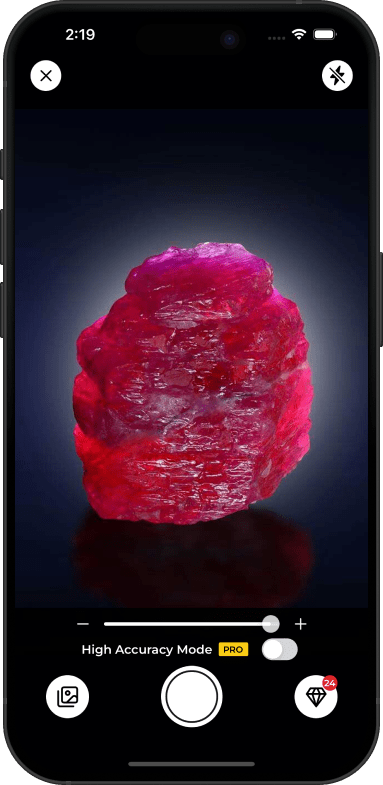
Identify Chrysocolla Instantly
- Snap a photo, get instant results
- 6,700+ rocks, minerals & crystals
- Discover collecting spots near you
Chrysocolla FAQs
How do I identify Chrysocolla?
Chrysocolla can be identified by its hardness of 2.5 to 3.5 on the Mohs scale, Blue color. Look for these key characteristics when examining specimens.
What color is Chrysocolla?
Chrysocolla typically appears in Blue, Green, Blue-Green. Color can vary depending on impurities and formation conditions.
How hard is Chrysocolla?
Chrysocolla has a hardness of 2.5 to 3.5 on the Mohs scale. This makes it a soft mineral that can be scratched easily.