Dendritic Agate
A variety of Chalcedony
What is Dendritic Agate?
Dendritic Agate is a beautiful stone of agate that was named after the small crystals that form divergent, plant-like or tree-like patterns inside the stone. These tiny filaments are actually particles of iron or manganese oxide. Dendritic Agate is associated with the Zodiac sign of Gemini.
Optical Properties
- Refractive Index
- 1.530-1.543
- Birefringence
- 0.003-0.009
- Pleochroism
- None
- Optical Character
- Biaxial positive
- Dispersion
- 0.013
Discover Values
Market Value Factors
Pricing varies for every rock and mineral, so use these universal factors to gauge Dendritic Agate before comparing listings or appraisals.
Size & Weight
Larger, intact specimens usually command higher prices.
Rarity & Demand
Scarce material or popular varieties sell at a premium.
Condition & Finish
Chips, repairs, and heavy wear lower value; clean prep helps.
Treatment & Provenance
Untreated specimens with documented locality are prized.
Where to Find Dendritic Agate
Dendritic Agate is a variety of Chalcedony. RockHoundR, the free-to-download rockhounding map from the Ruby Glint team, shows where collectors find chalcedony in the US, with land-access notes for BLM land and national forests. Collecting is banned in national parks.
See where to find chalcedonyAlways check the local rules and get the landowner's permission before you collect.
Health & Safety Information
- ⚠️Dendritic Agate in powdered form can be toxic due to its Crystalline Silica content.
- ⚠️Quartz, silica, crystalline silica and flint are non-toxic materials, but very fine dust containing quartz, known as respirable crystalline silicon (RCS), can cause serious and fatal lung disease. Lapidaries should exercise caution when cutting silica.
- ⚠️Dendritic Agate is typically non-toxic unless it's in powder form. Long-term exposure to finely ground powder may lead to silicosis. Therefore, when cutting or polishing dendritic Agate, be sure to wear a dust mask to avoid inhaling its dust.
Quick Facts
Physical Properties
- Color
- White to gray, black, brown, colorless, etc.
- Hardness (Mohs)
- 6.5 - 7
- Rock tumbling
- Tumbles well
- Density
- 2.59 - 2.67 g/cm³
- Streak
- White
- Luster
- Waxy, Vitreous
- Crystal System
- Trigonal
Chemical Properties
- Chemical Formula
- SiO2
- Elements
- Si, O
Also Known As
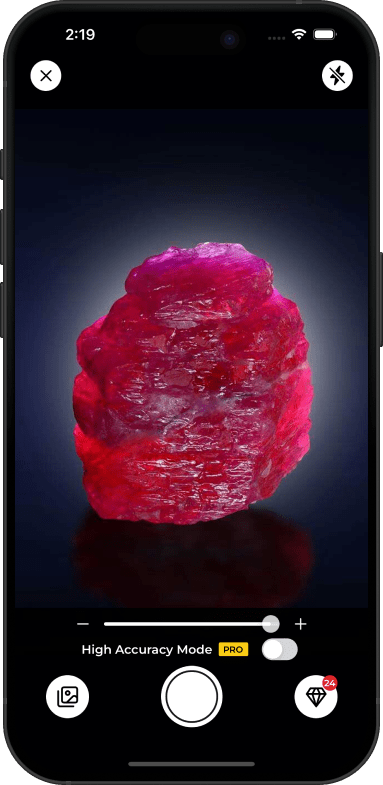
Identify Dendritic Agate Instantly
- Snap a photo, get instant results
- 6,700+ rocks, minerals & crystals
- Discover collecting spots near you
Dendritic Agate FAQs
How do I identify Dendritic Agate?
Dendritic Agate can be identified by its hardness of 6.5 - 7 on the Mohs scale, White to gray color, Waxy, Vitreous luster, Trigonal crystal system. Look for these key characteristics when examining specimens.
What color is Dendritic Agate?
Dendritic Agate typically appears in White to gray, black, brown, colorless, etc.. Color can vary depending on impurities and formation conditions.
How hard is Dendritic Agate?
Dendritic Agate has a hardness of 6.5 - 7 on the Mohs scale. This gives it moderate hardness.