Fülöppite
A variety of Plagionite Group
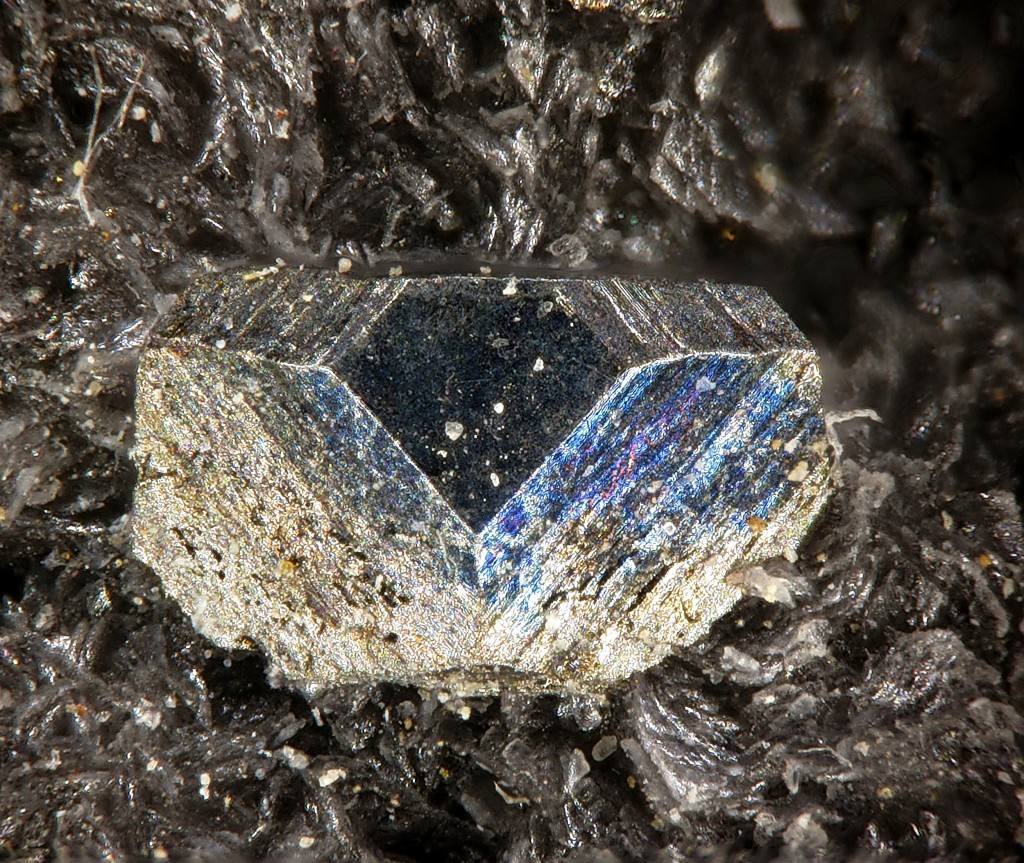
What is Fülöppite?
Fülöppite is a rare member of the plagionite group, comprising heteromorphite Pb7Sb8S19, plagionite Pb5Sb8S17 and semseyite Pb9Sb8S21. It was named in 1929 for Dr Bela Fülöpp, (1863–1938), a Hungarian lawyer, statesman and mineral collector.
Market Value Factors
Pricing varies for every rock and mineral, so use these universal factors to gauge Fülöppite before comparing listings or appraisals.
Size & Weight
Larger, intact specimens usually command higher prices.
Rarity & Demand
Scarce material or popular varieties sell at a premium.
Condition & Finish
Chips, repairs, and heavy wear lower value; clean prep helps.
Treatment & Provenance
Untreated specimens with documented locality are prized.
Key Characteristics
Characteristics of Fülöppite
Fülöppite is opaque. A petrographic microscope can be used to examine opaque materials under reflected polarised light. Under these conditions the mineral shows moderate anisotropism, changing colour from blue-green to red-brown. The reflectivity of a surface is the percentage of incident light energy that is reflected. It varies with the medium above the surface, such as air or oil, and with the wavelength of the incident light. The reflectivity of fülöppite in air for light of wavelength 540 nm is 31.9% to 40.1%. The mineral is brittle with an uneven fracture. It is soft, with a Moh's hardness of only 2 ⁄2, and heavy, with specific gravity 5.2. It melts easily in an open tube yielding sulphur fumes and a deposit of Sb2S2. It is not attacked by concentrated hydrochloric acid.
Appearance of Fülöppite
The crystals are short prismatic and pyramidal, with a lead-grey colour that may tarnish to steel-blue or bronze-white. The streak is reddish grey. The crystals are opaque, with a metallic lustre.
Formation of Fülöppite
The type locality is the Dealul Crucii Adit, Baia Mare, Maramureș County, Romania, and the type material is kept at the Natural History Museum, London, England, reference 1929,248. It is of hydrothermal origin and associated with zinkenite, semseyite, fizélyite, andorite, freieslebenite, geocronite, boulangerite, jamesonite, cinnabar, sphalerite, marcasite, quartz and dolomite. Fülöppite was first reported in Britain from Wet Swine Gill, Caldbeck Fells, Cumbria. It was described as dark grey metallic patches of fibrous crystals accompanying stibnite. Subsequently, rare dark red resinous to submetallic crystals associated with stibnite were identified as being close to fülöppite in composition.
Composition of Fülöppite
Fülöppite forms a homologous series with other members of the plagionite group. The structures of these minerals differ by the thickness of a galena sheet which occurs in all of them. Fülöppite has the thinnest such sheet.
Quick Facts
Physical Properties
- Color
- lead grey, tarnishing to steel blue or bronzy
- Hardness (Mohs)
- 2.5
- Rock tumbling
- Not recommended
- Density
- 5.19 g/cm³
- Streak
- reddish grey
Chemical Properties
- Chemical Formula
- Pb3Sb8S15
- Elements
- Pb, S, Sb
Identify Fülöppite Instantly
- Snap a photo, get instant results
- 6,700+ rocks, minerals & crystals
- Discover collecting spots near you
Fülöppite FAQs
How do I identify Fülöppite?
Fülöppite can be identified by its hardness of 2.5 on the Mohs scale, lead grey color. Look for these key characteristics when examining specimens.
What color is Fülöppite?
Fülöppite typically appears in lead grey, tarnishing to steel blue or bronzy. Color can vary depending on impurities and formation conditions.
How hard is Fülöppite?
Fülöppite has a hardness of 2.5 on the Mohs scale. This makes it a soft mineral that can be scratched easily.
What is the characteristics of fülöppite of Fülöppite?
Fülöppite is opaque. A petrographic microscope can be used to examine opaque materials under reflected polarised light. Under these conditions the mineral shows moderate anisotropism, changing colour from blue-green to red-brown. The reflectivity of a surface is the percentage of incident light energy that is reflected. It varies with the medium above the surface, such as air or oil, and with the wavelength of the incident light. The reflectivity of fülöppite in air for light of wavelength 540 nm is 31.9% to 40.1%. The mineral is brittle with an uneven fracture. It is soft, with a Moh's hardness of only 2 ⁄2, and heavy, with specific gravity 5.2. It melts easily in an open tube yielding sulphur fumes and a deposit of Sb2S2. It is not attacked by concentrated hydrochloric acid.
What is the appearance of fülöppite of Fülöppite?
The crystals are short prismatic and pyramidal, with a lead-grey colour that may tarnish to steel-blue or bronze-white. The streak is reddish grey. The crystals are opaque, with a metallic lustre.
What is the formation of fülöppite of Fülöppite?
The type locality is the Dealul Crucii Adit, Baia Mare, Maramureș County, Romania, and the type material is kept at the Natural History Museum, London, England, reference 1929,248. It is of hydrothermal origin and associated with zinkenite, semseyite, fizélyite, andorite, freieslebenite, geocronite, boulangerite, jamesonite, cinnabar, sphalerite, marcasite, quartz and dolomite. Fülöppite was first reported in Britain from Wet Swine Gill, Caldbeck Fells, Cumbria. It was described as dark grey metallic patches of fibrous crystals accompanying stibnite. Subsequently, rare dark red resinous to submetallic crystals associated with stibnite were identified as being close to fülöppite in composition.
