Serpierite
A variety of Devilline Group
What is Serpierite?
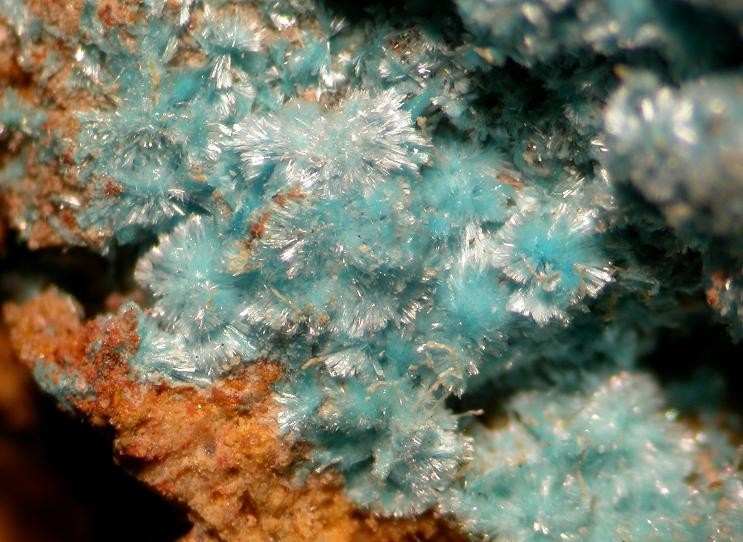
Serpierite is an uncommon transparent light blue mineral with a very fibrous appearance. This mineral is very soft and will start to dissolve if placed in water for extended periods of time. Serpierite is a secondary mineral found near oxidized hydrothermal conditions with copper-zinc deposits. This mineral may form pseudomorphs.
Market Value Factors
Pricing varies for every rock and mineral, so use these universal factors to gauge Serpierite before comparing listings or appraisals.
Size & Weight
Larger, intact specimens usually command higher prices.
Rarity & Demand
Scarce material or popular varieties sell at a premium.
Condition & Finish
Chips, repairs, and heavy wear lower value; clean prep helps.
Treatment & Provenance
Untreated specimens with documented locality are prized.
Key Characteristics
Characteristics of Serpierite
Sources differ widely about the hardness of serpierite, giving values varying between 2 and 4. They all agree, however, that the specific gravity is 3.07, a very little less than the calculated value. Cleavage is perfect perpendicular to the c direction, which is the direction in which the crystals are flattened. The mineral is brittle and breaks with a splintery fracture. It is soluble in acids and it is not radioactive.
Appearance of Serpierite
Serpierite is a sky-blue coloured mineral, with a white or almost white streak and a vitreous lustre, pearly on cleavages. It is transparent, and appears greenish-blue in transmitted light. No large crystals have been found. It occurs as tufts and crusted aggregates of lath-like or bladed crystals typically less than 1 mm long. These crystals are elongated along the crystallographic direction a, and flattened perpendicular to the c direction.
Formation of Serpierite
The type locality is the Serpieri Mine, Kamariza, Lavrion District, Greece, and type material is conserved at the National Museum of Natural History, Paris, France, reference 73.38, 78.226. Serpierite is a secondary mineral found in altered smelter slags and oxidised sulfide veins. At the type locality it is associated with smithsonite and it has also been found associated with devilline, posnjakite, ktenasite, linarite, langite, brochantite, wroewolfeite, namuwite, schulenbergite, hydrozincite, malachite and gypsum.
Quick Facts
Physical Properties
- Color
- Dark sky-blue to medium sky-blue, greenish blue in transmitted light
- Hardness (Mohs)
- 2
- Rock tumbling
- Not recommended
- Density
- 3.08 g/cm³
- Streak
- White, pale blue
- Luster
- Pearly, Vitreous
- Crystal System
- Monoclinic
Chemical Properties
- Chemical Formula
- Ca(Cu,Zn)4(SO4)2(OH)6 · 3H2O
- Elements
- Ca, Cu, H, O, S, Zn
Identify Serpierite Instantly
- Snap a photo, get instant results
- 6,700+ rocks, minerals & crystals
- Discover collecting spots near you
Serpierite FAQs
How do I identify Serpierite?
Serpierite can be identified by its hardness of 2 on the Mohs scale, Dark sky-blue to medium sky-blue color, Pearly, Vitreous luster, Monoclinic crystal system. Look for these key characteristics when examining specimens.
What color is Serpierite?
Serpierite typically appears in Dark sky-blue to medium sky-blue, greenish blue in transmitted light. Color can vary depending on impurities and formation conditions.
How hard is Serpierite?
Serpierite has a hardness of 2 on the Mohs scale. This makes it a soft mineral that can be scratched easily.
What is the characteristics of serpierite of Serpierite?
Sources differ widely about the hardness of serpierite, giving values varying between 2 and 4. They all agree, however, that the specific gravity is 3.07, a very little less than the calculated value. Cleavage is perfect perpendicular to the c direction, which is the direction in which the crystals are flattened. The mineral is brittle and breaks with a splintery fracture. It is soluble in acids and it is not radioactive.
What is the appearance of serpierite of Serpierite?
Serpierite is a sky-blue coloured mineral, with a white or almost white streak and a vitreous lustre, pearly on cleavages. It is transparent, and appears greenish-blue in transmitted light. No large crystals have been found. It occurs as tufts and crusted aggregates of lath-like or bladed crystals typically less than 1 mm long. These crystals are elongated along the crystallographic direction a, and flattened perpendicular to the c direction.
What is the formation of serpierite of Serpierite?
The type locality is the Serpieri Mine, Kamariza, Lavrion District, Greece, and type material is conserved at the National Museum of Natural History, Paris, France, reference 73.38, 78.226. Serpierite is a secondary mineral found in altered smelter slags and oxidised sulfide veins. At the type locality it is associated with smithsonite and it has also been found associated with devilline, posnjakite, ktenasite, linarite, langite, brochantite, wroewolfeite, namuwite, schulenbergite, hydrozincite, malachite and gypsum.
