Bandylite
A variety of Minerals
What is Bandylite?
Market Value Factors
Pricing varies for every rock and mineral, so use these universal factors to gauge Bandylite before comparing listings or appraisals.
Size & Weight
Larger, intact specimens usually command higher prices.
Rarity & Demand
Scarce material or popular varieties sell at a premium.
Condition & Finish
Chips, repairs, and heavy wear lower value; clean prep helps.
Treatment & Provenance
Untreated specimens with documented locality are prized.
Quick Facts
Physical Properties
- Color
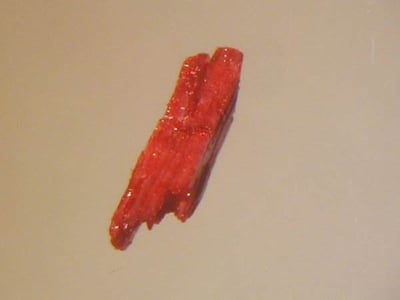
- Deep blue with greenish portions; cendre blue to Italian blue, becoming greener with atacamite inclusions; blue in transmitted light.
- Hardness (Mohs)
- 2.5
- Rock tumbling
- Not recommended
- Density
- 2.81 g/cm³
- Streak
- Pale blue
Chemical Properties
- Chemical Formula
- Cu[B(OH)4]Cl
- Elements
- B, Cl, Cu, H, O
Identify Bandylite Instantly
- Snap a photo, get instant results
- 6,700+ rocks, minerals & crystals
- Discover collecting spots near you
Bandylite FAQs
How do I identify Bandylite?
Bandylite can be identified by its hardness of 2.5 on the Mohs scale, Deep blue with greenish portions; cendre blue to Italian blue color. Look for these key characteristics when examining specimens.
What color is Bandylite?
Bandylite typically appears in Deep blue with greenish portions; cendre blue to Italian blue, becoming greener with atacamite inclusions; blue in transmitted light.. Color can vary depending on impurities and formation conditions.
How hard is Bandylite?
Bandylite has a hardness of 2.5 on the Mohs scale. This makes it a soft mineral that can be scratched easily.