Millerite
A variety of Minerals
What is Millerite?
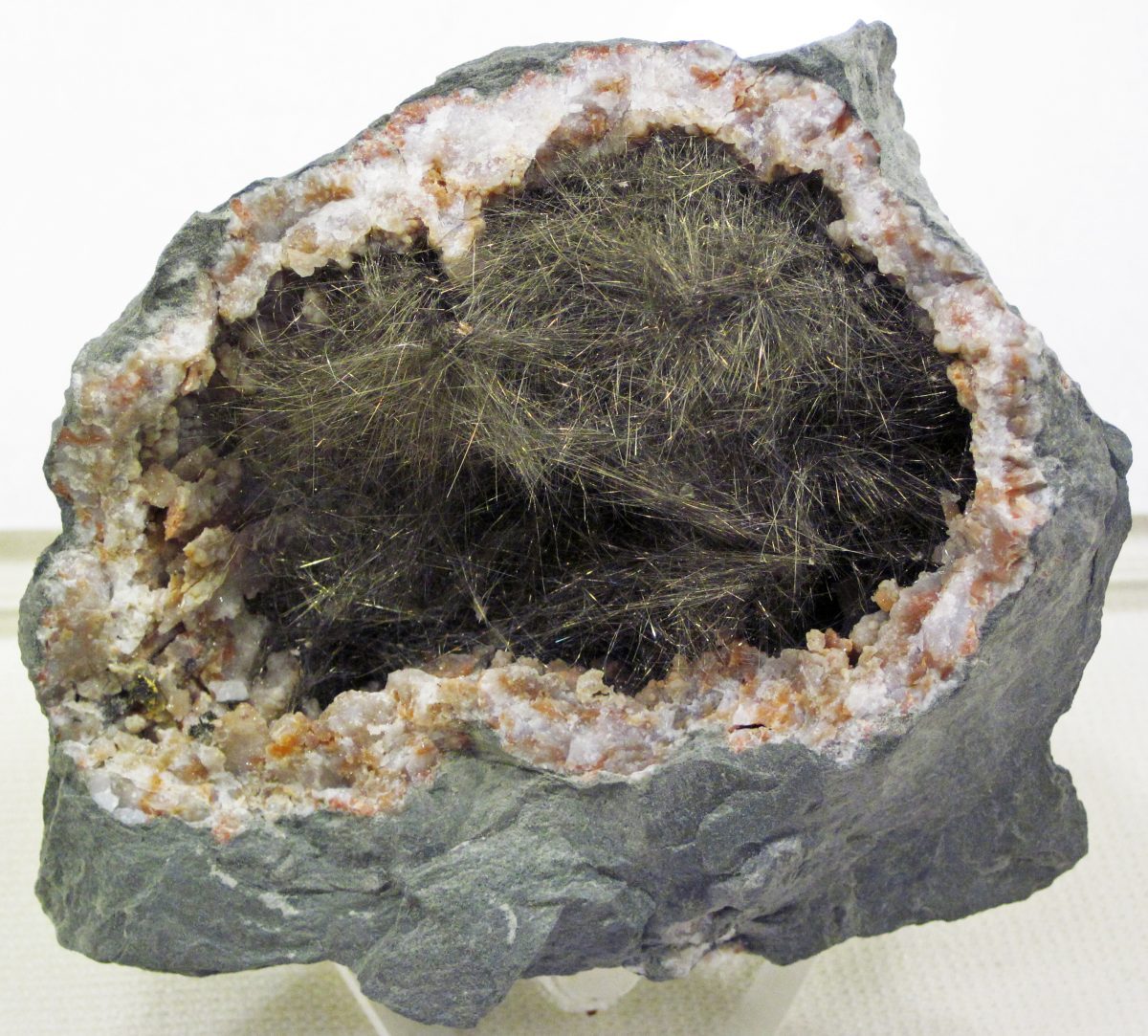
Millerite has a rich yellow color. It is typically not used for jewelry, as its very low hardness makes it unsuitable for wear. Therefore, as gem material for decorative objects, it also rarely appears on offer by gem makers. However, millerite crystals can also have an unusual, hair-like appearance and attract the interest of mineral collectors.
Uses & Applications
Millerite is a minor source of nickel, which is an important metal to many industries. Millerite is sometimes used for jewelry but is too soft for much practical use. Due to its rarity and beauty, it is often sought out by collectors.
Market Value Factors
Pricing varies for every rock and mineral, so use these universal factors to gauge Millerite before comparing listings or appraisals.
Size & Weight
Larger, intact specimens usually command higher prices.
Rarity & Demand
Scarce material or popular varieties sell at a premium.
Condition & Finish
Chips, repairs, and heavy wear lower value; clean prep helps.
Treatment & Provenance
Untreated specimens with documented locality are prized.
Key Characteristics
Formation of Millerite
Millerite is found as a metamorphic replacement of pentlandite within the Silver Swan nickel deposit, Western Australia, and throughout the many ultramafic serpentinite bodies of the Yilgarn Craton, Western Australia, generally as a replacement of metamorphosed pentlandite. There is one known occurrence of millerite in South Africa, near Pafuri in the Transvaal. The deposit has never been commercially mined. It is commonly found as radiating clusters of acicular needle-like crystals in cavities in sulfide rich limestone and dolomite or in geodes. It is also found in nickel-iron meteorites, such as CK carbonaceous chondrites. Millerite was discovered by Wilhelm Haidinger in 1845 in the coal mines of Wales. It was named for British mineralogist William Hallowes Miller. The mineral is quite rare in specimen form, and the most common source of the mineral is in the Halls Gap area of Lincoln County, Kentucky in the United States.
Health & Safety Information
- ⚠️Millerite dust is toxic because it contains heavy metals Nickel.
- ⚠️Nickel
- ⚠️It's advisable to handle millerite carefully to avoid generating dust and wash hands thoroughly afterward. When cutting or polishing millerite, wear a dust mask to prevent inhaling heavy metal particles. Store millerite in a sealed container in a well-ventilated area, away from children and pets. For those involved in crystal healing, never put it in your mouth.
More Images

Quick Facts
Physical Properties
- Color
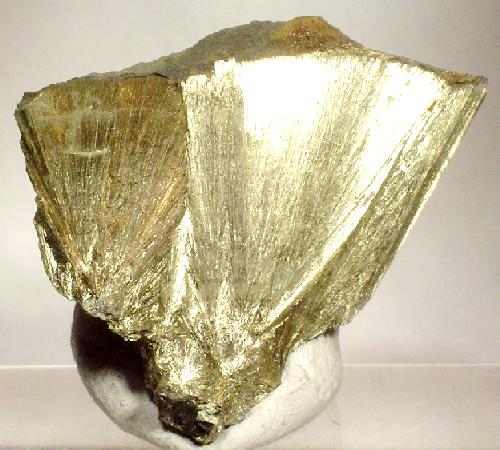
- Pale brass-yellow, with an iridescent tarnish, greenish-grey
- Hardness (Mohs)
- 3 - 3.5
- Rock tumbling
- Not recommended
- Density
- 5.374 g/cm³
- Streak
- Greenish black
- Luster
- Metallic
- Crystal System
- Trigonal
Chemical Properties
- Chemical Formula
- NiS
- Elements
- Ni, S
Also Known As
Identify Millerite Instantly
- Snap a photo, get instant results
- 6,700+ rocks, minerals & crystals
- Discover collecting spots near you
Millerite FAQs
How do I identify Millerite?
Millerite can be identified by its hardness of 3 - 3.5 on the Mohs scale, Pale brass-yellow color, Metallic luster, Trigonal crystal system. Look for these key characteristics when examining specimens.
What color is Millerite?
Millerite typically appears in Pale brass-yellow, with an iridescent tarnish, greenish-grey. Color can vary depending on impurities and formation conditions.
How hard is Millerite?
Millerite has a hardness of 3 - 3.5 on the Mohs scale. This makes it a soft mineral that can be scratched easily.
What is the formation of millerite of Millerite?
Millerite is found as a metamorphic replacement of pentlandite within the Silver Swan nickel deposit, Western Australia, and throughout the many ultramafic serpentinite bodies of the Yilgarn Craton, Western Australia, generally as a replacement of metamorphosed pentlandite. There is one known occurrence of millerite in South Africa, near Pafuri in the Transvaal. The deposit has never been commercially mined. It is commonly found as radiating clusters of acicular needle-like crystals in cavities in sulfide rich limestone and dolomite or in geodes. It is also found in nickel-iron meteorites, such as CK carbonaceous chondrites. Millerite was discovered by Wilhelm Haidinger in 1845 in the coal mines of Wales. It was named for British mineralogist William Hallowes Miller. The mineral is quite rare in specimen form, and the most common source of the mineral is in the Halls Gap area of Lincoln County, Kentucky in the United States.


%252FAbenakiite-(ce)-01.jpg&size=small)

