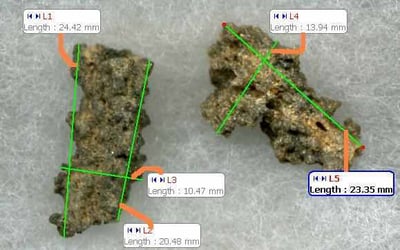
Mylonite
A variety of Metamorphic

What is Mylonite?
Mylonites are a broad category of rock that may be made from many different mineral components. They are metamorphic and super fine-grained, and can take on a wide range of appearances. The rock is sometimes used as filler or in road construction.
Uses & Applications
Like many other strong and durable rocks, mylonite is often only associated with construction materials. When cut in large blocks, mylonite is particularly good in building foundations, paving, and walling. It is commonly used in gardens for decorative purposes, and may be crushed to be used as road aggregate.
Market Value Factors
Pricing varies for every rock and mineral, so use these universal factors to gauge Mylonite before comparing listings or appraisals.
Size & Weight
Larger, intact specimens usually command higher prices.
Rarity & Demand
Scarce material or popular varieties sell at a premium.
Condition & Finish
Chips, repairs, and heavy wear lower value; clean prep helps.
Treatment & Provenance
Untreated specimens with documented locality are prized.
Key Characteristics
Rock Types of Mylonite
Blastomylonites are coarse grained, often sugary in appearance without distinct tectonic banding. Ultramylonites usually have undergone extreme grainsize reduction. In structural geology, ultramylonite is a kind of mylonite defined by modal percentage of matrix grains more than 90%. Ultramylonite is often hard, dark, cherty to flinty in appearance and sometimes resemble pseudotachylite and obsidian. In reverse, ultramylonite-like rocks are sometimes "deformed pseudotachylyte". Mesomylonites have undergone an appreciable amount of grainsize reduction, and are defined by their modal percentage of matrix grains being between 50 and 90%. Protomylonites are mylonites which have experienced limited grainsize reduction, and are defined by their modal percentage of matrix grains being less than 50%. Because mylonitisation is incomplete in these rocks, relict grains and textures are apparent, and some protomylonites can resemble foliated cataclasite or even some schists. Phyllonites are phyllosilicate(e.g. chlorite or mica)-rich mylonites. They typically have a well-developed secondary shear (C') fabric.
Formation of Mylonite
Mylonite are ductilely deformed rocks formed by the accumulation of large shear strain, in ductile fault zones. There are many different views on the formation of mylonites, but it is generally agreed that crystal-plastic deformation must have occurred, and that fracturing and cataclastic flow are secondary processes in the formation of mylonites. Mechanical abrasion of grains by milling does not occur, although this was originally thought to be the process that formed mylonites, which were named from the Greek μύλος mylos, meaning mill. Mylonite form at depths of no less than 4 km.
More Images


Quick Facts
Physical Properties
- Color
- Variable, often grey to black
- Density
- 2.65 - 2.85 g/cm³
Identify Mylonite Instantly
- Snap a photo, get instant results
- 6,700+ rocks, minerals & crystals
- Discover collecting spots near you
Mylonite FAQs
How do I identify Mylonite?
Mylonite can be identified by its Variable color. Look for these key characteristics when examining specimens.
What color is Mylonite?
Mylonite typically appears in Variable, often grey to black. Color can vary depending on impurities and formation conditions.
What is the rock types of mylonite of Mylonite?
Blastomylonites are coarse grained, often sugary in appearance without distinct tectonic banding. Ultramylonites usually have undergone extreme grainsize reduction. In structural geology, ultramylonite is a kind of mylonite defined by modal percentage of matrix grains more than 90%. Ultramylonite is often hard, dark, cherty to flinty in appearance and sometimes resemble pseudotachylite and obsidian. In reverse, ultramylonite-like rocks are sometimes "deformed pseudotachylyte". Mesomylonites have undergone an appreciable amount of grainsize reduction, and are defined by their modal percentage of matrix grains being between 50 and 90%. Protomylonites are mylonites which have experienced limited grainsize reduction, and are defined by their modal percentage of matrix grains being less than 50%. Because mylonitisation is incomplete in these rocks, relict grains and textures are apparent, and some protomylonites can resemble foliated cataclasite or even some schists. Phyllonites are phyllosilicate(e.g. chlorite or mica)-rich mylonites. They typically have a well-developed secondary shear (C') fabric.
What is the formation of mylonite of Mylonite?
Mylonite are ductilely deformed rocks formed by the accumulation of large shear strain, in ductile fault zones. There are many different views on the formation of mylonites, but it is generally agreed that crystal-plastic deformation must have occurred, and that fracturing and cataclastic flow are secondary processes in the formation of mylonites. Mechanical abrasion of grains by milling does not occur, although this was originally thought to be the process that formed mylonites, which were named from the Greek μύλος mylos, meaning mill. Mylonite form at depths of no less than 4 km.