Valentinite
A variety of Minerals
What is Valentinite?
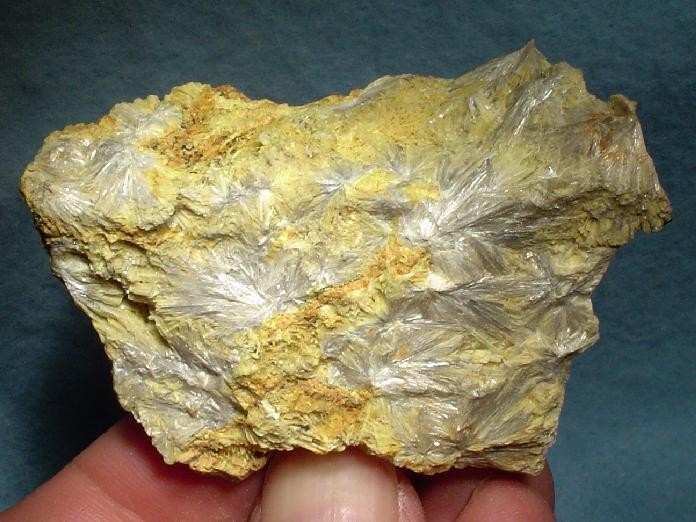
Valentinite, named in honor of Basil Valentine, is a mineral form of antimony trioxide (Sb2O3). It typically occurs in hydrothermal deposits, often associated with stibnite and other antimony minerals. Valentinite is of interest both for its chemical properties and its historical usage in alchemy and metallurgy. Its presence can indicate potential sources of antimony, an element used in various industrial applications.
Etymology & Origins
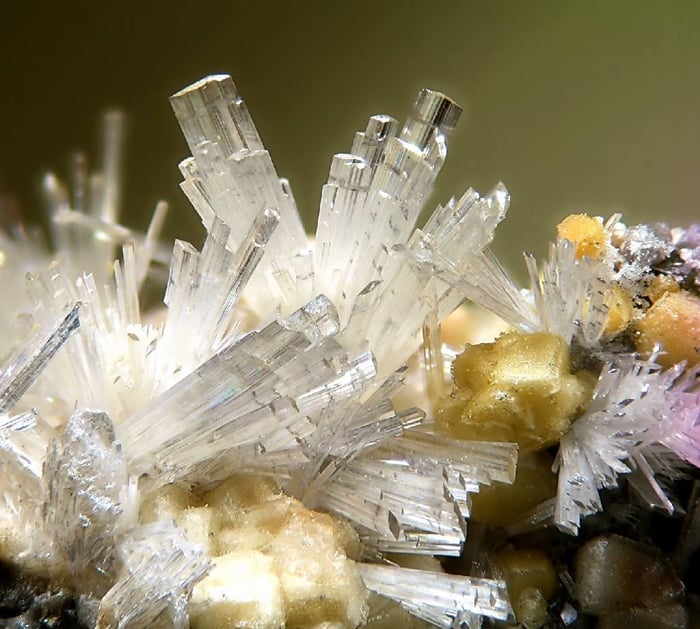
Valentinite is a mineral named in the middle of the 19th century in honour of Basilius Valentinus, a writer on alchemy. He is the supposed author of the first book to give a detailed description of antimony and its compounds. From the contents of the book it is also obvious that Valentinus was familiar with the synthetic preparation of antimony trioxide, which was called 'the antimony flower'. Valentinite was first described in 1845 for an occurrence in the Les Chalanches Mine, Allemond, Isère, Auvergne-Rhône-Alpes, France. The first description of its occurrence in the region of Příbram in Bohemia comes roughly from the same time. This particular locality at one time produced the very best crystals of this mineral. The largest crystals found there measured up to 3 cm. Grouped in rich druses, they developed in vein cavities with galena.
Uses & Applications
Valentinite is commonly sourced as an ore for the mineral antimony. Once processed, that antimony has many applications, such as in semiconductors in electronic devices. When mixed with other metals to form an alloy, it can be used to make flame-resistant materials including paint, glass, and pottery.
Market Value Factors
Pricing varies for every rock and mineral, so use these universal factors to gauge Valentinite before comparing listings or appraisals.
Size & Weight
Larger, intact specimens usually command higher prices.
Rarity & Demand
Scarce material or popular varieties sell at a premium.
Condition & Finish
Chips, repairs, and heavy wear lower value; clean prep helps.
Treatment & Provenance
Untreated specimens with documented locality are prized.
Key Characteristics
Formation of Valentinite
Valentinite is a weathering product of hydrothermal antimony-bearing veins, where it forms as a secondary mineral through oxidation in the upper parts of the deposits. It occurs associated with stibnite, native antimony, stibiconite, cervantite, kermesite and tetrahedrite. A rich deposit of valentinite has been found in the Constantine province of Algeria. This is the only deposit where it is mined as an ore, with 83% antimony. In all other locations it occurs in negligible quantities.
Health & Safety Information
- ⚠️Valentinite dust is toxic because it contains heavy metals Antimony.
- ⚠️It's advisable to handle valentinite carefully to avoid generating dust and wash hands thoroughly afterward. When cutting or polishing valentinite, wear a dust mask to prevent inhaling heavy metal particles. Store valentinite in a sealed container in a well-ventilated area, away from children and pets. For those involved in crystal healing, never put it in your mouth.
More Images
Quick Facts
Physical Properties
- Color
- Colourless, white, light gray, light yellow
- Hardness (Mohs)
- 2.5 - 3
- Rock tumbling
- Not recommended
- Density
- 5.76 g/cm³
- Streak
- White
- Luster
- Pearly, Adamantine
- Crystal System
- Orthorhombic
Chemical Properties
- Chemical Formula
- Sb2O3
- Elements
- O, Sb
Also Known As
Identify Valentinite Instantly
- Snap a photo, get instant results
- 6,700+ rocks, minerals & crystals
- Discover collecting spots near you
Valentinite FAQs
How do I identify Valentinite?
Valentinite can be identified by its hardness of 2.5 - 3 on the Mohs scale, Colourless color, Pearly, Adamantine luster, Orthorhombic crystal system. Look for these key characteristics when examining specimens.
What color is Valentinite?
Valentinite typically appears in Colourless, white, light gray, light yellow. Color can vary depending on impurities and formation conditions.
How hard is Valentinite?
Valentinite has a hardness of 2.5 - 3 on the Mohs scale. This makes it a soft mineral that can be scratched easily.
What is the formation of valentinite of Valentinite?
Valentinite is a weathering product of hydrothermal antimony-bearing veins, where it forms as a secondary mineral through oxidation in the upper parts of the deposits. It occurs associated with stibnite, native antimony, stibiconite, cervantite, kermesite and tetrahedrite. A rich deposit of valentinite has been found in the Constantine province of Algeria. This is the only deposit where it is mined as an ore, with 83% antimony. In all other locations it occurs in negligible quantities.

%252FAbenakiite-(ce)-01.jpg&size=small)

