Gem prices
How we price gems
Where the prices on Ruby Glint come from, what commercial, good and top mean, how weight, treatment and origin are priced, how the trends are estimated, and what the figures can't tell you.
Updated
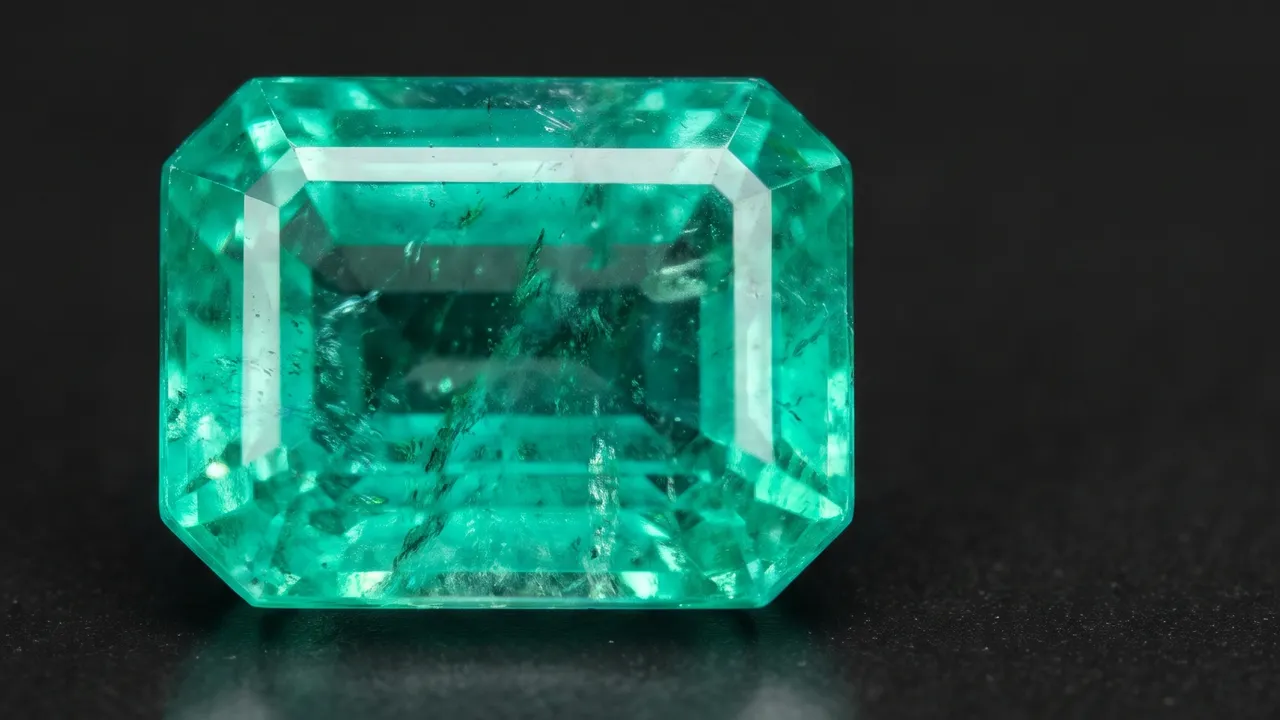
Emerald · No Oil · good 1 ct
$3,100–$5,300 /ct
+53% over 5 years, est.
What the prices are
Every figure is a price per carat in US dollars for one loose, natural stone: faceted for every gem except opal, which is priced as a cabochon (fire opal is also priced faceted). It is what collectors pay gem dealers, together with prices realised at auction. Tanzanite is the exception: its figures are dealer prices, because tanzanite usually sells for less at auction.
They are not jewelry-store prices or insurance replacement values, which usually run higher, and not wholesale prices for parcels, which run lower.
The website and the Ruby Glint app read the same price tables, so a gem's price page, its value calculator and the app always give the same figure for the same stone.
- Jewelry stores and insurance
Usually higher
- Ruby Glint prices
Dealers and auctions, per carat, one loose natural stone
- Wholesale parcels
Usually lower
Commercial, good and top
Each price is a range, split into thirds. Commercial is the lower third, good the middle and top the upper third.
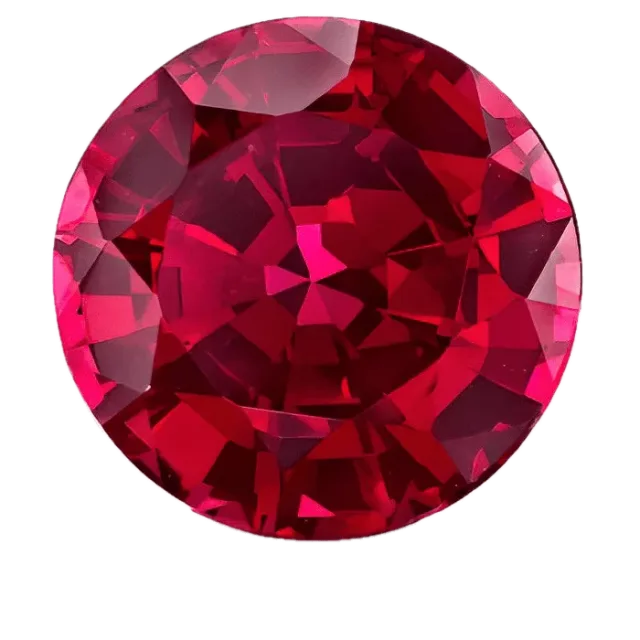
Commercial
Lighter or darker, visible inclusions
$150–$510
per carat
Good
Good color, minor inclusions
$510–$1,700
per carat
Top
Top color, eye-clean
$1,700–$5,800
per carat
A heated 1 ct ruby at each grade, per carat.
What the grades mean
Top is top color and eye-clean. Commercial is lighter, darker or less saturated color with inclusions you can see. Good sits between them.
Clarity is graded loupe-clean, eye-clean, slightly included, included. Prices assume a well-cut stone; a windowed, overly deep or badly cut stone sells below its range, and for opal the dome, thickness and even color across the face count as cut.
For example, a 1 ct heated ruby is $150–$510 per carat at commercial, $510–$1,700 at good and $1,700–$5,800 at top.
| Gem | What sets the color grade |
|---|---|
 Ruby | Pigeon's blood and vivid red at the top; pinkish, purplish or dark lower |
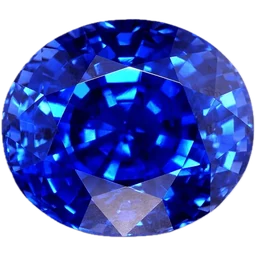 Sapphire | Blue leads; vivid royal or cornflower at the top, pale or inky lower |
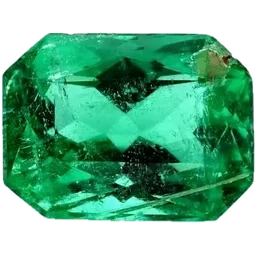 Emerald | Vivid green at the top; light or yellowish lower |
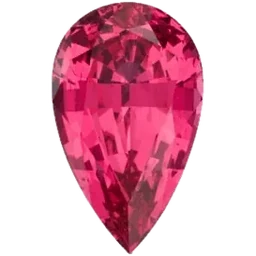 Spinel | Vivid cobalt blue, pure vivid red and neon pink lead; brownish, grayish or purplish tints in red and pink drop prices fast. |
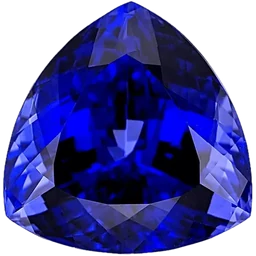 Tanzanite | Saturated violetish blue to bluish violet at the top; light lilac, periwinkle or grayish stones sell for a fraction. Seller grades like AAA are not standard, and many stones sold as AAA are mid-grade. |
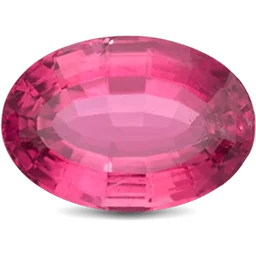 Tourmaline | Saturated, pure hues lead: neon blue for Paraíba, red that stays red in warm light for rubellite, chrome or emerald green; dark, brownish or grayish stones sell for much less |
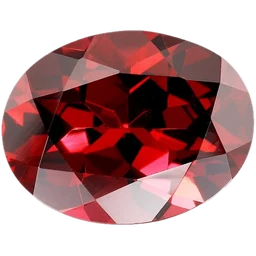 Garnet | Pure saturated green (tsavorite, demantoid), bright orange (spessartite) and pink to raspberry (Malaya, rhodolite) lead; brownish, very dark or pale stones sell for much less |
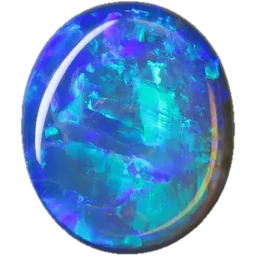 Opal | Brightness and play of color come first: bright red or multicolor on a dark body is the top; dim or blue-green color is lower |
Treatment, origin and lab reports
Treatment can multiply or divide a stone's price, so each gem has a separate price line for each common treatment.
| Gem | Price lines | Priced separately | Lab-created |
|---|---|---|---|
| Ruby | No heat, with lab report; Heated | Filled, dyed or diffused stones: $5–$85 per carat | $2–$500 per carat |
| Sapphire | No heat, with lab report; Heated | Filled, dyed or diffused stones: $5–$150 per carat | $2–$300 per carat |
| Emerald | No oil, with lab report; Insignificant or minor oil, with lab report; Oil or resin | Filled, dyed or diffused stones: $15–$300 per carat | $80–$500 per carat |
| Spinel | Untreated | Filled, dyed or diffused stones: $10–$60 per carat | $3–$60 per carat |
| Tanzanite | Heated | Filled, dyed or diffused stones: $15–$60 per carat | $2–$40 per carat |
| Tourmaline | Natural | Filled, dyed or diffused stones: $10–$400 per carat | $1–$400 per carat |
| Garnet | Untreated | Filled, dyed or diffused stones: $2–$20 per carat | $1–$40 per carat |
| Opal | Natural | Doublets, triplets and treated opal: $5–$60 per carat | $5–$350 per carat |
Untreated, minor-oil and premium-origin prices count only with a report from a recognized lab. Without one, the calculators and the app price a stone on the treated line at any origin, and show what a report confirming the claim would add. Premium origins (such as Burma for ruby, Kashmir for sapphire and Colombia for emerald) have their own rows on each gem's price page.
Heavily treated stones (filled, diffused, dyed or coated) and assembled opal sell in a range of their own, far below natural stones of the same look. Lab-created stones have a range of their own too.
Weight
Price per carat rises with size, because large clean crystals are rare.
Each table has five size bands. A band's prices are anchored to the weight where most sales in it sit, near its lower end. Between two anchors the price per carat is blended, so a stone's value never jumps at a band edge. Price pages show set weights (0.5 to 8 ct for gems priced by one main color, 1 ct for gems priced by type); the calculators and the app use a stone's exact weight.
Price trends
Each gem's chart follows a good 1 ct stone. The 1-year and 5-year changes are estimates of what prices did, not forecasts.
A trend is an index for each gem and treatment line, built from dated sales and market reports. Today's price range is carried back along it, so every origin follows its gem's trend at its own price level. Where a variety has too few dated sales for a trend of its own, it shares its gem's general trend.
Where a gem's trend works differently
Tanzanite
The trend for a fine 1 ct heated stone, estimated from dated dealer and trade reports. Tanzanite has one source, so all stones follow it.
Tourmaline
The trend for a fine 1 ct stone, estimated from dated sales and market reports; Paraíba and rubellite have their own, and the other colors share one general tourmaline trend. Every origin follows the same trend; its level comes from its prices today.
Garnet
The trend for a fine 1 ct stone, estimated from dated sales and market reports; varieties with few dated sales share one general garnet trend. Every origin follows the same trend; its level comes from its prices today.
Opal
The trend for a fine 1 ct stone, estimated from dated sales and market reports. Black and boulder follow Australian opal; white and crystal also follow Ethiopian opal, flat to softer as its supply grew.
How current the prices are
Every table carries the month its prices are for. When we revise a gem, the month changes on every page that shows it and in the app.
| Gem | Prices as of |
|---|---|
| Ruby | September 2026 |
| Sapphire | September 2026 |
| Emerald | September 2026 |
| Spinel | October 2026 |
| Tanzanite | October 2026 |
| Tourmaline | October 2026 |
| Garnet | October 2026 |
| Opal | October 2026 |
Gems outside the price tables
The pages for diamond, amethyst, aquamarine, topaz, jade, peridot, morganite, alexandrite, and turquoise give a broad range for gem-quality stones, last revised on June 10, 2026. They have no trend and no calculator of their own yet.What the prices can't tell you
- They are estimates for reference, not appraisals. For insurance, a sale or an estate, get a written appraisal from a qualified gemologist who has examined the stone.
- One stone can sell outside its range. An exceptional color, a famous provenance or a forced sale all move a price.
- Fine stones over a few carats change hands rarely, so the top of the larger sizes rests on fewer sales than the commercial end.
- No-heat, minor-oil and premium-origin prices assume a report from a recognized lab. We can't confirm treatment or origin from a description or a photo.
- Prices are in US dollars and exclude sales tax and import duty.
- Trends describe what prices did. They are not a forecast or investment advice.