
Gem guides
Gem glossary
The words gemologists, labs and dealers use, in plain English.
Updated
Play-of-colorSilkJardinPleochroismExtinctionAsterism
| AGTA codes | Letters the American Gem Trade Association uses to disclose treatment, such as H for heating and O for oiling. More |
| Asterism | A star of light across a cabochon, caused by aligned needle inclusions, as in star sapphire and star ruby. |
| Birefringence | The difference between the highest and lowest refractive index of a doubly refractive gem. Large values make back facets look doubled. |
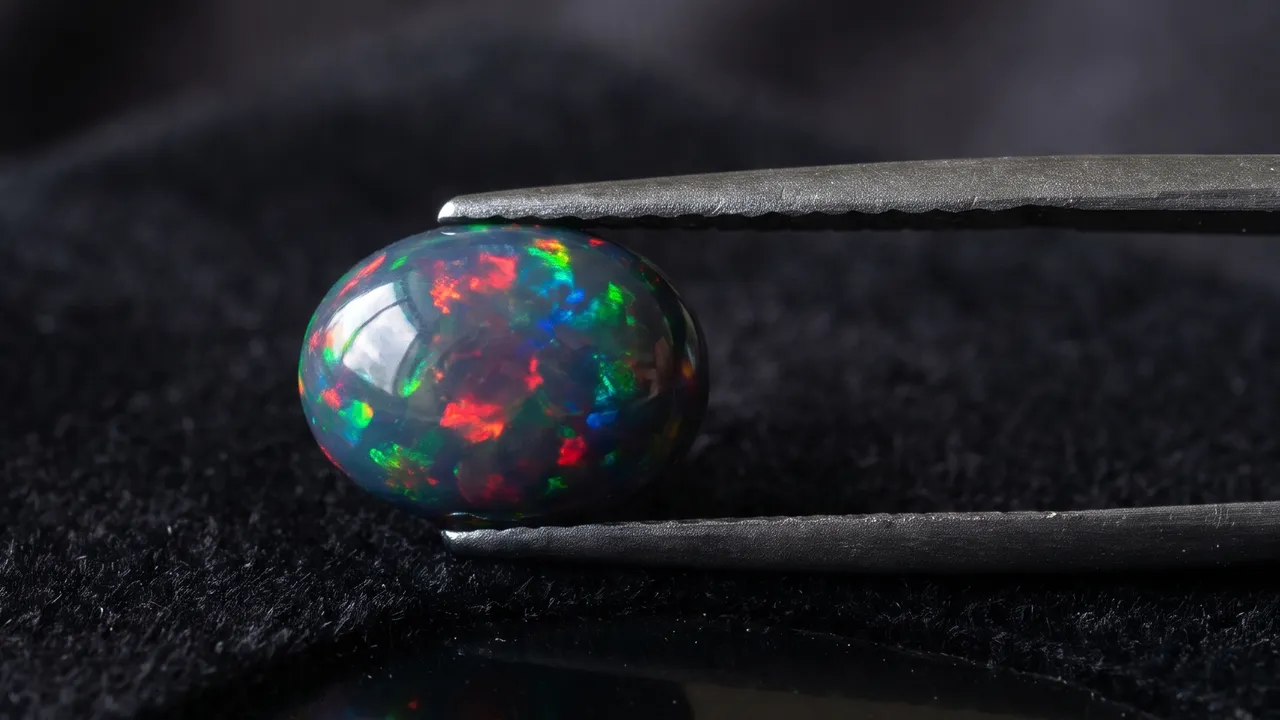
| Cabochon | A stone cut with a smooth, domed top and no facets. |
| Chatoyancy | A cat's-eye band of light across a cabochon, caused by parallel fibers or tubes. |
| Chelsea filter | A color filter that makes some chromium-colored gems look red. Useful for a few separations, unreliable for many. |
| Clarity types (I, II, III) | GIA's grouping of colored gems by how included they usually are. Type I gems such as aquamarine and topaz are often eye-clean; Type II such as ruby, sapphire and garnet usually have some inclusions; Type III such as emerald and red tourmaline almost always do. |
| Color zoning | Uneven color in bands or patches. Straight, angular zoning is typical of natural corundum; curved bands of flame-fusion synthetics. |
| Composite | A stone made of gem material bonded with glass or resin, such as lead-glass filled ruby. Not the same as a treated natural gem. |
| Dichroism | Pleochroism with two colors, seen in uniaxial gems such as ruby and sapphire. |
| Dispersion | The splitting of white light into colors, seen as fire. High in diamond, low in most colored gems. |
| Doublet and triplet | Stones built from two or three layers, such as a thin slice of opal on a backing under a clear cap. |
| Extinction | Dark areas in a faceted stone seen face-up, where the cut sends light out of the stone instead of back to the eye. |
| Eye-clean | No inclusions visible to the unaided eye at normal viewing distance. Loupe-clean means none visible at 10x. |
| Fingerprint | A partly healed fracture that leaves a pattern of tiny fluid inclusions, like a fingerprint. |
| Fluorescence | Visible glow under ultraviolet light. Chromium makes ruby and red spinel glow red; iron suppresses it. |
| Hue, tone and saturation | The three parts of color: the basic color, how light or dark it is, and how strong or pure it is. |
| Jardin | French for garden: the network of fissures and inclusions typical of emerald. |
| Lab-grown (synthetic) | Made in a laboratory with the same chemistry and structure as the natural gem. A simulant only looks like it. |
| Loupe | A 10x hand lens, the standard magnification for grading clarity. |
| Optic character | Whether a gem is singly refractive (isotropic) or doubly refractive (uniaxial or biaxial). A polariscope shows which. |
| Origin | A lab's opinion of where a gem was mined, based on inclusions and trace elements. More |
| Padparadscha | Pinkish orange to orangy pink sapphire. Labs differ on the exact color range. |
| Pigeon's blood | A trade term for the finest vivid red ruby. Each lab sets its own criteria. More |
| Pleochroism | Different colors seen in different directions through a doubly refractive gem. Tanzanite and iolite show it strongly. |
| Polariscope | An instrument with two polarizing filters that shows whether a gem is singly or doubly refractive. |
| Refractive index (RI) | How much a gem slows and bends light, read on a refractometer. The single most useful number for identifying a gem. |
| Royal blue | A trade term for a deep, vivid blue sapphire. Each lab sets its own criteria. More |
| Silk | Fine needle-like inclusions, usually rutile, in ruby and sapphire. Fine silk softens color; heating dissolves it. |
| Simulant | A different material that imitates a gem, such as glass or cubic zirconia imitating diamond. |
| Specific gravity (SG) | A gem's density compared with water. Measured by weighing in air and in water; ruby is 4.00, emerald 2.72. |
| Spectroscope | A hand instrument that shows a gem's absorption lines, such as the chromium lines in ruby or the iron bands in almandine garnet. |
| Type A, B and C jade | Untreated jadeite (A), bleached and polymer-filled (B) and dyed (C). Only Type A holds full value. More |
| Window | A washed-out area in the center of a faceted stone where light passes straight through, usually from a shallow cut. |
See also gem treatments, how to read a lab report and the gem comparisons: ruby vs spinel vs garnet, sapphire vs tanzanite vs iolite and emerald vs tsavorite vs chrome tourmaline.