Erythrite
A variety of Vivianite Group
What is Erythrite?
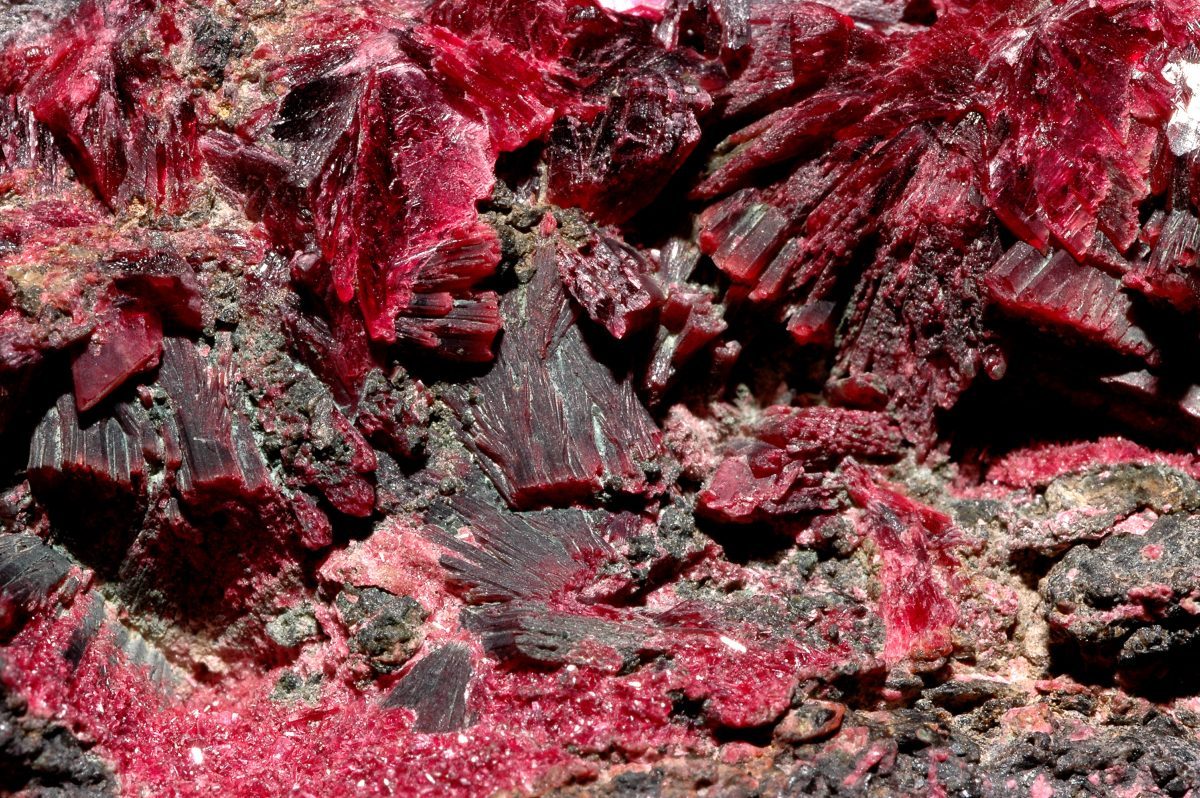
Erythrite is an old and uncommon mineral whose identification only dates back to 1832. When cobalt-rich ore starts to oxidize, the process can leave behind the beautiful blossoming crystals of erythrite. It is relatively high in arsenic content, so extreme caution is encouraged when handling and processing this mineral.
Etymology & Origins
Erythrite was first described in 1832 for an occurrence in Grube Daniel, Schneeberg, Saxony, and takes its name from the Greek έρυθρος (erythros), meaning red.
Uses & Applications
Erythrite is a minor ore of cobalt, which is an essential metal used in laptops, batteries, magnets, hip replacements, jet engines, and more. The striking and unusual colors also make erythrite a valued collector's mineral.
Healing Properties
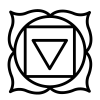
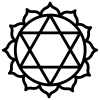
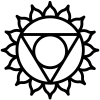
Erythrite is a positive energy stone that works on the Heart, Throat, and Root chakras. It can help a person on their journey to self-awareness, allowing for self-acceptance and spiritual growth. The stone's positive energy on the heart is believed to influence one's relationships and allow for better understanding of others. Communication may be improved when using this stone as it opens the Throat chakra for better clarity when speaking.
Market Value Factors
Pricing varies for every rock and mineral, so use these universal factors to gauge Erythrite before comparing listings or appraisals.
Size & Weight
Larger, intact specimens usually command higher prices.
Rarity & Demand
Scarce material or popular varieties sell at a premium.
Condition & Finish
Chips, repairs, and heavy wear lower value; clean prep helps.
Treatment & Provenance
Untreated specimens with documented locality are prized.
Associated Chakras
Key Characteristics
Rock Types of Erythrite
The nickel variety, annabergite, occurs as a light green nickel bloom on nickel arsenides. In addition iron, magnesium and zinc can also substitute for the cobalt position, creating three other minerals: parasymplesite (Fe), hörnesite (Mg) and köttigite (Zn).
Health & Safety Information
- ⚠️Erythrite dust is toxic because it contains heavy metals Arsenic, Cobalt.
- ⚠️It's advisable to handle erythrite carefully to avoid generating dust and wash hands thoroughly afterward. When cutting or polishing erythrite, wear a dust mask to prevent inhaling heavy metal particles. Store erythrite in a sealed container in a well-ventilated area, away from children and pets. For those involved in crystal healing, never put it in your mouth.
More Images


Quick Facts
Physical Properties
- Color
- Crimson to peach red, pale rose, pink
- Hardness (Mohs)
- 1.5 - 2.5
- Rock tumbling
- Not recommended
- Density
- 3.135 g/cm³
- Streak
- Pale red to pink, paler than the colour
- Luster
- Pearly, Dull, Waxy, Sub-vitreous
- Crystal System
- Monoclinic
Chemical Properties
- Chemical Formula
- Co3(AsO4)2 · 8H2O
- Elements
- As, Co, H, O
Also Known As
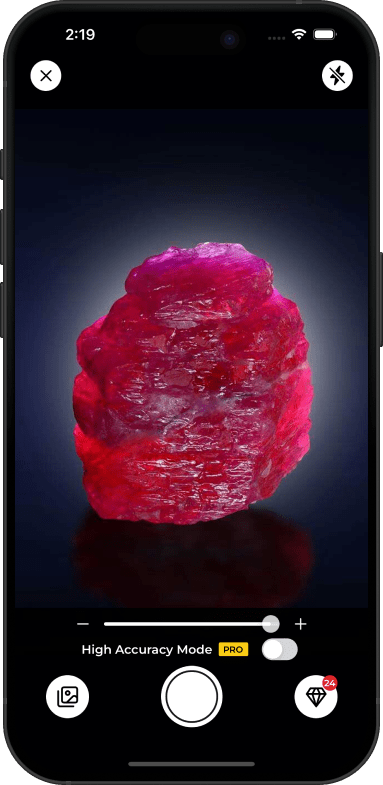
Identify Erythrite Instantly
- Snap a photo, get instant results
- 6,700+ rocks, minerals & crystals
- Discover collecting spots near you
Erythrite FAQs
How do I identify Erythrite?
Erythrite can be identified by its hardness of 1.5 - 2.5 on the Mohs scale, Crimson to peach red color, Pearly, Dull, Waxy, Sub-vitreous luster, Monoclinic crystal system. Look for these key characteristics when examining specimens.
What color is Erythrite?
Erythrite typically appears in Crimson to peach red, pale rose, pink. Color can vary depending on impurities and formation conditions.
How hard is Erythrite?
Erythrite has a hardness of 1.5 - 2.5 on the Mohs scale. This makes it a soft mineral that can be scratched easily.
What is the rock types of erythrite of Erythrite?
The nickel variety, annabergite, occurs as a light green nickel bloom on nickel arsenides. In addition iron, magnesium and zinc can also substitute for the cobalt position, creating three other minerals: parasymplesite (Fe), hörnesite (Mg) and köttigite (Zn).

