
Gem comparison
Emerald vs tsavorite vs chrome tourmaline
All three owe their green to chromium or vanadium, so a Chelsea filter won't separate them reliably. Refractive index, birefringence and inclusions will.
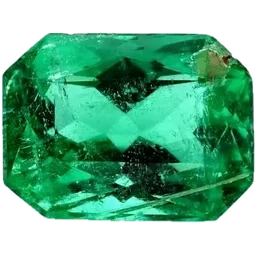 Emerald
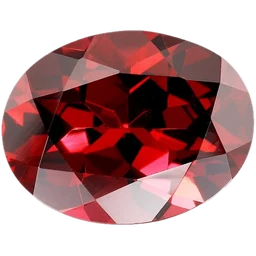 Tsavorite
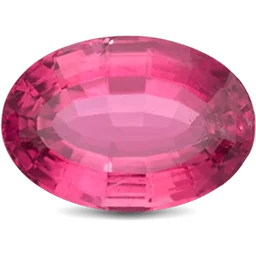 Chrome tourmaline
Updated
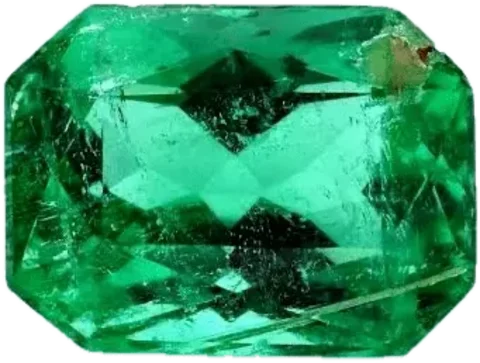
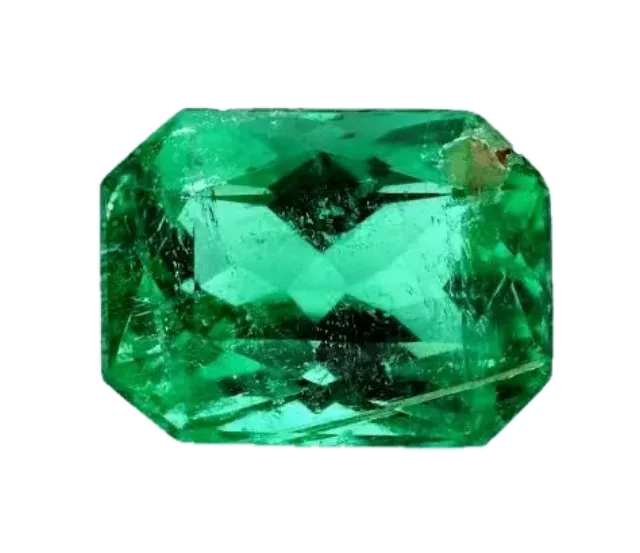
Emerald
RI 1.577–1.583
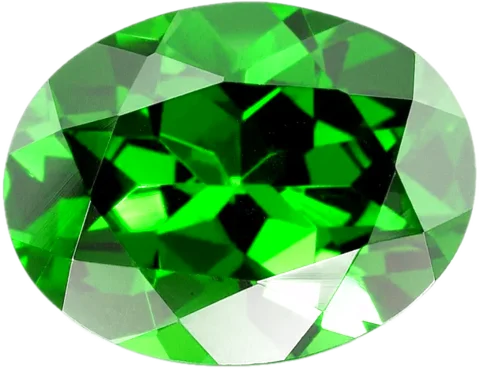
Tsavorite
RI 1.734–1.759
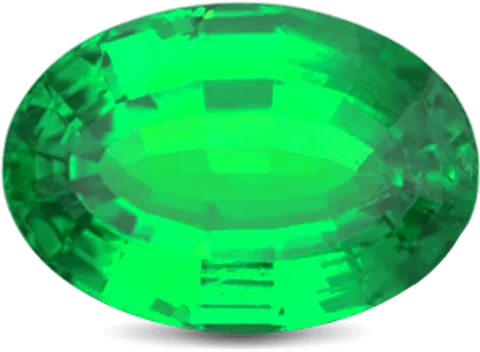
Chrome tourmaline
RI 1.624–1.644
At a glance
Where each stone falls on the two numbers that separate them fastest. Bars that don't overlap mean that test alone tells them apart.
How to tell them apart
In the order a gemologist would usually reach for them. None of these tests touches the stone's surface.
- TEST 1
Refractometer
Emerald reads about 1.57–1.58 with low birefringence. Tourmaline reads 1.62–1.64 with birefringence near 0.02. Tsavorite gives one reading near 1.74.
- TEST 2
Loupe
Strong birefringence makes tourmaline's back facets look doubled. Emerald shows its jardin and sometimes flashes from filler. Tsavorite shows no doubling.
- TEST 3
Polariscope
Tsavorite stays dark as it turns. Emerald and tourmaline blink.
- TEST 4
Heft
Emerald (2.72) is the lightest, tourmaline (3.06) heavier and tsavorite (3.61) heaviest.
- TEST 5
Chelsea filter
Not reliable here: chromium and vanadium greens can turn red or pink through it in all three.
For treatment and origin, only a lab report will do: how to read a gem lab report. Terms used here are explained in the gem glossary.
Side by side
What you can see on each stone, then the standard gemological values. Refractive index and birefringence are the quickest separations.
LIGHT
COLORS AS YOU TURN IT
LONG-WAVE UV
HARDNESS
| Property | Emerald | Tsavorite | Chrome tourmaline |
|---|---|---|---|
| Species | Beryl | Grossular garnet | Tourmaline (dravite-uvite) |
| Refractive index | 1.577–1.583 (1.565–1.602 overall) | 1.734–1.759 (single reading) | 1.624–1.644 |
| Birefringence | 0.005–0.009 | None | 0.018–0.020 |
| Optic character | Doubly refractive, uniaxial negative | Singly refractive | Doubly refractive, uniaxial negative |
| Specific gravity | 2.72 | 3.61 | 3.06 |
| Hardness (Mohs) | 7.5–8 | 7–7.5 | 7–7.5 |
| Pleochroism | Moderate to strong: bluish green and yellowish green | None | Moderate: yellowish green and bluish green |
| Fluorescence (long-wave UV) | Usually inert; some weak red | Inert to weak | Inert |
| Typical inclusions | Jardin of fissures, three-phase inclusions, flash effect from filler | Fibers and crystals; fewer open fissures than emerald | Liquid films, growth tubes |
| Treatments | Nearly always oiled or resin filled | Usually untreated | Usually untreated |
| Price at 1 ct | $130–$4,000 with oil or resin per carat | $280–$2,100 per carat | Not priced separately; green tourmaline is $86–$610 per carat and chrome sells above it |
Emerald vs tsavorite vs chrome tourmaline: questions
Is tsavorite better than emerald?
It depends on what you value. Tsavorite is brighter, more durable and usually untreated, while emerald has the name, the history and the higher price for fine stones.
Can a Chelsea filter identify emerald?
Not on its own. Chromium and vanadium colored greens, including tsavorite and chrome tourmaline, can turn red or pink through the filter too. A refractometer reading is far more reliable.
How do I spot chrome tourmaline sold as emerald?
Look at the back facets through the table with a loupe. Tourmaline's strong double refraction makes them look doubled; emerald's low birefringence does not.