Gem comparison
Ruby vs red spinel vs garnet
Three red gems that were confused for centuries: the Black Prince's Ruby in the British Imperial State Crown is a spinel. A dichroscope, a polariscope and a refractometer separate them in minutes.
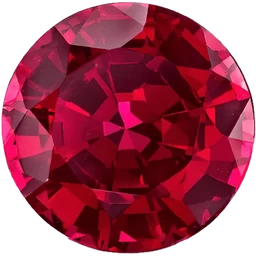 Ruby
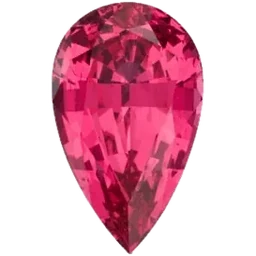 Red spinel
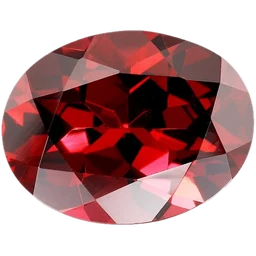 Red garnet (pyrope-almandine)
Updated
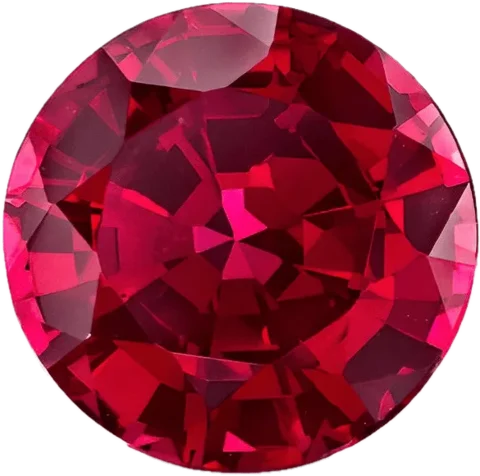
Ruby
RI 1.762–1.770
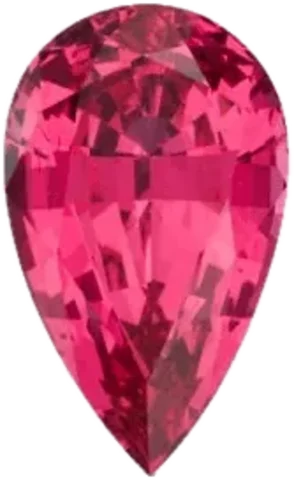
Red spinel
RI 1.712–1.736
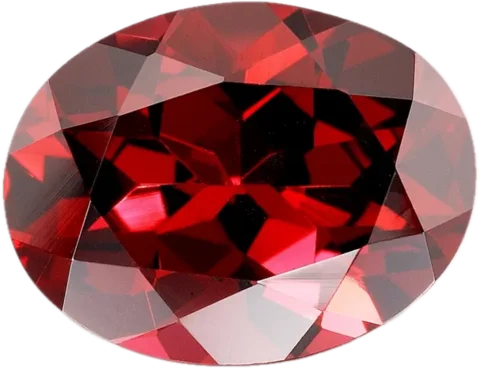
Red garnet
RI 1.714–1.830
At a glance
Where each stone falls on the two numbers that separate them fastest. Bars that don't overlap mean that test alone tells them apart.
How to tell them apart
In the order a gemologist would usually reach for them. None of these tests touches the stone's surface.
- TEST 1
Dichroscope
Ruby shows two reds. Spinel and garnet show one color in every direction.
- TEST 2
Polariscope
Ruby blinks light and dark as it turns. Spinel and garnet stay dark (strain can cause anomalous blinks).
- TEST 3
Refractometer
Ruby gives two readings near 1.76–1.77. Spinel gives one near 1.72. Garnet gives one from about 1.72 to 1.83, or reads over the limit.
- TEST 4
Long-wave UV
Ruby and spinel glow red. Garnet stays inert.
- TEST 5
Strong magnet
Almandine-rich garnet is pulled by a neodymium magnet. Ruby and spinel barely react.
- TEST 6
Loupe
Silk and angular zoning point to ruby; octahedral crystals to spinel; needles and a darker, brownish red to garnet.
For treatment and origin, only a lab report will do: how to read a gem lab report. Terms used here are explained in the gem glossary.
Side by side
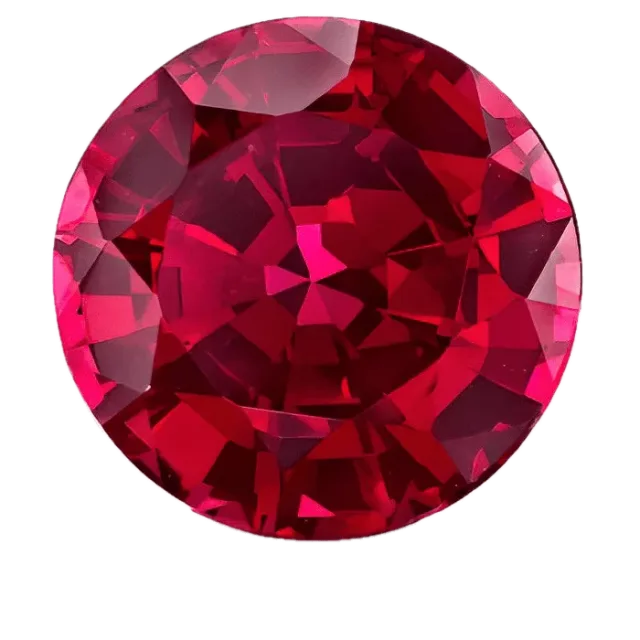
What you can see on each stone, then the standard gemological values. Refractive index and birefringence are the quickest separations.
LIGHT
COLORS AS YOU TURN IT
LONG-WAVE UV
HARDNESS
| Property | Ruby | Red spinel | Red garnet (pyrope-almandine) |
|---|---|---|---|
| Species | Corundum | Spinel | Garnet |
| Refractive index | 1.762–1.770 | 1.712–1.736 (single reading) | 1.714–1.830, by composition (single reading) |
| Birefringence | 0.008–0.010 | None | None |
| Optic character | Doubly refractive, uniaxial negative | Singly refractive | Singly refractive |
| Specific gravity | 4.00 | 3.60 | 3.70–4.20 |
| Hardness (Mohs) | 9 | 8 | 7–7.5 |
| Pleochroism | Strong: purplish red and orangy red | None | None |
| Fluorescence (long-wave UV) | Strong red (weak in iron-rich stones) | Strong red | Inert |
| Typical inclusions | Rutile silk, angular color zoning, fingerprints | Octahedral crystals, often in rows | Rutile needles, crystals |
| Treatments | Usually heated; also lead-glass filled and beryllium diffused stones | Usually untreated | Usually untreated |
| Price at 1 ct | $150–$5,800 per carat heated; $1,200–$15,000 with a no-heat lab report | $280–$2,200 per carat | $8–$150 per carat |
Ruby vs red spinel vs garnet: questions
What is the easiest way to tell ruby from red spinel?
Look through the stone from several directions, ideally with a dichroscope. Ruby shows two different reds; spinel shows one. A refractometer confirms it: ruby reads about 1.76 to 1.77 with two readings, spinel about 1.72 with one.
Is red spinel worth less than ruby?
Usually, but not always. Fine red spinel is rarer than many rubies and has risen in price, though a ruby of the same look generally still costs more. Both are far more valuable than red garnet.
Why were spinels mistaken for rubies?
Before refractometers, red gems were named by color. Famous 'rubies' in the British Crown Jewels, including the Black Prince's Ruby, were later identified as spinel.
Does red garnet glow under UV light?
Almost never. Iron in pyrope-almandine garnet quenches fluorescence, so a red stone that stays dark under long-wave UV is more likely garnet than ruby or spinel.