
Gem comparison
Sapphire vs tanzanite vs iolite
Three violetish blue gems at very different prices. Their pleochroism alone often gives them away, and a refractometer settles it.
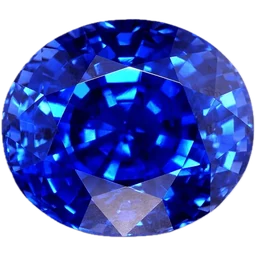 Blue sapphire
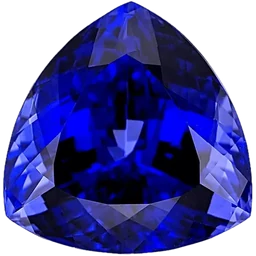 TanzaniteIolite
Updated
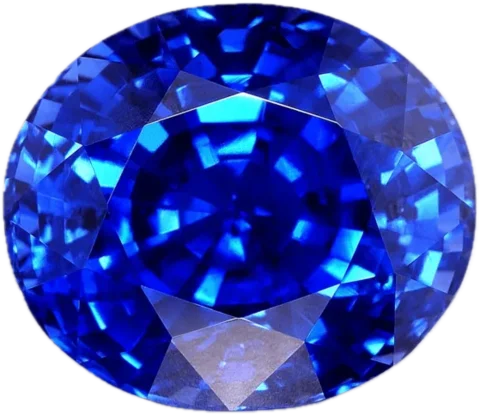
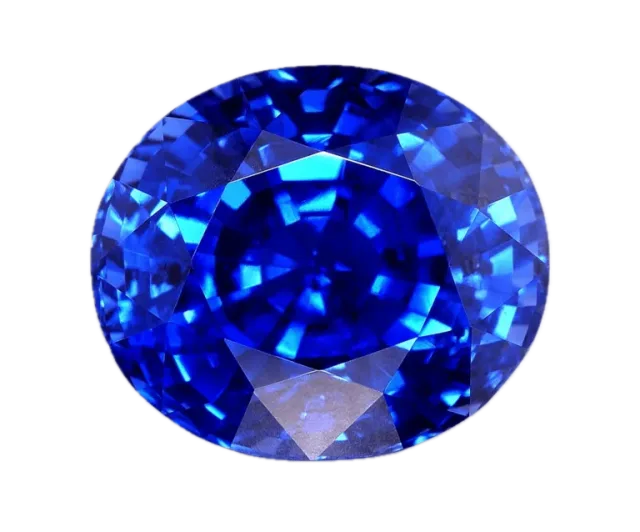
Blue sapphire
RI 1.762–1.770
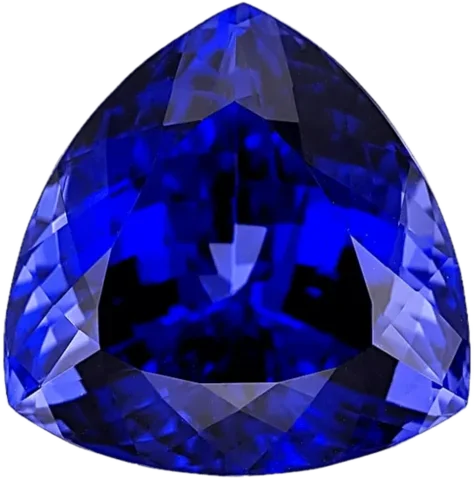
Tanzanite
RI 1.691–1.700
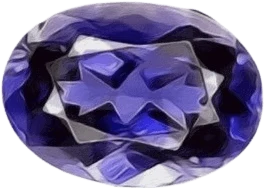
Iolite
RI 1.542–1.551
At a glance
Where each stone falls on the two numbers that separate them fastest. Bars that don't overlap mean that test alone tells them apart.
How to tell them apart
In the order a gemologist would usually reach for them. None of these tests touches the stone's surface.
- TEST 1
Look from several directions
Iolite turns almost colorless one way. Tanzanite flashes violet and blue. Sapphire stays blue, shifting slightly toward green.
- TEST 2
Refractometer
Sapphire reads 1.76–1.77, tanzanite about 1.69–1.70 and iolite about 1.54–1.55.
- TEST 3
Heft
Sapphire (4.00) feels clearly heavier than tanzanite (3.35), and iolite (2.61) feels light.
- TEST 4
Loupe
Silk and straight angular zoning point to sapphire. Tanzanite is usually clean. Facet edges on tanzanite wear and chip more easily.
For treatment and origin, only a lab report will do: how to read a gem lab report. Terms used here are explained in the gem glossary.
Side by side
What you can see on each stone, then the standard gemological values. Refractive index and birefringence are the quickest separations.
LIGHT
COLORS AS YOU TURN IT
LONG-WAVE UV
HARDNESS
| Property | Blue sapphire | Tanzanite | Iolite |
|---|---|---|---|
| Species | Corundum | Zoisite | Cordierite |
| Refractive index | 1.762–1.770 | 1.691–1.700 | 1.542–1.551 |
| Birefringence | 0.008–0.010 | 0.008–0.013 | 0.008–0.012 |
| Optic character | Doubly refractive, uniaxial negative | Doubly refractive, biaxial positive | Doubly refractive, biaxial |
| Specific gravity | 4.00 | 3.35 | 2.61 |
| Hardness (Mohs) | 9 | 6–7 | 7–7.5 |
| Pleochroism | Moderate to strong: violetish blue and greenish blue | Strong: blue, violet and (in unheated stones) brownish yellow | Very strong: violet blue, pale blue and nearly colorless yellowish gray |
| Fluorescence (long-wave UV) | Usually inert | Inert | Inert |
| Typical inclusions | Rutile silk, straight angular zoning, fingerprints | Usually clean; growth tubes | Hematite platelets in some stones, fingerprints |
| Treatments | Usually heated; also beryllium and titanium diffusion | Nearly always heated | Usually untreated |
| Price at 1 ct | $130–$2,500 per carat heated; $820–$5,900 with a no-heat lab report | $140–$600 per carat | Not in our price tables; far below sapphire and tanzanite |
Sapphire vs tanzanite vs iolite: questions
How can I tell tanzanite from blue sapphire?
Tilt it. Tanzanite flashes violet and blue (and brownish in unheated stones), while sapphire stays blue. Tanzanite is also lighter in the hand and softer, so its facet edges wear sooner.
Is iolite a fake sapphire?
No, iolite is a natural gem of its own, the mineral cordierite. It becomes a problem only when sold as sapphire. Its very strong pleochroism, nearly colorless in one direction, gives it away.
Which is more durable: sapphire, tanzanite or iolite?
Sapphire, at 9 on the Mohs scale. Iolite is 7 to 7.5 with a cleavage, and tanzanite 6 to 7 with a perfect cleavage, so both need more care in rings.