Shale
A variety of Sedimentary
What is Shale?
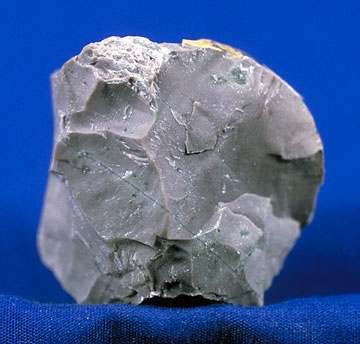
Shale is a fragile, sedimentary rock that breaks into thin layers with sharp edges. It is created by the pressure applied when mud and clay are intensely compacted. Shale's primary economic value is that it contains material that can be transformed into oil or natural gas. Other shales form clays that can be made into bricks, cement, or pottery when crushed and mixed with water.
Etymology & Origins
Before the mid-19th century, the terms slate, shale and schist were not sharply distinguished. In the context of underground coal mining, shale was frequently referred to as slate well into the 20th century.
Uses & Applications
Shale is commonly commonly used in pottery, bricks, and ceramics, because it can be easily crushed and requires little additional processing. When mixed with limestone, it can be used to make cement. Shale is also a great indicator of nearby oil and gas reservoirs.
Discover Values
Market Value Factors
Pricing varies for every rock and mineral, so use these universal factors to gauge Shale before comparing listings or appraisals.
Size & Weight
Larger, intact specimens usually command higher prices.
Rarity & Demand
Scarce material or popular varieties sell at a premium.
Condition & Finish
Chips, repairs, and heavy wear lower value; clean prep helps.
Treatment & Provenance
Untreated specimens with documented locality are prized.
Key Characteristics
Formation of Shale
The process in the rock cycle which forms shale is called compaction. The fine particles that compose shale can remain suspended in water long after the larger particles of sand have deposited. Shales are typically deposited in very slow moving water and are often found in lakes and lagoonal deposits, in river deltas, on floodplains and offshore from beach sands. They can also be deposited in sedimentary basins and on the continental shelf, in relatively deep, quiet water. 'Black shales' are dark, as a result of being especially rich in unoxidized carbon. Common in some Paleozoic and Mesozoic strata, black shales were deposited in anoxic, reducing environments, such as in stagnant water columns. Some black shales contain abundant heavy metals such as molybdenum, uranium, vanadium, and zinc. The enriched values are of controversial origin, having been alternatively attributed to input from hydrothermal fluids during or after sedimentation or to slow accumulation from sea water over long periods of sedimentation. Fossils, animal tracks/burrows and even raindrop impact craters are sometimes preserved on shale bedding surfaces. Shales may also contain concretions consisting of pyrite, apatite, or various carbonate minerals. Shales that are subject to heat and pressure of metamorphism alter into a hard, fissile, metamorphic rock known as slate. With continued increase in metamorphic grade the sequence is phyllite, then schist and finally gneiss.
Composition of Shale
Shales are typically composed of clay minerals and quartz grain, and are typically gray. Addition of variable amounts of minor constituents alters the color of the rock. Black shale results from the presence of greater than one percent carbonaceous material and indicates a reducing environment. Black shale can also be referred to as black metal. Red, brown and green colors are indicative of ferric oxide (hematite – reds), iron hydroxide (goethite – browns and limonite – yellow), or micaceous minerals (chlorite, biotite and illite – greens). Clays are the major constituent of shales and other mudrocks. The clay minerals represented are largely kaolinite, montmorillonite and illite. Clay minerals of Late Tertiary mudstones are expandable smectites whereas in older rocks especially in mid- to early Paleozoic shales illites predominate. The transformation of smectite to illite produces silica, sodium, calcium, magnesium, iron and water. These released elements form authigenic quartz, chert, calcite, dolomite, ankerite, hematite and albite, all trace to minor (except quartz) minerals found in shales and other mudrocks. Shales and mudrocks contain roughly 95 percent of the organic matter in all sedimentary rocks. However, this amounts to less than one percent by mass in an average shale. Black shales, which form in anoxic conditions, contain reduced free carbon along with ferrous iron (Fe) and sulfur (S). Pyrite and amorphous iron sulfide along with carbon produce the black coloration.
Quick Facts
Physical Properties
- Color
- Red, brown, black, gray
- Hardness (Mohs)
- 3
- Rock tumbling
- Not recommended
- Density
- 2.4 - 2.8 g/cm³
Also Known As

Identify Shale Instantly
- Snap a photo, get instant results
- 6,700+ rocks, minerals & crystals
- Discover collecting spots near you
Shale FAQs
How do I identify Shale?
Shale can be identified by its hardness of 3 on the Mohs scale, Red color. Look for these key characteristics when examining specimens.
What color is Shale?
Shale typically appears in Red, brown, black, gray. Color can vary depending on impurities and formation conditions.
How hard is Shale?
Shale has a hardness of 3 on the Mohs scale. This makes it a soft mineral that can be scratched easily.
What is the formation of shale of Shale?
The process in the rock cycle which forms shale is called compaction. The fine particles that compose shale can remain suspended in water long after the larger particles of sand have deposited. Shales are typically deposited in very slow moving water and are often found in lakes and lagoonal deposits, in river deltas, on floodplains and offshore from beach sands. They can also be deposited in sedimentary basins and on the continental shelf, in relatively deep, quiet water. 'Black shales' are dark, as a result of being especially rich in unoxidized carbon. Common in some Paleozoic and Mesozoic strata, black shales were deposited in anoxic, reducing environments, such as in stagnant water columns. Some black shales contain abundant heavy metals such as molybdenum, uranium, vanadium, and zinc. The enriched values are of controversial origin, having been alternatively attributed to input from hydrothermal fluids during or after sedimentation or to slow accumulation from sea water over long periods of sedimentation. Fossils, animal tracks/burrows and even raindrop impact craters are sometimes preserved on shale bedding surfaces. Shales may also contain concretions consisting of pyrite, apatite, or various carbonate minerals. Shales that are subject to heat and pressure of metamorphism alter into a hard, fissile, metamorphic rock known as slate. With continued increase in metamorphic grade the sequence is phyllite, then schist and finally gneiss.
What is the composition of shale of Shale?
Shales are typically composed of clay minerals and quartz grain, and are typically gray. Addition of variable amounts of minor constituents alters the color of the rock. Black shale results from the presence of greater than one percent carbonaceous material and indicates a reducing environment. Black shale can also be referred to as black metal. Red, brown and green colors are indicative of ferric oxide (hematite – reds), iron hydroxide (goethite – browns and limonite – yellow), or micaceous minerals (chlorite, biotite and illite – greens). Clays are the major constituent of shales and other mudrocks. The clay minerals represented are largely kaolinite, montmorillonite and illite. Clay minerals of Late Tertiary mudstones are expandable smectites whereas in older rocks especially in mid- to early Paleozoic shales illites predominate. The transformation of smectite to illite produces silica, sodium, calcium, magnesium, iron and water. These released elements form authigenic quartz, chert, calcite, dolomite, ankerite, hematite and albite, all trace to minor (except quartz) minerals found in shales and other mudrocks. Shales and mudrocks contain roughly 95 percent of the organic matter in all sedimentary rocks. However, this amounts to less than one percent by mass in an average shale. Black shales, which form in anoxic conditions, contain reduced free carbon along with ferrous iron (Fe) and sulfur (S). Pyrite and amorphous iron sulfide along with carbon produce the black coloration.