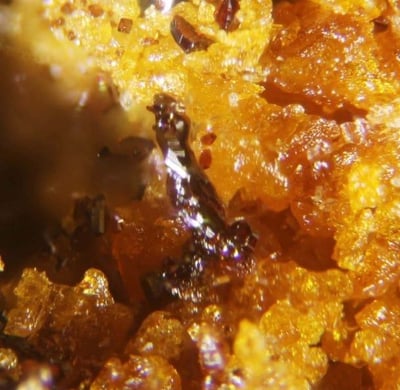
Spodumene
A variety of Clinopyroxene Subgroup
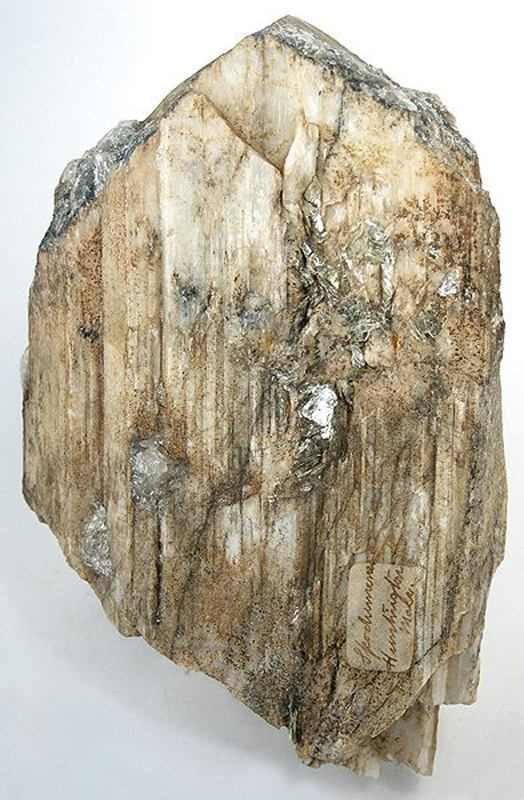
What is Spodumene?
Most varieties of spodumene are uninteresting and dull, except Kunzite (pink) and Hiddenite (green) which are highly valued in the gemstone market. The colors of this transparent mineral change when viewed from different angles. Its crystals can grow exceptionally large - the largest specimen recorded was measured 13 m. It is an important source of lithium and ceramic materials.
Uses & Applications
Spodumene is used as a lithium source for commercial applications such as ceramics and ceramic glass, mobile phone and car batteries. It also appears in beautiful crystal structures as the rare gemstones hiddenite, kunzite, and triphane.
Healing Properties
Spodumene is believed to help restore vitality and enthusiasm while cleansing the body of lingering negative energy. It can be used on an individual's person or in the home, wherever spiritual cleansing is needed. While it aligns all of the chakras, many believe that the yellow version of the stone stimulates the Solar Plexus chakra while the clear and white stones work with the Crown, Higher Crown, and Solar Star Chakras.
Optical Properties
- Refractive Index
- 1.657-1.681
- Birefringence
- 0.014-0.016
- Pleochroism
- Yellow stones - distinct: very light yellow, yellow, deep yellow
- Optical Character
- Biaxial positive
- Dispersion
- 0.017
Market Value Factors
Pricing varies for every rock and mineral, so use these universal factors to gauge Spodumene before comparing listings or appraisals.
Size & Weight
Larger, intact specimens usually command higher prices.
Rarity & Demand
Scarce material or popular varieties sell at a premium.
Condition & Finish
Chips, repairs, and heavy wear lower value; clean prep helps.
Treatment & Provenance
Untreated specimens with documented locality are prized.
The Meaning
Spodumene is not a traditional birthstone, but considered a natural birthstone for those born in early summer from June 21st through July 21st.
Associated Chakras


Key Characteristics
Rock Types of Spodumene
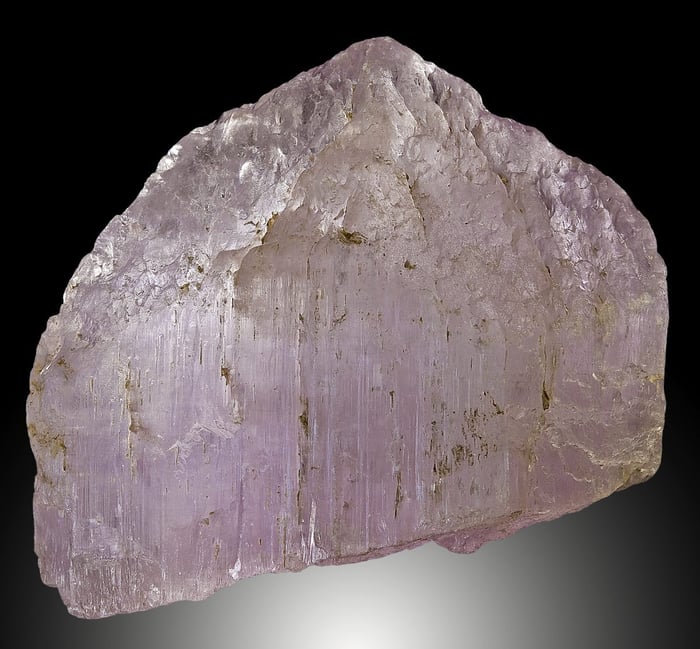
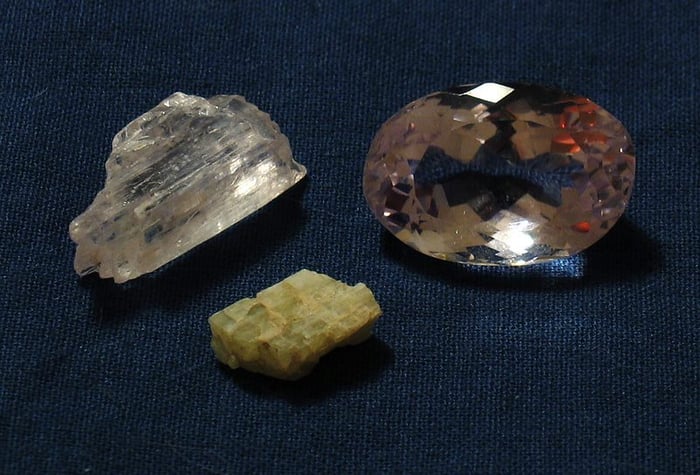
Hiddenite Hiddenite is a pale, emerald-green gem variety first reported from Alexander County, North Carolina, US. It was named in honor of William Earl Hidden (16 February 1853 - 12 June 1918), mining engineer, mineral collector, and mineral dealer. This emerald green variety of spodumene is colored by chromium, just like emeralds. Not all green spodumene is colored with chromium, which tend to have a lighter color, and therefore are not true hiddenite. Kunzite Kunzite is a pink to lilac colored gemstone, a variety of spodumene with the color coming from minor to trace amounts of manganese. Some (but not all) kunzite used for gemstones has been heated to enhance its color. It is also frequently irradiated to enhance the color. Kunzite was discovered in 1902, and was named after George Frederick Kunz, Tiffany & Co's chief jeweler at the time, and a noted mineralogist. It has been found in Brazil, US, Canada, CIS, Mexico, Sweden, Western Australia, Afghanistan and Pakistan. One notable example of kunzite used in jewellery is in the Russian Palmette tiara and necklace worn by the Duchess of Gloucester. Triphane Triphane is a synonym of spodumene, but also used for colourless or yellowish varieties.
Formation of Spodumene
Spodumene was first described in 1800 for an occurrence in the type locality in Utö, Södermanland, Sweden. It was discovered by Brazilian naturalist Jose Bonifacio de Andrada e Silva. The name is derived from the Greek spodumenos (σποδούμενος), meaning "burnt to ashes," owing to the opaque, ash-grey appearance of material refined for use in industry. Spodumene occurs in lithium-rich granite pegmatites and aplites. Associated minerals include: quartz, albite, petalite, eucryptite, lepidolite and beryl. Transparent material has long been used as a gemstone with varieties kunzite and hiddenite noted for their strong pleochroism. Source localities include Afghanistan, Australia, Brazil, Madagascar, Pakistan, Québec in Canada and North Carolina, California in the US.
More Images
Quick Facts
Physical Properties
- Color
- Colourless, yellow, light green, emerald-green, pink to violet, purple, white, gray
- Hardness (Mohs)
- 6.5 - 7
- Rock tumbling
- With care
- Density
- 3.184 g/cm³
- Streak
- White
- Luster
- Vitreous, Dull
- Crystal System
- Monoclinic
Chemical Properties
- Chemical Formula
- LiAlSi2O6
- Elements
- Al, Li, O, Si
Also Known As
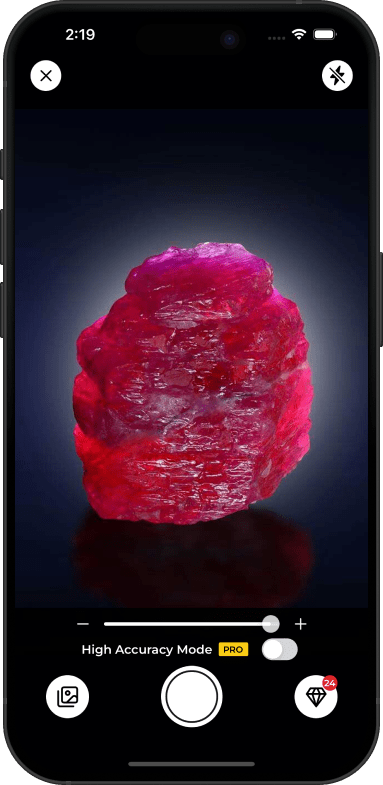
Identify Spodumene Instantly
- Snap a photo, get instant results
- 6,700+ rocks, minerals & crystals
- Discover collecting spots near you
Spodumene FAQs
How do I identify Spodumene?
Spodumene can be identified by its hardness of 6.5 - 7 on the Mohs scale, Colourless color, Vitreous, Dull luster, Monoclinic crystal system. Look for these key characteristics when examining specimens.
What color is Spodumene?
Spodumene typically appears in Colourless, yellow, light green, emerald-green, pink to violet, purple, white, gray. Color can vary depending on impurities and formation conditions.
How hard is Spodumene?
Spodumene has a hardness of 6.5 - 7 on the Mohs scale. This gives it moderate hardness.
What is the rock types of spodumene of Spodumene?
Hiddenite Hiddenite is a pale, emerald-green gem variety first reported from Alexander County, North Carolina, US. It was named in honor of William Earl Hidden (16 February 1853 - 12 June 1918), mining engineer, mineral collector, and mineral dealer. This emerald green variety of spodumene is colored by chromium, just like emeralds. Not all green spodumene is colored with chromium, which tend to have a lighter color, and therefore are not true hiddenite. Kunzite Kunzite is a pink to lilac colored gemstone, a variety of spodumene with the color coming from minor to trace amounts of manganese. Some (but not all) kunzite used for gemstones has been heated to enhance its color. It is also frequently irradiated to enhance the color. Kunzite was discovered in 1902, and was named after George Frederick Kunz, Tiffany & Co's chief jeweler at the time, and a noted mineralogist. It has been found in Brazil, US, Canada, CIS, Mexico, Sweden, Western Australia, Afghanistan and Pakistan. One notable example of kunzite used in jewellery is in the Russian Palmette tiara and necklace worn by the Duchess of Gloucester. Triphane Triphane is a synonym of spodumene, but also used for colourless or yellowish varieties.
What is the formation of spodumene of Spodumene?
Spodumene was first described in 1800 for an occurrence in the type locality in Utö, Södermanland, Sweden. It was discovered by Brazilian naturalist Jose Bonifacio de Andrada e Silva. The name is derived from the Greek spodumenos (σποδούμενος), meaning "burnt to ashes," owing to the opaque, ash-grey appearance of material refined for use in industry. Spodumene occurs in lithium-rich granite pegmatites and aplites. Associated minerals include: quartz, albite, petalite, eucryptite, lepidolite and beryl. Transparent material has long been used as a gemstone with varieties kunzite and hiddenite noted for their strong pleochroism. Source localities include Afghanistan, Australia, Brazil, Madagascar, Pakistan, Québec in Canada and North Carolina, California in the US.